

The European standard "EN 1542 Products and systems for the protection and repair of concrete structures - Test methods - Measurement of bond strength by tension" is part of a series of standards related to products and systems for the protection and repair of concrete structures. This standard describes a method for measuring the tensile bond strength of plasters, mortars, concretes, and surface protection systems used for the protection and repair of concrete. The requirements of this standard apply to products and systems applied to a maximum thickness of 50 mm in the test method, but some products may be used in repairs where the thickness exceeds 50 mm.
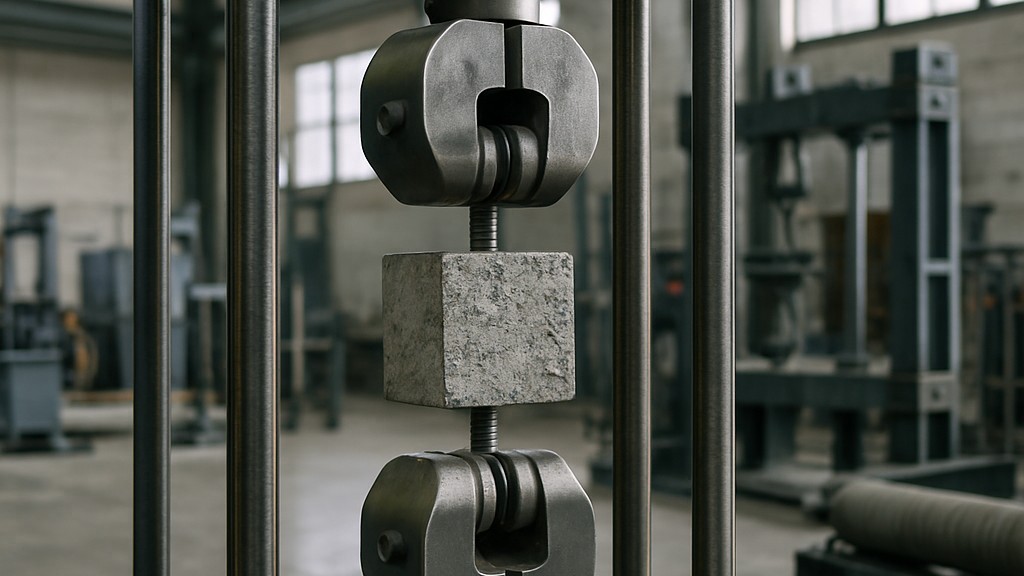
This standard describes a method for measuring the tensile bond strength of repair products and systems applied to standard reference concrete specimens prepared in accordance with EN 1766 "Products and systems for the protection and repair of concrete structures - Test methods - Reference concretes for testing." The test method is conducted by direct dolly pulling, using a dolly attached to the surface of the repair product or system, with a defined test area defined by core drilling.
When using this method, the product or system, along with the containers and instruments used to prepare and apply the mixture, should be placed in a standard laboratory environment for at least 24 hours before use. Unless otherwise specified by the manufacturer, the following mixing technique is used to prepare samples.
For plain cement concrete (PCC) and cementitious mortar, the mortar mixer is used, set to low speed, the measuring liquid is poured into the bowl and the dry ingredients are added, then mixed for a total time of 2 minutes.
When the manufacturer's instructions prohibit the use of partial bags of materials, a concrete mixer or other method recommended by the manufacturer must be used.
Some types of repair mortar have been found to foam excessively under the influence of the mortar mixer specified in standard EN 196-1. An alternative is to use a concrete mixer. The air content, strength, and density of concrete canvas (CC) and PCC mixtures should normally be determined to characterize the mortar being tested.
Test specimens prepared in a vertical position shall be stored in this position for three days under the curing conditions specified in the standard annex (Annex A). During storage, the surfaces of the test specimens shall be positioned at least 100 mm apart.
Unless otherwise specified by the manufacturer, any formwork should be removed 24 hours after application of the product or product system and then returned to a vertical position.
After three days of vertical curing, the samples can be laid horizontally and curing continues for the period specified in the standard annex (Annex A).
Following the curing period, the test sample is conditioned for seven days by storing it in a standard laboratory environment as specified in the standard appendix. Towards the end of this seven-day period, the sample is prepared by securing the supports so that testing can be performed at the end of the seventh day.
During core drilling, the core bit and test specimen are secured so that they cannot move or become loose. The drill must be free from significant vibration and must not allow lateral movement of the core bit. A diamond core barrel is drilled at an axis of 90 degrees plus/minus 1 degree to the surface. The repair product or system is drilled through the concrete substrate to a depth of 15 mm plus/minus 5 mm. The diamond core barrel is removed without damaging the test specimen.
In short, the EN 1542 standard is primarily used to evaluate the performance of repair mortars, coatings, or other surface treatments applied to concrete structures. The test involves bonding a test disc (usually metal) to the surface and then applying a tensile force perpendicular to the surface until failure occurs. The result, expressed in megapascals (MPa), indicates the adhesion of the repair material to the original concrete.
This standard is essential because it provides a reliable and standardized method for assessing bond strength between repair materials and existing concrete surfaces. This is a critical factor in the success and durability of concrete repairs. The key reasons for this standard's importance include:
In short, the EN 1542 standard ensures that repair systems are reliable, safe, and durable. This is crucial when dealing with aging infrastructure or high-risk concrete elements.
Our organization, which has been supporting businesses across all sectors for years through a wide range of testing, measurement, analysis, and evaluation activities, boasts a strong team of employees who closely follow global developments in science and technology and are constantly improving themselves. In this context, we also provide testing services in accordance with the standard "EN 1542: Products and systems for the protection and repair of concrete structures - Test methods - Measurement of bond strength by tensile testing."
To get an appointment, to get more detailed information or to request an evaluation, you can ask us to fill in our form and reach you.

