EN 13329 Laminate Floor Coverings - Elements with Aminoplastic Thermosetting Resin Based Surface Layer
The European standard "EN 13329 Laminate floor coverings - Elements with an aminoplastic thermosetting resin-based surface layer - Specification, requirements and test methods" describes the characteristics, requirements, and test methods for laminate floor coverings with an aminoplastic thermosetting resin-based surface layer. This standard also includes marking and packaging requirements.
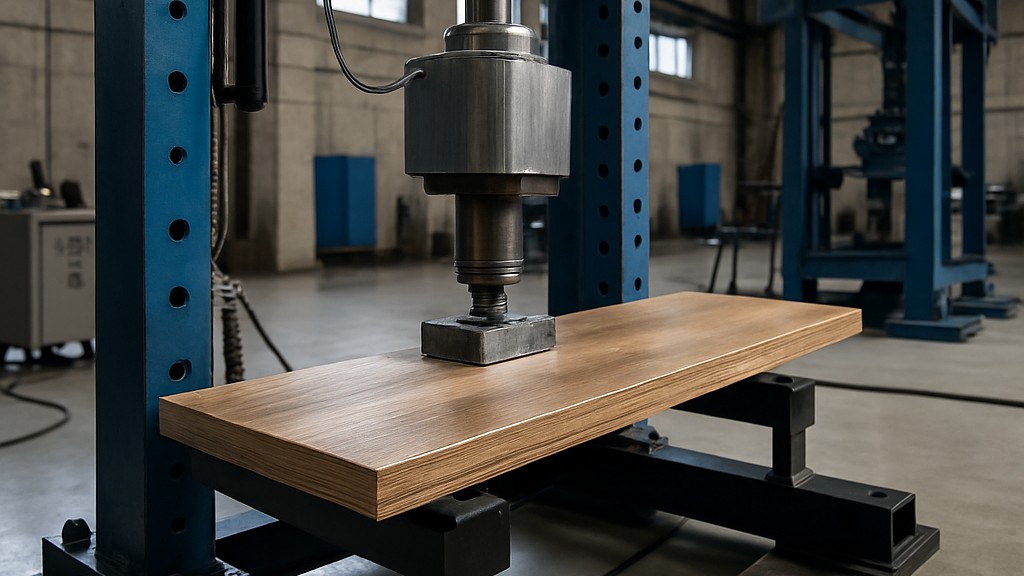
This standard includes a classification system based on EN ISO 10874, which provides practical requirements for areas of use and levels of use. This system is used to indicate the areas where laminate flooring will provide satisfactory service and to encourage consumers to make an informed choice.
Laminate floor coverings are generally designed for floating installations and are suitable for residential and commercial use, including kitchens. However, this standard does not specify requirements for use in frequently wet areas such as bathrooms, laundry rooms, or saunas. In general, laminate floor coverings may only be installed when authorized by the manufacturer and under the conditions described in the manufacturer's installation instructions.
The requirements in this standard are stated as follows:
- General requirements: All laminate floor coverings, when tested by the methods specified herein, must comply with the general requirements given in the table provided within the standard.
- Classification requirements: All laminate floor coverings, when tested using the methods specified in the table provided within the standard, must be classified as suitable for different levels of use according to the requirements specified herein. Classification must be in accordance with the scheme specified in EN ISO 10874. The large ball impact test and wheelchair test of class 34 products must be carried out with pre-attached underlays or an underlay specified by the manufacturer. For the large ball impact test of products in classes 21-23 and 31-33, a standard expanded polystyrene (EPS) foam with a thickness of 1,8 mm plus/minus 0,2 mm, a CS value of 60 plus/minus 10 kPa1 and a PC value of 0,9 mm plus/minus 0,1 mm must be used. The three parameters of the foam must be determined in accordance with CEN/TS 16354.
- Additional technical specifications: When any of the properties listed in the table provided in the standard are required for specific applications, laminate floor coverings must be tested using the methods specified herein. The properties listed in the table are considered important for certain products or applications.
The term "laminate flooring" refers to a type of flooring produced by bonding multiple layers of material together using a lamination process. Designed to resemble wood, stone, or other natural surfaces, these products offer durability, ease of maintenance, and affordability.
Laminate floor coverings generally consist of four layers:
- Wear layer (top layer): A transparent, protective layer made of resin or melamine. It is resistant to scratches, stains, and fading.
- Decorative layer: A high-resolution printed image that gives the appearance of the floor (such as wood, stone, tile).
- Inner layer: Usually high-density fiberboard (HDF) or medium-density fiberboard (MDF), it provides strength and durability.
- Base layer (sub-layer): It is the stabilizing layer that prevents moisture from entering and keeps the board flat.
Its basic features are as follows:
- An affordable alternative to parquet or tile.
- Click-lock systems (floating floors) for easy installation.
- Durable and resistant to scratches and dents.
- It requires low maintenance (just sweeping and occasional damp mopping).
- It is moisture resistant, but not completely waterproof unless specifically designed for it.
In Europe, laminate flooring is generally subject to the EN 13329 standard. This standard defines:
- Product classification (e.g. AC3, AC4)
- Durability requirements (impact, stain, moisture resistance)
- Quality and performance testing methods
Laminate flooring has become a popular choice for residential and commercial interiors thanks to its durability, affordability, and aesthetic appeal. To ensure quality and consistency across manufacturers, the EN 13329 standard, which specifies the requirements for laminate flooring, was developed. This standard establishes benchmarks for product performance, enabling consumers and professionals to confidently compare and select flooring products.
The EN 13329 standard defines the technical specifications, test methods, and classification criteria for laminate flooring with a layered structure. These floors typically consist of a decorative surface, a core (usually high-density fiberboard), and a backing layer. This standard ensures that laminate flooring products are tested using consistent and rigorous methods for a wide range of performance indicators, including abrasion resistance, impact resistance, stain resistance, moisture resistance, and dimensional stability.
The EN 13329 standard introduced a classification system that divides laminate flooring into residential and commercial use, with corresponding density levels:
- 21 Residences: Density level light (bedrooms)
- 22 Housing: Density level general (living rooms)
- 23 Housing: Density level is heavy (corridors, kitchens)
- 31 Commercial: Light density (hotel rooms, small offices)
- 32 Commercial: Density level general (classrooms, boutiques)
- 33 Commercial: Density level heavy (shops)
- 34 Commercial: Density level is very heavy (airports, public halls)
Each classification is determined through a series of laboratory tests that simulate real-life wear and tear conditions.
The EN 13329 standard defines rigorous test methods to evaluate multiple performance characteristics:
- Abrasion resistance (AC ratings): Measured using the Taber abrasion test, laminate floors are given an AC (abrasion class) rating from AC1 to AC6, where higher numbers indicate greater durability. Most commercial-grade products are AC4 or higher. The AC rating scale is as follows:
- AC1 Light residential: Suitable for areas with low foot traffic, such as bedrooms.
- AC2 Medium occupancy: For medium-density living rooms or guest rooms.
- AC3 Heavy residential/light commercial: Suitable for most residential areas and low-density offices or hotel rooms.
- AC4 General commercial: Ideal for busy homes or light to medium intensity commercial use such as boutiques or cafes.
- AC5 Heavy commercial: For busy commercial environments such as shops and offices.
- AC6 Very heavy commercial: Designed for extreme wear in public buildings, airports or industrial use.
- Impact resistance: This measures a product's ability to withstand falling objects without visible damage. This is crucial in high-traffic and commercial areas.
- Stain and burn resistance: Laminate floors should be resistant to stains and minor burns (such as cigarettes) from common household chemicals.
- Dimensional stability: Soils are tested for their ability to maintain their shape and dimensions under changing humidity and temperature conditions.
- Formaldehyde emissions: This standard ensures compliance with indoor air quality emission standards. Most high-quality laminate floors meet the E1 classification.
The EN 13329 standard is considered important for the following reasons:
- It offers clear and standardized criteria for quality and performance in laminate flooring.
- Provides guidelines for manufacturers to develop compliant and marketable products.
- It provides assurance of quality and conformity for architects and contractors.
- It allows consumers to make informed decisions based on their intended use and durability requirements.
Ultimately, when choosing the right laminate flooring for a residential or commercial space, it's crucial that it complies with EN 13329. With classifications reflecting real-world use and durability, this standard is an essential tool in the flooring industry.
Our organization, which has been supporting businesses across all sectors for years through a wide range of testing, measurement, analysis, and evaluation activities, boasts a strong team of employees who closely follow global developments in science and technology and are constantly improving themselves. In this context, we also provide testing services in accordance with the standard "EN 13329 Laminate floor coverings - Elements with an aminoplastic thermoset resin-based surface layer - Properties, requirements, and test methods."



