

The ASTM C1087 Standard Test Method for Determining the Compatibility of Liquid-Applied Sealants with Accessories Used in Structural Glass Systems, developed by the American Society for Testing and Materials (ASTM), describes a laboratory screening procedure for determining the compatibility of liquid-applied structural glass sealants with accessories such as dry glass gaskets, spacers, shims, and mounting blocks after exposure to heat and ultraviolet light.
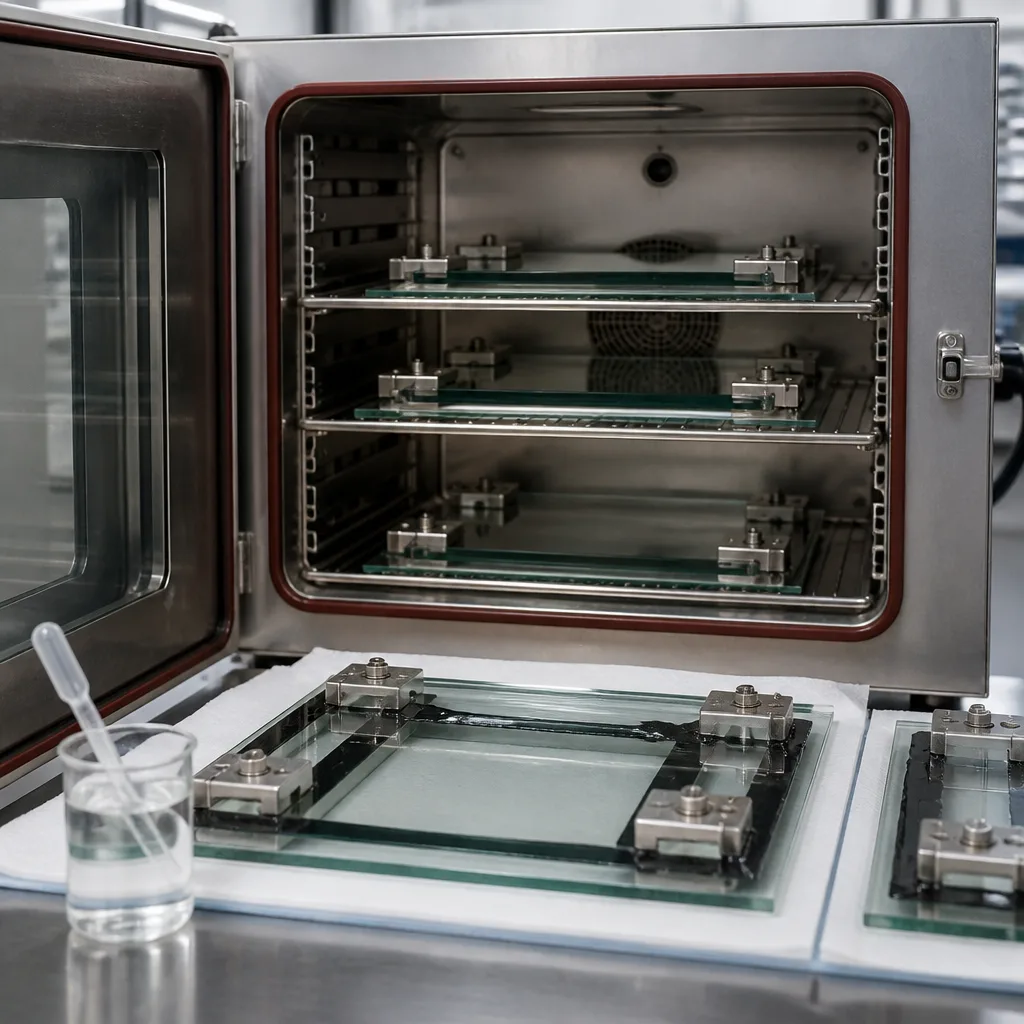
This test method involves observing the following three parameters:
In structurally sealed glass systems, the sealant acts as a structural adhesive and can also serve as a primary airtight seal. As a structural adhesive, the integrity of the adhesive bond is critical.
Changes in color and adhesion after exposure are two criteria that can be used to determine the system's compatibility. Experience has shown that accessories that cause loss of adhesion or discoloration in this test method may also cause these events in real-world use.
The ASTM C1087 standard is particularly important because a structural glazing system does not consist solely of sealant and glass. Materials such as gaskets, spacers, shims, and insertion blocks come into contact with the sealant and can affect its appearance and adhesion. This standard provides a laboratory screening procedure to identify potentially harmful interactions of materials before they are used in an actual glazing system.
The primary purpose of the ASTM C1087 standard is to determine whether liquid-applied structural glazing paste is compatible with accessory materials after exposure to heat and ultraviolet (UV) radiation. The test focuses on three main effects:
These observations help determine whether an accessory negatively affects the performance or appearance of the paste.
The ASTM C1087 standard specifically addresses accessories that can be incorporated into structural glazing systems. Examples include:
The compatibility of these materials is important because the components may chemically or physically interact with the sealant during use.
ASTM C1087 is essentially an accelerated laboratory screening test. Test setups are prepared using glass, structural sealant, and accessory material being evaluated. Samples are then exposed to high temperatures and ultraviolet radiation. The exposure is designed to reveal discrepancies that might not be immediately apparent under normal laboratory conditions. After exposure, samples are examined for the following changes:
The results are compared with appropriate control samples to determine whether the accessory adversely affects the sealing material. Previous versions of the method describe exposing samples to ultraviolet radiation, with the radiation reaching the sealing material directly in one sample and passing through the glass in the other.
In structural sealing glazing, the sealant can act as a structural adhesive and also provide primary airtightness. Consequently, maintaining the integrity of the adhesive bond is critical for the glazing system.
An accessory that causes adhesion failure could potentially reduce the reliability of the glazing system. Accessories that cause adhesion loss or discoloration during this test may lead to similar problems in actual use.
The evaluation criteria are as follows:
The ASTM C1087 standard is important because structural glass systems involve multiple materials that must work together over long service lives. A sealant may have excellent properties when tested alone, but may experience problems when it comes into contact with a specific gasket, spacer, shim, or set block. Possible problems include:
Manufacturers and designers can identify unsuitable material combinations during the laboratory phase by conducting compatibility tests before installation.
The ASTM C1087 standard applies to:
It is particularly useful during sealant selection, accessory qualification, system development, and quality assurance.
One of the practical benefits of the ASTM C1087 standard is that it supports compatibility decisions between different suppliers and material types. For example, a project might specify a structural silicone sealant along with a particular glazing gasket and mounting block. Even if all three products individually meet their own material specifications, their combination may not necessarily be compatible. This standard provides a controlled method for screening such combinations.
However, the ASTM C1087 standard should be considered a laboratory screening procedure rather than a complete estimate of field performance. Passing the test does not mean that every possible environmental condition or long-term service condition has been reproduced. Other factors such as joint design, assembly quality, substrate preparation, sealant chemistry, environmental exposure, and mechanical loading can affect actual performance. Therefore, this standard is often considered a component of a broader glazing system qualification program.
In conclusion, the ASTM C1087 standard provides a standardized method for checking the compatibility of liquid-applied structural glass sealants with accessories such as gaskets, spacers, shims, and mounting blocks. Its primary purpose is to detect changes in the sealant's color and, most importantly, any potential loss of adhesion following exposure to heat and UV light.
For many years, our organization, with its competent and experienced team, has been understanding the needs of its clients, providing the advanced testing services they require, and assisting them in the establishment, implementation, and improvement of management systems. Within this framework, we also provide testing services in accordance with the ASTM C1087 standard.
To get an appointment, to get more detailed information or to request an evaluation, you can ask us to fill in our form and reach you.

