

The European standard “EN 13687 Products and systems for the protection and repair of concrete structures - Test methods - Determination of thermal compatibility” consists of the following subsections published under the same title:
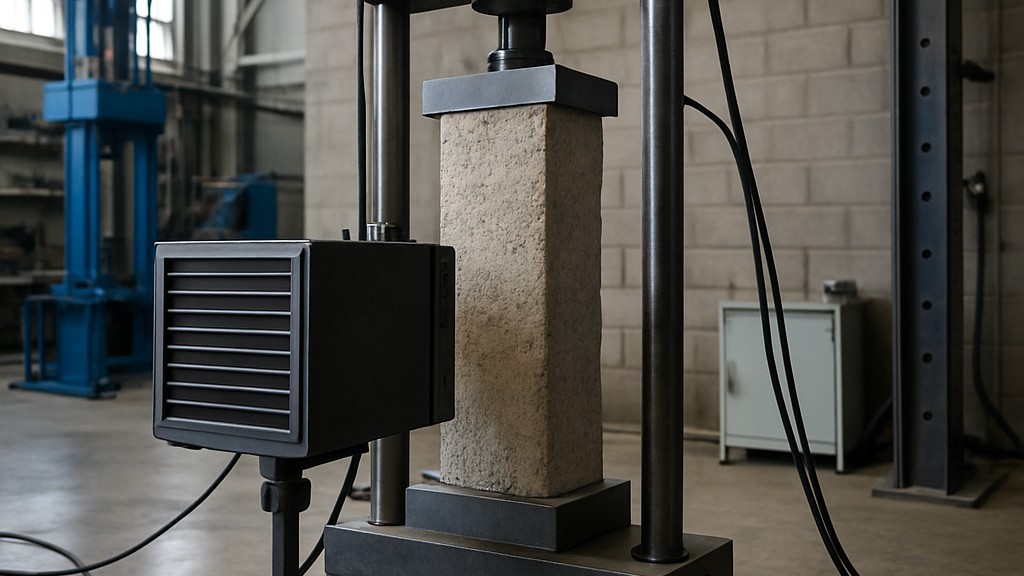
A layer of plaster, mortar, concrete, or surface protection system (or both) is applied to a reference concrete test specimen prepared in accordance with EN 1766. After curing, the test specimen is subjected to a freeze-thaw thermal shock cycle from 21°C plus/minus 2°C to minus 15°C plus/minus 2°C, including immersion in a saturated deicing salt solution. Following the temperature cycle, visible defects are recorded, and the adhesion of the repair product or system to the concrete substrate is determined by tensile testing.
A layer of a repair product or system or surface protection system is applied to a reference concrete test specimen prepared in accordance with EN 1766. After curing, the test specimen is subjected to a thermal shock cycle between 60°C and 12°C. Following the temperature cycle, visible defects are recorded, and the adhesion of the repair product or system to the concrete substrate is determined by tensile testing.
The surface protection system is applied to a reference concrete test specimen prepared in accordance with EN 1766. After the surface protection system has cured, the test specimen is subjected to freeze-thaw cycles with water immersion between 60°C plus/minus 2°C and minus 15°C plus/minus 2°C, but excluding immersion in saturated deicing salt solution. Following temperature cycling, visible defects are recorded, and the adhesion of the surface protection system to the concrete substrate is determined by tensile testing (in accordance with EN 1542). Thermal cycling is performed continuously in a programmable climate chamber or manually using a chiller, water bath, and oven.
A layer of repair mortar, mortar and concrete, or surface protection system is applied to a reference concrete test specimen prepared in accordance with EN 1766. After curing, the test specimen is subjected to a freeze-thaw cycle in air at temperatures between 55°C and -25°C. Following the temperature cycle, visible defects (such as cracking, peeling, chalking) are recorded, and the adhesion of the repair product or system to the concrete substrate is determined by tensile testing (in accordance with EN 1542).
Three concrete test specimens are required for each test, one of which serves as a reference specimen. Before application of the repair product or system, all materials must be stored for at least 24 hours in a standard laboratory climate (21°C plus/minus 2°C and 60% plus/minus 10% relative humidity). The repair mortar, grout, concrete, or surface protection system must be prepared and applied to the concrete test specimens in a standard laboratory climate in accordance with the manufacturer's instructions or in an alternative environment specified for the intended use. After application of the repair product or system, the specimens must be cured in accordance with the requirements of Annex A.
The test method consists of applying a layer of surface protection system prepared in accordance with EN 1766. After curing, the test sample is subjected to a temperature shock, achieved by applying hot asphalt or bitumen or chemicals. After thermal loading, visible defects are recorded, and the adhesion of the surface protection system is determined by tensile testing (in accordance with EN 1542).
The application of the surface protection system to two concrete substrates must be carried out under standard climatic conditions or in alternative environments as specified for the intended use. Two test pieces are required for each test, one of which serves as the reference test piece. The sides of the concrete slab specimens placed under the casting should be sandblasted in accordance with EN 1766, cured according to this standard (dry conditioning), and then the surface protection system should be prepared and applied in accordance with the manufacturer's instructions. The tested coating should be cured in accordance with the manufacturer's instructions at a temperature of 21°C (plus/minus 2°C) and a relative humidity of 60% (plus/minus 10%).
Our organization, which has been supporting businesses across all sectors for years through a wide range of testing, measurement, analysis, and evaluation activities, has a strong team of employees who closely follow global developments in science and technology and are constantly improving themselves. In this context, we also provide testing services in accordance with the standard "EN 13687 Products and systems for the protection and repair of concrete structures - Test methods - Determination of thermal compatibility."
To get an appointment, to get more detailed information or to request an evaluation, you can ask us to fill in our form and reach you.

