GOST 12.1.044-89 System of Occupational Safety Standards - Fire and Explosion Hazard of Substances and Materials - Nomenclature of Indices and Methods of Their Determination
The standard “GOST 12.1.044-89 Occupational safety standards system - Fire and explosion hazard of substances and materials - Naming of indices and methods of their determination,” published by the Eurasian Council for Standardization, Metrology and Certification, a regional standards organization operating under the auspices of the Commonwealth of Independent States, describes the requirements for basic materials, chemical compounds, and their mixtures in various aggregate forms and combinations, including polymeric and composite materials, used in various branches of the national economy. However, this standard does not apply to explosive and radioactive substances and materials.
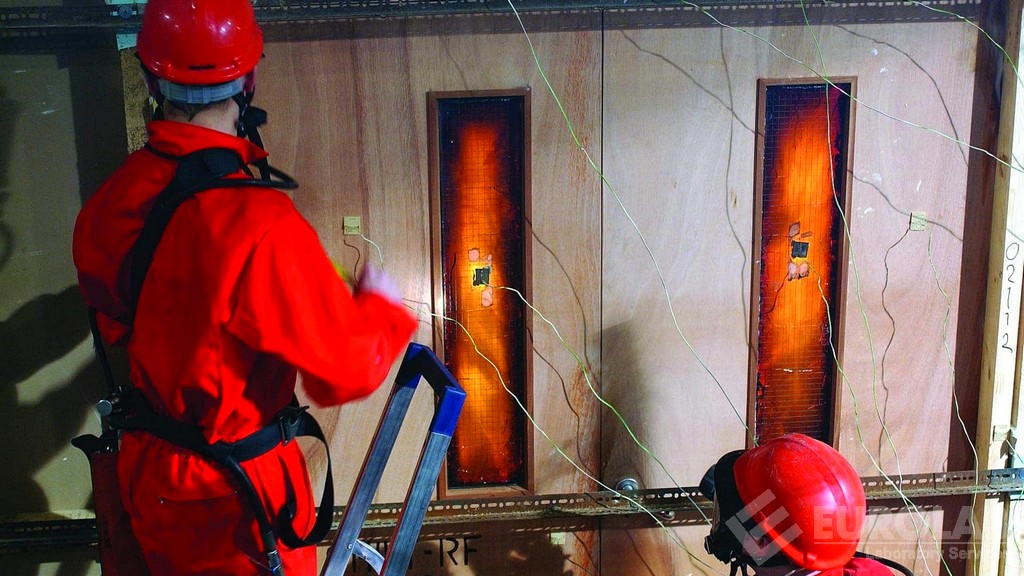
This standard contains the range of indicators for fire and explosion hazard of substances and materials and methods for their determination.
Methods for determining indicators of fire and explosion hazard of substances and materials are given in the annexes of the standard as follows:
- Protocol for determination of fire and explosion hazard indices for substances and materials (Annex 1 Proposed)
- Techniques for calculating the flash point of liquids (Annex 2 Recommended)
- Techniques for calculating the flash point of liquids (Annex 3 Recommended)
- Techniques for calculating the concentration limits of flame propagation in mixtures of gas or vapour and air (Annex 4 Normative)
- Design of dispersible substance sprayer for determination of explosion indicators for dust-air mixtures (Annex 5 Recommended)
- Techniques for calculating the temperature limits of flame spread (Annex 6 Recommended)
- Techniques for experimental determination of the normal speed of flame propagation in mixtures of gas or vapour and air (Annex 7 Recommended)
- Technique for the experimental determination of the maximum explosion pressure and the maximum explosion pressure rise rate of mixtures of gas or vapour and air (Annex 8 Recommended)
- Definition of standard sample for the technique of determining the smoke emission coefficient (Annex 9 Normative)
- Description of the mock-up of the standard sample for the technique of determining the flame spread index (Annex 10 Normative)
- Technique for calculating the maximum explosion pressure of mixtures of gas or vapour and air (Annex 11 Recommended)
- Techniques for calculating the explosion pressure rise rate of mixtures of gas or vapour and air (Annex 12 Recommended)
- Technique for the experimental determination of thermal autoignition conditions of solids and materials (Annex 13 Proposed)
- Technique for experimental determination of minimum ignition energy for dust-air mixtures (Annex 14 Proposed)
- Technique for determining the minimum ignition energy Maximum rate of increase of explosion pressure of dust-air mixtures (Annex 15 Recommended)
The test methods described in the Russian state standard GOST 12.1.044-89 include:
- Flammability
- Flash point
- Ignition point
- Autoignition point
- Concentration limits of flame spread
- Temperature limits of flame spread
- Smoldering point
- Thermal autoignition conditions
- Minimum ignition energy
- Oxygen index
- Ability to explode and burn when interacting with water, air, oxygen, etc.
- Normal flame spread speed
- Burning rate
- Smoke evolution coefficient
- Flame spread index
- Toxicity indicator of combustion products of polymeric materials
- Minimum retardant concentration of a retarder
- Minimum explosive
- Minimum explosive content of oxygen
- Maximum burst pressure
- Explosion pressure rise rate
Fire and explosion hazard of substances and materials is determined by indicators, the selection of which depends on the aggregate state of the substance (material) and the conditions of its use. Classification of these indicators has been established and regulatory requirements have been introduced for them, therefore methods for determining indicators for building materials are used.
For the purposes of this standard,
- Flammability group is a classification characteristic of the ability of substances and materials to burn.
- Combustion is an exothermic reaction that occurs under progressive self-accelerating conditions.
Based on flammability, substances and materials are divided into three groups:
- Non-flammable: Substances and materials that cannot burn in air. Non-flammable substances can be explosive in a fire (for example, oxidizers or substances that release flammable products when interacting with water, air, oxygen or each other).
- Low flammability (difficult to burn): Substances and materials that can burn in air when exposed to an ignition source, but cannot burn on their own after being removed.
- Flammable: Substances and materials that can ignite spontaneously, as well as when exposed to an ignition source and independently removed. Flammable liquids with a flash point not exceeding 61 degrees in a closed crucible or 66 degrees in an open crucible, phlegmatized mixtures that do not flash in a closed crucible are classified as flammable liquids with a flash point of 0,100. Temperatures not exceeding 28 degrees are called particularly dangerous.
Among the numerous tests, measurements, analyses and evaluations carried out for enterprises in various sectors, our organization, with its trained and expert staff and advanced technological equipment, also provides testing services defined in the standard “GOST 12.1.044-89 Occupational safety standards system - Fire and explosion hazard of substances and materials - Naming of indices and methods for their determination”.



