

The European standard “EN 314 Plywood - Binding quality” consists of the following subsections published under the same title:
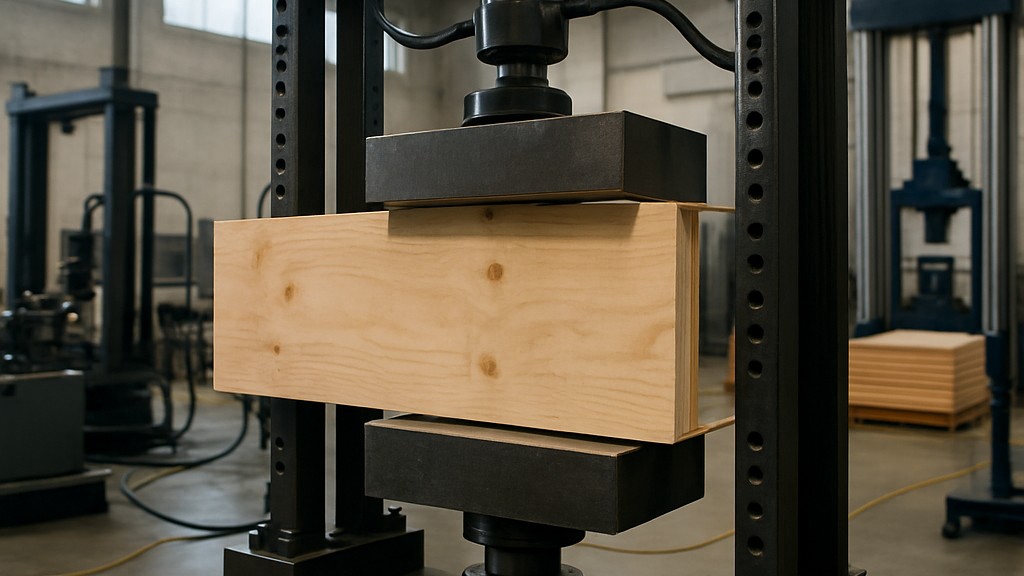
Sampling should be carried out according to the standard “EN 326-1 Wood-based panels - Sampling, cutting and inspection - Part 1: Sampling and cutting of test pieces and expression of test results”. Test pieces must be free from any manufacturing defects or characteristics inherent in the wood at the test site (EN 635-1 standard).
Veneer plywood test pieces should be prepared as shown in the figure. Each test piece should be cut so that the grain direction of the layer between the bond lines under test is perpendicular to the length of the test piece. The test pieces should be prepared and notched to allow inspection of each bond line of the panel. Saw cuts should extend to the layer between the bond lines under test, as shown in the figure. Test pieces of the full panel thickness can be used for veneer plywood with 3 to 9 layers. For panels consisting of more than 9 layers, excess layers can be removed by planing, sawing, or sanding. A similar procedure can be used to determine the bond quality of blockboard, laminated board, or thin-surface veneered plywood. Saw cuts should extend to one of the layers between the surface layers and the core layers between the bond lines under test, as shown in the figures.
EN 314-1 is a standard that specifies test procedures used to assess the bonding quality of plywood. It is part of the broader EN 314 series, which focuses on ensuring that plywood products meet performance and safety standards, particularly with regard to the strength and durability of their glued joints.
The primary purpose of this standard is to define how to test the bonding performance of plywood panels produced by bonding wood veneer layers. Because bond quality is crucial to the structural integrity and long-term use of plywood, standard test methods are necessary to assess whether adhesive bonds perform as expected under specified conditions.
The EN 314-1 standard specifies test methods but not performance requirements. The key components of this standard are:
The EN 314-1 standard is widely used in the following areas:
As a result, the EN 314-1 standard provides reliable and repeatable test methods, helping to ensure:
This standard is a critical standard that defines the bonding quality requirements for plywood, ensuring its reliable performance under a variety of environmental and structural conditions. This standard is particularly important in the construction, furniture, and packaging industries, where the durability and structural integrity of glued wood products are crucial. This standard includes minimum performance criteria for glue bonds in plywood. It complements EN 314-1, which outlines test methods for determining bond quality. Together, these standards ensure that plywood products meet performance expectations for various uses.
The EN 314-2 standard applies to:
This standard divides plywood into three bonding classes depending on the environment in which the material will be used:
The binding quality of plywood is evaluated according to:
Each grade requires different strength thresholds and percentage wood failure. Adhesives must maintain strong bond integrity after exposure to relevant conditions, such as water immersion, heating, or soaking and drying cycles.
The EN 314-2 standard is considered important for the following reasons:
Consequently, EN 314-2 is the fundamental standard for assessing and ensuring the bonding quality of plywood in Europe. It promotes the use of safe, reliable, and suitable materials in construction and manufacturing by setting clear requirements based on the intended use environment. Manufacturers and users rely on this standard to ensure that their plywood products meet both technical and legal requirements.
Our organization, which has been supporting businesses across all sectors for years through a wide range of testing, measurement, analysis, and evaluation activities, has a strong team of employees who closely follow global developments in science and technology and are constantly improving themselves. In this context, we also provide testing services to businesses in accordance with EN 314 Plywood - Fastening Quality standards.
To get an appointment, to get more detailed information or to request an evaluation, you can ask us to fill in our form and reach you.

