

EN ISO 29465 Thermal insulation products for building applications - Determination of length and width," a European-based standard later published by the International Organization for Standardization (ISO), describes the equipment and procedures required to determine the length and width of full-size products. This standard applies to thermal insulation products.
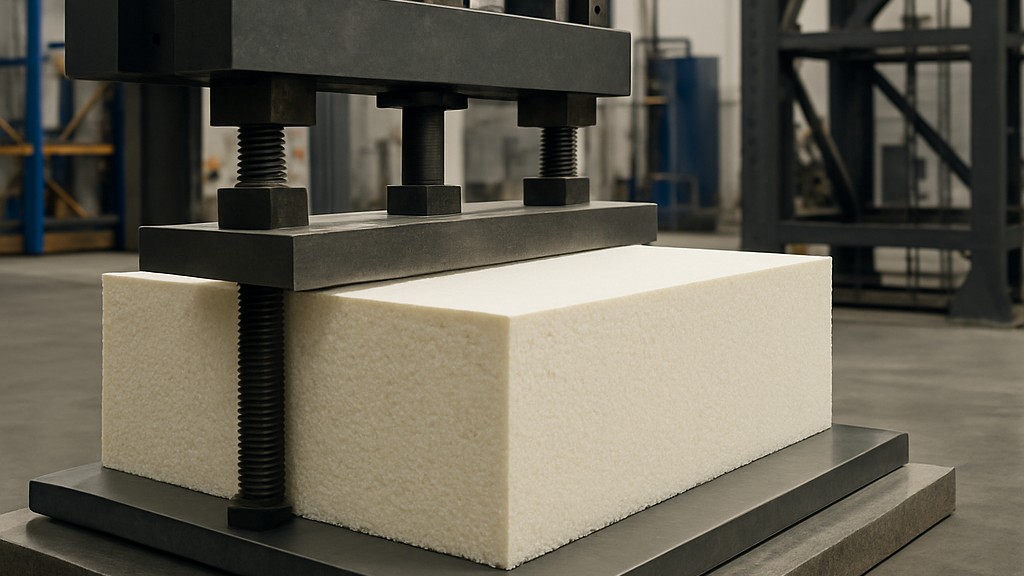
For the purposes of this standard, length refers to the longer linear dimension of the major surface of the test specimen and width refers to the shorter linear dimension of the major surface of the test specimen measured perpendicular to the length.
In principle, the sample is placed on a flat surface and a direct linear measurement is made with a metal ruler or metal strip. The test sample should be the full-size version of the product. The number of test samples should be as specified in the relevant product standard. In the absence of a product standard or other technical specification, the number of samples can be agreed upon between the parties.
Before starting the test, the samples must be conditioned. Test samples must be stored in a temperature of 23°C (+/- 5°C) for at least 6 hours. In case of disagreement, they must be stored at 23°C (+/- 2°C) and 50% (+/- 5%) relative humidity for the period specified in the relevant product standard. Different conditioning and testing conditions may apply in tropical climates. In this case, the conditions must be 27°C (+/- 2°C) and 65% (+/- 5%) relative humidity, and must be clearly stated in the test report.
Tests must be conducted at 23 degrees Celsius plus/minus 5 degrees Celsius. In case of disagreement, they must be conducted at 23 degrees Celsius plus/minus 2 degrees Celsius and 50 percent relative humidity plus/minus 5 percent. Different conditioning and testing conditions may apply in tropical climates. In such cases, the conditions must be 27 degrees Celsius plus/minus 2 degrees Celsius and 65 percent relative humidity plus/minus 5 percent, and must be clearly stated in the test report.
At the beginning of the test, the sample is carefully placed on a flat surface. For test samples with dimensions of 1,5 m or less, a length measurement and a width measurement are taken at the positions shown in the figure. For test samples longer than 1,5 m, an additional width measurement is taken for each additional metre of length, as shown in the figure, up to a maximum of five measurements. In this case, the value is the average of all width measurements. For test samples wider than 1,5 m, an additional length measurement is taken for each additional metre of width, with measurements spaced evenly apart. All lengths and widths should be read to the nearest millimetre. Length and width are expressed in millimetres as the average value for each sample, rounded to the nearest millimetre. For products 3 m or longer, the average length value shall be reported rounded to the nearest 5 mm.
In the world of sustainable construction and energy-efficient building, thermal insulation plays a crucial role. Proper insulation not only improves comfort but also significantly reduces energy consumption for heating and cooling. International standards are essential for ensuring consistency and reliability in the performance of insulation materials. One such standard is EN ISO 29465, which provides a standardized method for measuring the physical dimensions of these materials. Adopted across Europe and aligned with global norms, this standard helps manufacturers, builders, and regulators precisely verify product specifications. This standard contributes to quality control in the construction industry by ensuring measurements are accurate, repeatable, and globally comparable.
EN ISO 29465 is a technical standard focusing on test and measurement methods for thermal performance and energy use in built environments. It outlines the equipment and procedures required to determine the length and width of full-size thermal insulation products, such as rigid boards, flexible mats, or rolls, for use in walls, roofs, and floors.
This standard is applicable to a wide range of insulation materials, including those made from mineral wool, foam plastic, or natural fibers. By standardizing these measurements, the standard prevents discrepancies that can arise from different measurement techniques and ensures that products meet the declared dimensions for design and installation purposes. This standard is particularly important in European Union countries, where building regulations, such as the Energy Performance of Buildings Directive (EPBD), emphasize the correct material properties to achieve energy efficiency targets.
The scope of EN ISO 29465 is narrow but crucial: it applies only to the determination of length and width for full-size thermal insulation products. It does not cover thickness or the linear dimensions of smaller test specimens. These are addressed in ISO 29466 and ISO 29768. This modular approach allows the standards to complement each other within the ISO 29460 series of thermal insulation testing standards.
The essential requirements of this standard are:
These elements ensure that measurements are objective and repeatable, which is vital for quality assurance in production.
Accurate dimensional measurements, as defined by EN ISO 29465, are more than just a technical detail; they support confidence in building materials. In construction, even small deviations in length or width can create gaps in insulation layers, reducing thermal efficiency and increasing energy costs. For example, a 1 percent error on a 2-meter-wide roll can cause significant coverage problems across large areas.
This standard supports legal compliance, such as CE marking for building products under the EU Construction Products Directive (CPR). It also aids in life cycle assessments, where precise dimensions contribute to material waste and embodied carbon accounting. Furthermore, because certifications based on this standard are internationally recognized, it promotes fair trade by providing a level playing field for global suppliers.
As a result, the EN ISO 29465 standard has had a profound impact on the thermal insulation industry. By providing a clear and reliable method for measuring length and width, it ensures that buildings are not only structurally sound but also energy efficient and sustainable. As the construction industry grapples with climate challenges, these standards will continue to evolve, fostering quality and innovation.
Our organization, which has been operating for many years and meticulously follows global developments in science and technology, employs a team of experienced professionals and a broad infrastructure to conduct testing, measurement, and analysis in a wide range of areas for businesses across all sectors. In this context, we also provide testing services in accordance with the EN ISO 29465 standard for "Thermal insulation products for building applications - Determination of length and width."
To get an appointment, to get more detailed information or to request an evaluation, you can ask us to fill in our form and reach you.

