ETAG 034 Exterior Cladding Kits Guide
The standard “ETAG 034 Guide to External Cladding Kits”, developed by the European Organisation for Technical Approvals (EOTA), covers in particular external cladding kits, cladding components, fixing systems, subframes, anchors and associated accessories that form a complete system.
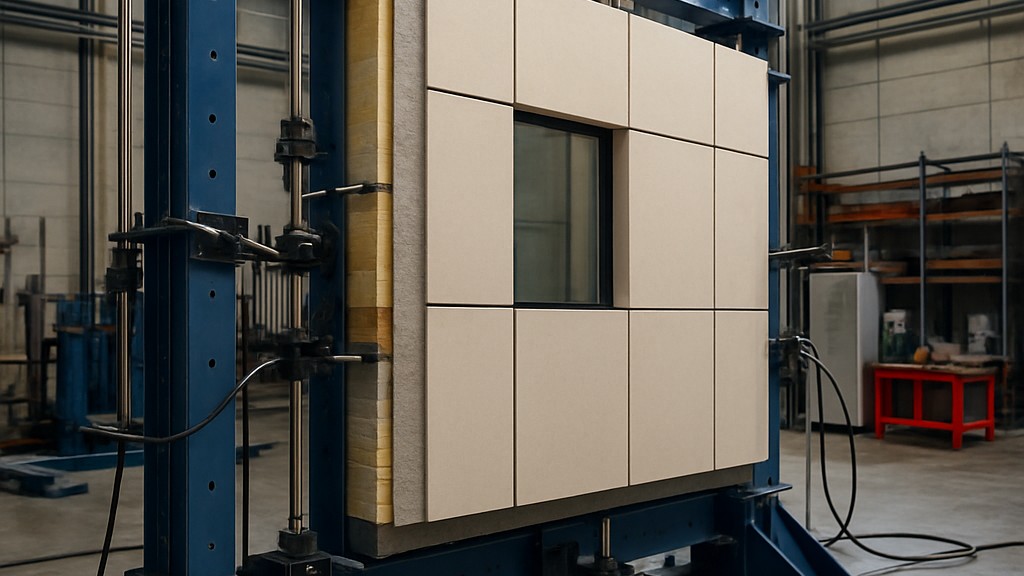
The European construction industry places great importance on harmonized standards to ensure the safety, durability, and performance of building products. One of these fundamental guidelines is the ETAG 034 standard. This guideline provides a framework for European technical approvals for exterior cladding kits. These kits are widely used in modern construction to improve building aesthetics, thermal insulation, and weather protection.
Rather than testing just one product, the ETAG 034 guide evaluates the performance of the entire kit, as the safety and durability of the coating depends on how all the parts work together.
This guide applies to a variety of exterior cladding kits, such as:
- Ventilated cladding systems (with open air spaces behind the panels)
- Non-ventilated coverings (directly glued or fixed to walls)
- Kits made of metal, stone, ceramic, glass, composite or polymeric panels
This guide specifies requirements and assessment methods for:
- Mechanical resistance and stability: Ensures that the coating is resistant to wind loads, impact and its own weight.
- Safety in case of fire: Classification of reaction to fire performance and fire resistance.
- Hygiene, health and environment: Addresses emissions, waterproofing and resistance to biological growth.
- Safety in use: Avoid falling hazards or sharp edges.
- Durability and serviceability: Provides long-term performance against UV rays, freeze-thaw cycles, moisture and corrosion.
The ETAG 034 guideline is considered important for the following reasons:
- Performance assurance: Ensures that coating kits are tested as a whole, not just individual components.
- Safety: Provides assurance that coatings are resistant to environmental stresses, wind loads and fire risks.
- Market access in Europe: Manufacturers can obtain a European technical assessment (ETA) based on the ETAG 034 guideline, allowing them to affix the CE marking and sell their products throughout the EU.
- Innovation-friendly: European technical approval guidelines (ETAG) allow flexibility in design and materials, so manufacturers can offer innovative solutions without adhering to a rigid standard.
The ETAG 034 manual includes detailed testing procedures such as:
- Wind resistance tests (positive and negative pressure cycles)
- Impact resistance tests
- Water penetration and freeze-thaw resistance
- Fire classification tests (EN 13501-1)
- Durability assessments (UV exposure, corrosion resistance, moisture absorption)
The assessment ensures that kits are fit for purpose throughout their intended service life.
The ETAG 034 guideline is being replaced by the European Assessment Documents under the Construction Products Directive (CPR). However, many of its principles and testing requirements continue to be used in modern assessments for external cladding.
As a result, the ETAG 034 guideline has played a significant role in harmonizing the assessment of exterior cladding kits across Europe. By focusing on system-level performance, it has led to greater safety, durability, and quality in modern façade design. While it has now transitioned to the European Assessment Documents framework, its legacy remains a fundamental element in the certification and CE marking process for cladding systems.
The basic performance criteria and test methods of the ETAG 034 guideline are as follows:
- Mechanical resistance and stability: Must withstand wind loads, dead loads and impact without failureThe following test methods are applied:
- Wind resistance test (pressure / suction cycles)
- Impact resistance test (hard/soft body impact)
- Tensile / anchorage strength tests
- Safety in case of fire: Ensuring safe fire behavior (reaction and resistance). The following test methods are applied:
- EN 13501-1 Fire classification of construction products and building elements - Part 1: Classification using data from reaction to fire tests
- Fire resistance testing of the cladding kit/system
- Hygiene, health and environment: No harmful emissions, no moisture ingress. The following test methods are applied:
- Water penetration test
- Freeze-thaw resistance
- Resistance to biological growth (mold, algae)
- Safety in use: Avoid hazards such as falling panels, sharp edges, or instability. The following test methods are applied:
- Fastening system reliability tests
- Anchor safety tests
- Dimensional stability checks
- Durability and serviceability: Must maintain long-term performance under environmental stresses. The following test methods are applied:
- UV aging tests
- Thermal cycle
- Moisture absorption
- Corrosion resistance of metals
- Adhesion / bond strength tests
In brief, in the ETAG 034 guideline, exterior cladding kits are divided into two main sections and several subsections depending on the type of cladding:
- Part 1 General: This part contains the general rules that apply to all exterior cladding kits. It defines the scope, terminology, system components, and general requirements. It includes the essential requirements of the Construction Products Directive (CPR). It lists general assessment methods (e.g., structural safety, fire, hygiene, durability).
- Section 2 Specific sections: This section is divided into different subsections, each dedicated to a specific type of material or system. Examples include:
- Ventilated cladding kits: Focus on systems with an air gap between the cladding and the wall.
- Glued cladding kits: For kits where the panels are glued directly to the wall (without ventilation gap).
- Metal cladding kits: Contains specific requirements for aluminum, steel, or other metal panels.
- Stone cladding kits: Cover natural stone, marble and granite and have specific durability and fixing criteria.
- Ceramic coating kits: For ceramic tiles or panels, freeze-thaw and adhesion performance are taken into account.
- Glazing kits: Address mechanical strength, breakage safety and fixing systems for glass facades.
- Polymer-based coating kits: For coatings made of composite, plastic or resin-based materials.
The basic components of a ventilated façade within the scope of ETAG 034 are:
- Covering elements: The visible outer layer that provides weather resistance and aesthetics.
- Fastening elements: Mechanical anchors and supports that secure the cladding without the need for adhesives.
- Substructure: Rails, brackets or grilles that create air spaces for ventilation.
- Thermal insulation: Optional layers to increase energy performance.
This holistic approach addresses incompatibilities such as different coefficients of thermal expansion or material corrosion that could compromise structural integrity.
Ultimately, the ETAG 034 guideline is more than just a standard; it's a cornerstone of safe and innovative façade engineering. While it has since been amended, its principles remain, guiding the development of building standards. As buildings become larger and more environmentally friendly, this guideline serves as a reminder that technical approval is not just a regulatory element; it's also a commitment to quality and safety. For manufacturers aiming for CE marking, it's crucial to consult the original guideline or its successor. Essentially, this guideline ensures that façades are resilient to time and weather conditions.
Our organization, which has been serving for many years and meticulously follows global developments in science and technology, conducts testing, measurement, and analysis in a wide range of areas with a skilled team and extensive infrastructure for businesses in every sector. In this context, we also provide testing services in accordance with the "ETAG 034 Exterior Cladding Kits Guide" standard.



