

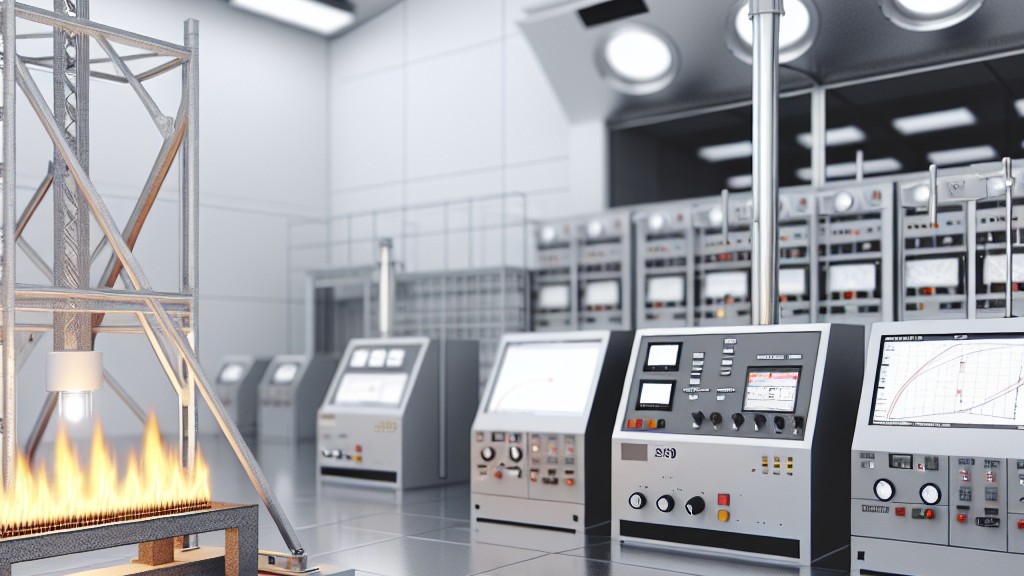
The standard "UL 1709 Rapid rise fire tests of protective materials for structural steel" developed by Underwriter Laboratories (UL) describes a full-scale test method for measuring the thermal resistance of protective materials, systems, or structures to rapid rise fires. The first part of this standard includes furnace calibration and furnace control requirements.
As fire safety becomes more critical than ever, it is important to follow published test methodology closely and to test products and systems consistently and accurately to maintain the desired fire protection. Certification by an accredited organization provides confidence and trust in the outcome. This provides confidence in the suitability of the product. This is true for all test methods, but is even more critical when the application is in a high-rise environment such as a petrochemical plant or high-rise building. Any deviation from the approved individual design details will invalidate the fire performance and will not provide the necessary protection that can be critical to life safety.
Robust certification processes that detail acceptable design and follow accurate testing provide assurance that the product and system under certification will perform as intended. Designs must be closely monitored to ensure the necessary fire safety.
The first editions of this standard for testing protection materials for structural steel in high-rise fires such as petrochemical plants took a fairly simple approach and were silent on the number of samples, size, and duration. Critically, the standard specified the calibration method required for the test furnace to help ensure consistency across laboratories. This standard was initially developed to provide appropriate fire test requirements for materials exposed to the high-rise temperatures typically observed in high-intensity, hydrocarbon-based fires. The standard, which has undergone several updates, still includes the calibration requirement but has been enhanced to include protection tests for structural beams and a way to evaluate various steel sizes and shapes and over various time periods.
The UL 1709 standard continues to be adopted as the method for evaluating the fire protection of structural steel, and protective system manufacturers are increasingly adopting it as the primary hydrocarbon testing method to demonstrate compliance of their products.
The current method for calibrating the furnace requires a single calibration column to be placed in the centre of the furnace chamber. This is intended to mirror what will happen in the next type of test, thus exposing the tested sample to the same thermal dose as the calibration column and providing a high level of consistency in the evaluation of the protection system from test to test.
It is not intended to introduce more than one sample into the furnace at a time, as this would result in one or more sides of the columns being shielded from some of the heat in the furnace chamber, thus not repeating the intended time-temperature and heat flux exposure to the sample. This practice could also result in some columns being closer to the walls of the furnace chamber, which could result in a lower thermal dose to the protection system being evaluated.
According to UL 1709, the furnace should be calibrated using eight thermocouples at a maximum distance of 102 millimeters from the exposed surface of the specimen. This means eight thermocouples per column to ensure that the furnace temperature is controlled in such a way that the test specimen is exposed to the intended time-temperature curve. These thermocouples should also be distributed evenly throughout the furnace to ensure that the thermal dose is evaluated evenly during the test. Uneven distribution of thermocouples within the furnace chamber can cause a temperature gradient, causing uneven heating of the columns.
Protective products that are typically tested and certified to UL 1709 are placed in harsh environments when put into practice. Therefore, it is mandatory for all protective systems that aim to be certified to UL 1709 to undergo durability tests that simulate these harsh environments. The durability test is performed in accordance with UL 2431, the safety standard for durability of fire-resistant coatings and materials, and the protective systems must comply with all requirements for material classification category IA outdoor, heavy industry as specified in the standard.
The UL 1709 standard is increasingly being adopted. This standard is the right standard to use to evaluate protective systems for structural steel.
To ensure that the UL 1709 standard remains relevant to the needs of the petrochemical industry and continues to adequately address known safety risks, the standard is being revised and also creates a more holistic certification category for fire resistance of structural steel against hydrocarbon fires.
In summary, the UL 1709 standard describes test methods for two types of exposure:
Our organization, which has been trying to support businesses from every sector with its testing, measurement, analysis and evaluation studies carried out in a wide range for years, has a strong staff that closely follows the developments in the world in the field of science and technology and constantly improves itself. In this context, testing services in accordance with the "UL 1709 Rapid rise fire tests of protective materials for structural steel" standard are also provided to businesses.
To get an appointment, to get more detailed information or to request an evaluation, you can ask us to fill in our form and reach you.

