

A European standard, “EN 13364 Natural stone test methods - Determination of the breaking load in the dowel hole”, describes a test method for determining the breaking load in the dowel hole of natural stones used as coating or lining in structures. This test, in principle, consists of applying a force perpendicular to the surface of the sample by means of a dowel previously placed in a hole drilled on one side of the sample and measuring the breaking load of the sample.
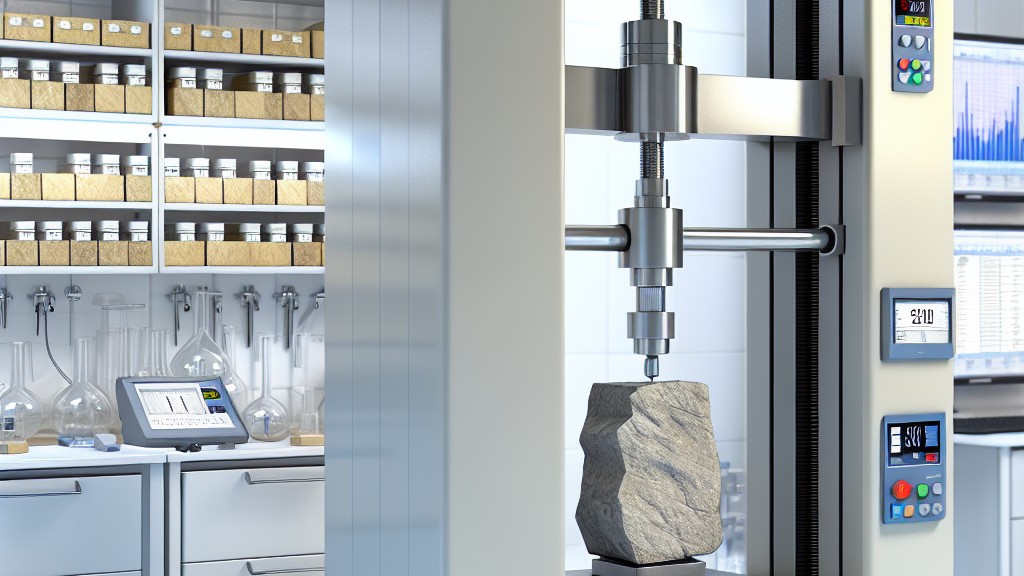
The main equipment used in these tests includes:
Sampling is not the responsibility of the testing laboratory unless specifically requested. The location of any bedding or anisotropy should be shown by at least two parallel lines on each sample.
Tests can be performed as a diagnostic test or a technological test:
The minimum number of test specimens depends on the presence of planes of anisotropy. If the stone does not show planes of anisotropy, 10 Type 0 tests should be performed on three specimens. If the stone shows planes of anisotropy:
In this standard, the surface quality of the samples is determined as follows:
The dimensions of the samples are determined in this standard as follows:
The dowel hole breaking load value is considered an important design parameter in the installation of natural stones, which are preferred as cladding materials in high-rise buildings, on building facades due to reasons such as their aesthetic appearance, ease of production and assembly, and resistance to external climatic conditions. When the basic mechanical strength values of natural stones to be used as cladding in buildings are known, the dowel hole breaking load values can be determined quickly and reliably using a few equations.
Briefly, samples are tested using a calibrated loading apparatus in accordance with the method described in standard EN 13364, although the test can also be performed in a saturated condition.
Our organization has a strong staff that closely follows the developments in the world in the field of science and technology and constantly improves itself. Among the numerous test, measurement, analysis and evaluation studies provided for businesses in various sectors, there are also test services in accordance with the standard "EN 13364 Natural stone test methods - Determination of breaking load in dowel holes".
To get an appointment, to get more detailed information or to request an evaluation, you can ask us to fill in our form and reach you.

