

Developed by the American Society for Testing and Materials (ASTM), ASTM C568 Standard Specification for Limestone Dimension Stone describes the material properties, physical requirements, and sampling requirements appropriate for selecting limestone for general building and structural purposes. The ASTM C1242 Standard Guide for Selection, Design, and Installation of Dimension Stone Fastening Systems and ASTM C1528/C1528M Standard Guide for Dimension Stone Selection apply to the proper selection and use of limestone dimension stones.
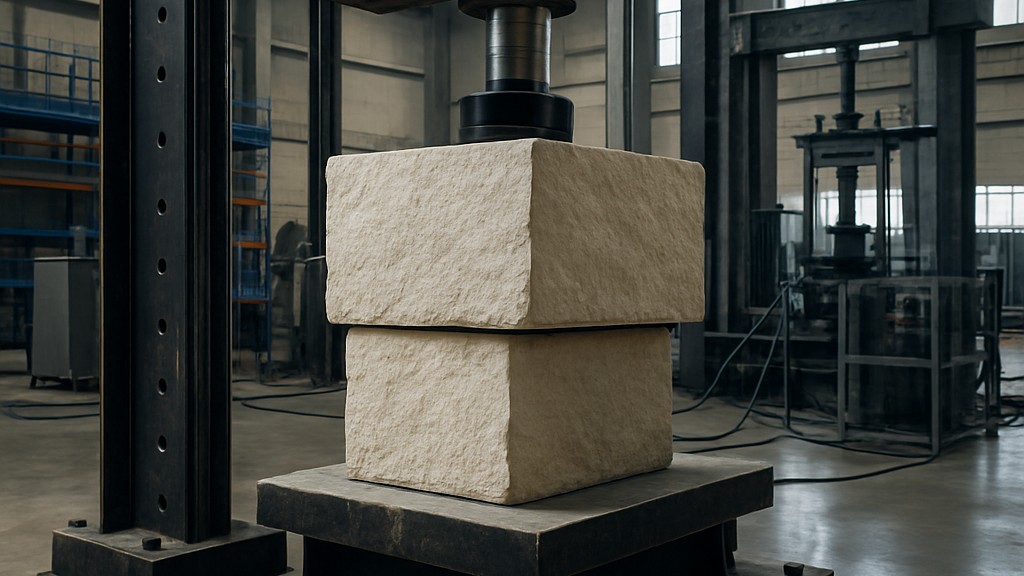
Dimensional limestone includes stone that has been sawn, split or otherwise worked or shaped and, in particular, excludes units of moulded, cast or otherwise artificially assembled composite pieces, as well as broken and crushed stone.
Dimensional limestone is generally divided into three categories that describe limestones with approximate density ranges:
The physical requirements are determined as follows:
When necessary, samples to be tested for the purpose of determining characteristic and physical properties should be representative of the limestone to be used in the tests.
Limestone is a sedimentary rock composed primarily of calcium carbonate and typically found in the form of the minerals calcite or aragonite. Formed by the accumulation and compaction of minerals and organic matter over millions of years, limestone is one of the most abundant and widely used rocks on Earth. Its versatility, accessibility, and unique properties make it a cornerstone in construction, industry, and even environmental applications.
In short, the ASTM C568 standard applies to limestone designed for use as dimension stone, including:
This standard does not cover crushed or broken limestone used for aggregate, road base or other non-dimensional purposes.
ASTM C568 specifies the physical and mechanical properties of limestone cut stone to ensure it meets performance standards. These properties include:
Lower absorption provides better resistance to weathering and moisture damage.
The ASTM C568 standard cites several test methods to verify compliance:
Samples should be tested in both dry and wet conditions to simulate real-world performance.
Limestone's wide range of applications stems from its durability, chemical composition, and global availability, making it indispensable in many industries. Limestone that meets the ASTM C568 standard is commonly used in:
The choice of limestone type depends on the application, environmental influences, and structural requirements. For example, Type I limestone is unsuitable for outdoor use in freeze-thaw climates due to its high porosity, while Type III is ideal for these conditions.
The ASTM C568 standard ensures that limestone dimensioned stone is fit for purpose by providing clear criteria for physical properties and performance. It helps architects, engineers, and builders select appropriate materials and ensure safety, durability, and aesthetic quality. The standard also facilitates consistency within the stone industry by providing a common benchmark for suppliers and users worldwide.
Buyers must verify that the stone meets the specified type and performance criteria for their project. Certification may include third-party testing by accredited laboratories to confirm compliance with the standard.
As a result, ASTM C568 is a critical standard for ensuring the quality and suitability of limestone dimension stone for construction and architectural applications. By dividing limestone into three density-based categories and specifying stringent physical requirements, it provides a reliable framework for selecting durable, high-performance stone. This standard helps maintain the integrity and longevity of limestone in a variety of projects, from large facades to intricate sculptures to functional flooring.
Our organization, which has been operating for many years and meticulously follows global developments in science and technology, conducts testing, measurement, and analysis in a wide range of areas for businesses in every sector with a skilled team and extensive infrastructure. In this context, we also provide testing services in accordance with the ASTM C568 Standard Specification for Limestone Dimensioned Stone.
To get an appointment, to get more detailed information or to request an evaluation, you can ask us to fill in our form and reach you.

