

The standard "EN ISO 5173 Destructive testing of welds in metallic materials - Bend tests", which has its basis in a European standard and was subsequently published by the International Organization for Standardization (ISO), describes the method of performing transverse root, face and side bend tests on test specimens taken from butt welds, clad butt welds (subdivided into welds in clad sheets and clad welds) and clad without butt welds, in order to reveal defects at or near the surface of the test specimen under tension during the bend test or to evaluate ductility.
This standard also specifies the dimensions of the test specimen. It also specifies methods to be used in place of transverse bend tests with a die for welded joints when the base materials, heat-affected zones, or weld metal have significant differences in physical and mechanical properties compared to bending. This standard applies to metallic materials in all product forms with welded joints made by any welding process.
For the purposes of this standard, the following terms and definitions apply:
In principle, when performing the test, a transverse or longitudinal test specimen is taken from a welded joint and subjected to plastic deformation by bending it, without reversing the bending direction, such that one of the surfaces or sections of the welded joint is under tension. The temperature at which the tests are performed should be recorded. The test speed should be constant and, when known, should be recorded. The test should be performed in accordance with one of the methods described in this standard.
The test methods described in EN ISO 5173 are used to evaluate the ductility and strength of welds, specifically the ability of the welded material to undergo plastic deformation without cracking. The main bend test methods are:
These test methods are used in a variety of situations to evaluate the mechanical integrity and strength of welded joints in metallic materials.
Test specimens should be prepared so that the preparation process does not affect the base material or weld metal. The size and preparation of the specimens depend on the material thickness and the type of bend test. Specimens are typically rectangular and machined from a welded joint.
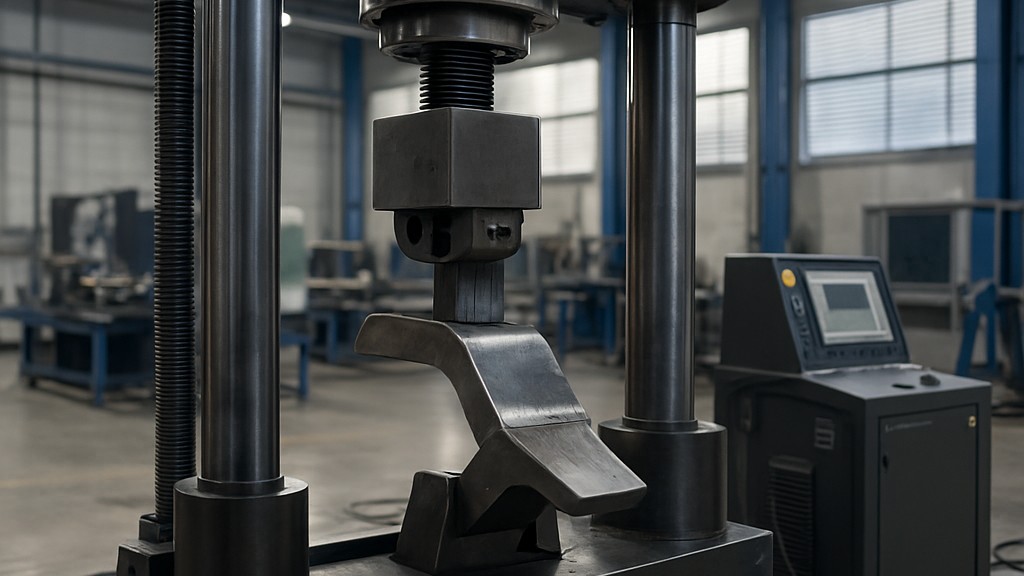
When performing the test, the sample is placed on two supports and bent over a die (mandrel) of a specific diameter. Depending on the method, bending can be performed using a guided bend testing machine or rollers. The bending angle and die diameter are selected based on the material type and thickness.
After bending, the test specimen is examined for surface cracks or other discontinuities. Acceptance criteria are based on the maximum allowable crack sizes or the presence of any obvious defects. Cracks caused by edge effects or pre-existing defects (not related to welding) may be ignored if clearly identified.
In short, the purpose of this standard is to ensure that welded joints have adequate ductility and are free from significant internal or surface defects. It is commonly used in weld qualification testing and quality control of welded products.
Our organization, which has been supporting businesses across all sectors for years through a wide range of testing, measurement, analysis, and evaluation activities, has a strong team of employees who closely follow global developments in science and technology and are constantly improving themselves. In this context, we also provide testing services in accordance with the EN ISO 5173 "Destructive testing on welds in metallic materials - Bend tests" standard.
To get an appointment, to get more detailed information or to request an evaluation, you can ask us to fill in our form and reach you.

