

The standard “ASTM C1243 Standard Test Method for Relative Resistance of Unglazed Ceramic Tiles to Deep Abrasion by a Rotating Disc” published by the American Society for Testing and Materials (ASTM) describes a test method for determining deep abrasion by measuring the volume loss resulting from the abrasion of unglazed ceramic tiles using a rotating disc and abrasive material under specified conditions.
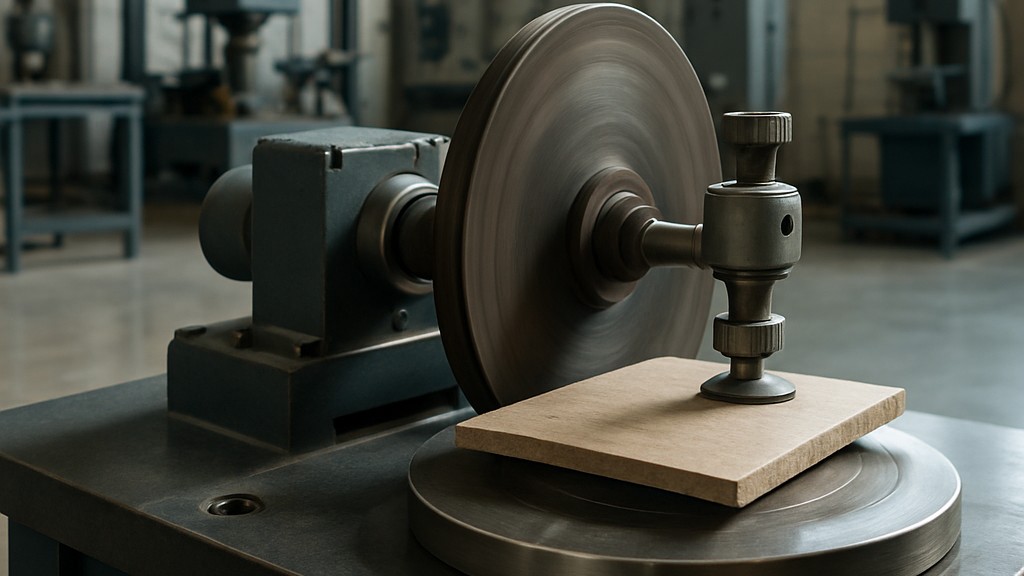
Deep abrasion refers to material loss below the surface, not just light scratches. This type of abrasion occurs when hard particles or surfaces repeatedly rub against the tile, causing it to wear away or gouge the material.
Unglazed ceramic tiles are tiles without a glassy surface coating. Because the body of the tile is directly exposed to abrasion, testing the durability of its core is even more important. They are common in industrial, commercial, or outdoor environments.
The rotating disc describes the mechanism that causes wear in the test. A rotating disc, usually made of steel or another hard material, rotates under a controlled load and speed, striking the tile surface. This simulates real-world conditions such as foot traffic, equipment drag, or rolling loads.
All things considered, this method measures how much material is removed from a ceramic tile when a rotating disc is abraded under controlled conditions. It provides relative wear resistance data, meaning it compares tiles against each other and does not provide an exact lifespan estimate.
This test method provides a means of measuring the potential abrasion resistance of unglazed ceramic tiles intended for use in floor coverings. This test method does not consider physical appearance but aims to measure durability. ASTM C1027, Standard Test Method for Determining the Apparent Abrasion Resistance of Glazed Ceramic Tiles, is applicable for determining the apparent abrasion resistance of glazed ceramic tiles. An alternative method for determining deep abrasion is described in ASTM C501, Standard Test Method for Relative Abrasion Resistance of Unglazed Ceramic Tiles with Taber Abrasive.
This test method evaluates the resistance of unglazed ceramic tiles used in floor coverings to deep abrasion. Abrasion is achieved by applying a rotating disc and a continuous stream of abrasive grit to the tile surface. This test is critical for assessing the durability of ceramic materials, particularly in high-traffic floor applications where surface abrasion is a concern.
ASTM C1243 is designed specifically for unglazed ceramic tiles, which are widely used in commercial and industrial flooring due to their strength and slip resistance. Unlike glazed tiles, unglazed surfaces are more susceptible to visible wear patterns over time. The purpose of this standard is to determine the relative wear resistance of unglazed ceramic tiles using the controlled abrasion method.
This method evaluates the material volume loss from the tile surface after a standard abrasion test using a rotating steel pin under a specified load and speed. The test provides a quantitative measure of abrasion resistance, helping manufacturers and designers compare different tile products and select appropriate materials for abrasion-intensive environments.
In general, this testing method includes the following steps:
ASTM C1243 is essential because it provides a reliable, repeatable, and standardized method for evaluating the abrasion resistance of unglazed ceramic tiles. This standard is considered important for the following reasons:
This eliminates subjective judgments and provides clear, data-driven insights.
This standard helps them choose tiles with proven durability and avoids costly replacements or repairs.
This supports innovation and accountability in tile production.
However, this standard has some limitations:
As a result, ASTM C1243 is a vital standard for the ceramics industry, providing a consistent and repeatable method for evaluating the abrasion resistance of unglazed ceramic tiles. This data informs both product development and application selection, ensuring long-lasting, reliable flooring solutions for demanding environments.
Our organization, which has been supporting businesses across all sectors for years through a wide range of testing, measurement, analysis, and evaluation activities, boasts a strong team of employees who closely follow global developments in science and technology and are constantly improving themselves. In this context, we also provide testing services in accordance with the ASTM C1243 Standard Test Method for the Relative Resistance of Unglazed Ceramic Tiles to Deep Abrasion by Rotating Disc.
To get an appointment, to get more detailed information or to request an evaluation, you can ask us to fill in our form and reach you.

