

The ASTM C1116 Standard Specification for Fiber-Reinforced Concrete and Shotcrete, developed by the American Society for Testing and Materials (ASTM) , covers all forms of fiber-reinforced concrete delivered to a recipient with homogeneously mixed materials, from which samples can be taken and tested at the point of delivery. This standard does not cover the placement, consolidation, curing, or protection of fiber-reinforced concrete after delivery to the recipient.
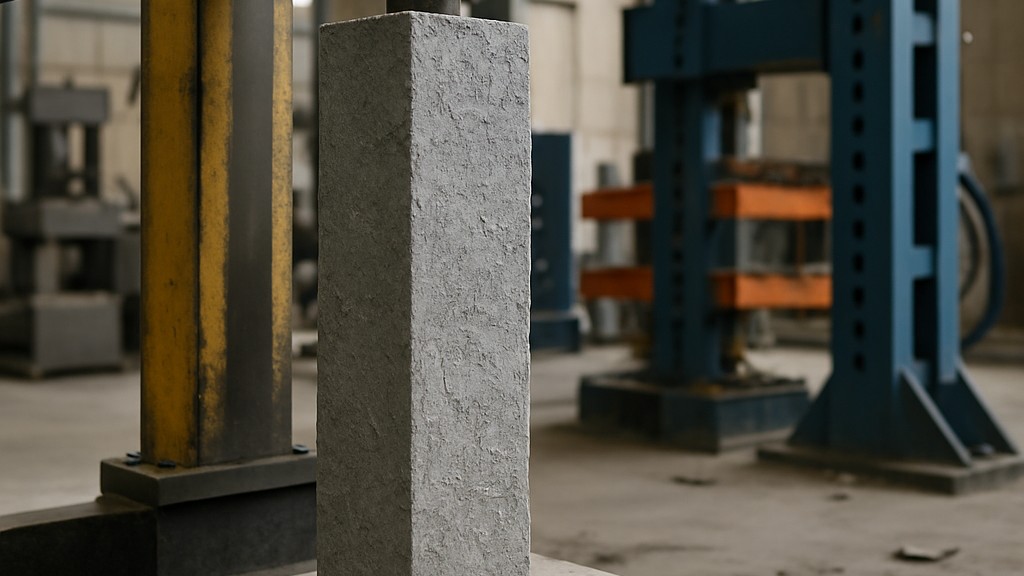
Certain sections of this standard also apply to fiber-reinforced concrete intended for dry-mix shotcrete when concrete sampling and testing are possible only at the point of placement. In this case, the sections on batch plant, mixing equipment, mixing and delivery, and measurement of workability and air content do not apply.
This standard does not cover thin-section glass fibre reinforced concrete produced by the spraying process.
Fiber-reinforced concrete (FRC) and shotcrete (SRC) refer to a class of construction materials that combine concrete or shotcrete with fibrous materials to improve its mechanical properties. Fiber-reinforced concrete (FRC) is concrete that contains fibrous materials to increase its structural integrity. It contains short, discrete fibers that are uniformly distributed and randomly oriented. Common fiber types include:
This type of concrete is commonly used in industrial floors, pavements, pre-cast products, and tunnels and retaining walls.
Shotcrete is a method of placing concrete or mortar through a hose and throwing it pneumatically onto a surface at high speed.
Types of shotcrete include:
The advantages of shotcrete include:
This type of concrete is widely used in tunnel linings, slope stabilization, swimming pools and repair works.
Enhanced (fiber-reinforced) shotcrete is concrete reinforced with fibers (usually steel or synthetic) for improved performance, especially in challenging environments such as underground construction. Its key advantages include:
This type of concrete often replaces mesh reinforcement in tunnels and mines. It is also used in mining, tunnel construction, hydroelectric structures, and seismic reinforcement.
In short, fiber-reinforced concrete and shotcrete are significant innovations in modern construction, offering improved performance, cost-effectiveness, and durability. Their combined use, particularly in high-demand structural applications such as tunnels and infrastructure rehabilitation, continues to grow alongside advances in materials science.
The ASTM C1116 standard is essential because it provides uniform criteria and guidance for specifying and evaluating fiber-reinforced concrete. This standard is considered important for the following reasons:
The ASTM C1116 standard is important because without it, the quality of fiber-reinforced concrete can vary greatly, leading to uncertain performance and increased risk in construction projects.
Our organization, which has been supporting businesses across all sectors for years through a wide range of testing, measurement, analysis, and evaluation activities, has a strong team of employees who closely follow global developments in science and technology and are constantly improving themselves. In this context, we also provide testing services in accordance with the ASTM C1116 Standard Specification for Fiber-Reinforced Concrete and Sprayed Concrete.
To get an appointment, to get more detailed information or to request an evaluation, you can ask us to fill in our form and reach you.

