

As energy efficiency becomes an increasingly global priority, the construction industry faces increasing pressure to design buildings that reduce energy consumption. A critical component of this effort is the thermal performance of windows and doors, which significantly impact a building's heat loss or gain. The ISO 10077 standard plays a key role in establishing criteria and methodologies for assessing this thermal performance.
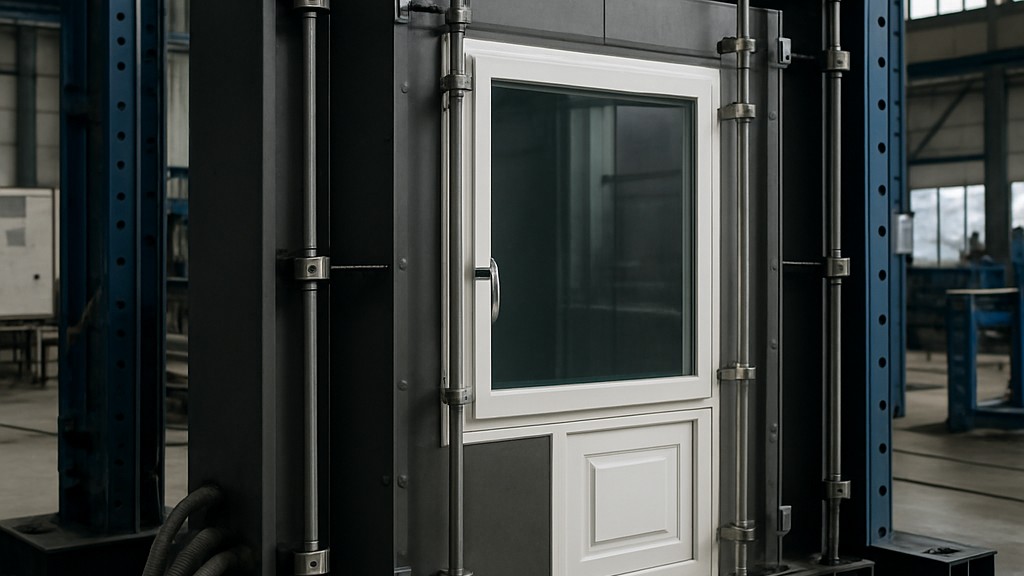
The “ EN ISO 10077 Thermal performance of windows , doors and shutters - Calculation of heat transmittance” standard, which is based on a European standard and was later published by the International Organization for Standardization (ISO) , consists of the following sub-sections published under the same title:
The thermal transmittance of roof windows and other projecting windows can be calculated in accordance with this standard, provided that the thermal transmittance of the frame sections is determined by measurement or numerical calculation. Default values for glazing, frames, and shutters are given in the appendices. Thermal bridging effects at the slat or joint between the window or door frame and the rest of the building envelope are excluded from the calculation.
The calculation does not include:
This standard does not apply to: curtain walls and other structural glazing, and industrial, commercial, and garage doors.
The table provided within the standard shows the relative position of this standard within the set of EPB standards in relation to the modular structure specified in ISO 52000-1. The EPB standard refers to a standard that complies with the requirements specified in ISO 52000-1, CEN/TS 16628, and CEN/TS 16629.
This standard does not include the effects of solar radiation, heat transfer caused by air leakage, or three-dimensional heat transfer such as sensitive metallic connections. Thermal bridging effects between the frame and the building structure are not included.
The table provided within the standard shows the relative position of this standard within the set of EPB standards in the context of the modular structure specified in ISO 52000-1.
In short, EN ISO 10077 is an international standard that specifies methods for calculating the thermal transmittance (U-value) of windows, doors, and shutters. The U-value is important in determining how well a product insulates against heat transfer. Thermal transmittance (U-value) represents the rate of heat transfer within a structure. The lower the U-value, the better the insulation. EN ISO 10077 defines how to calculate the total U-value, taking into account the following factors:
Particular attention is paid to frame materials and configurations. While EN ISO 10077 includes default value tables, it also allows for specific measurements using advanced simulation tools, as described in EN ISO 10077-2. For applications requiring high accuracy, EN ISO 10077-2 outlines how to use two-dimensional finite element modeling to simulate heat flow. This method provides precise U-values for specific products, taking into account geometric complexity and material inhomogeneity.
The primary objective of the EN ISO 10077 standard is to ensure consistent and reliable assessment of window and door thermal performance among manufacturers, designers, and regulators. This helps:
This standard applies to all glazing systems, including:
Consequently, the EN ISO 10077 standard is a fundamental element in assessing the energy efficiency of windows and doors. By providing clear methodologies for calculating thermal transmittance, it enables manufacturers, architects, and engineers to design products and buildings that meet modern energy performance demands. As global efforts towards sustainability intensify, standards like EN ISO 10077 will continue to be vital tools in shaping the future of green construction.
Our organization, which has been supporting businesses across all sectors for years through a wide range of testing, measurement, analysis, and evaluation activities, has a strong team of employees who closely follow global developments in science and technology and are constantly improving themselves. In this context, we also provide testing services in accordance with the EN ISO 10077 standard: Thermal performance of windows, doors, and shutters - Calculation of thermal transmittance.
To get an appointment, to get more detailed information or to request an evaluation, you can ask us to fill in our form and reach you.

