

The European standard "EN 14566 Mechanical fasteners for plasterboard systems - Definitions, requirements and test methods" describes the properties and performance of mechanical fasteners, including nails, screws, and staples, designed for fastening plasterboard, fiber-reinforced plasterboard, secondary processing products, and suitable auxiliary products to wood and metal in building construction. Fasteners secure the sheet to the frame, allowing the surface to be finished with grout or plastering, making it suitable for decoration. They can also be used in framing, in the connection between the substructure and load-bearing components, and in the fastening of sheets to each other. Mechanical fasteners contribute to the stability of the assembly.
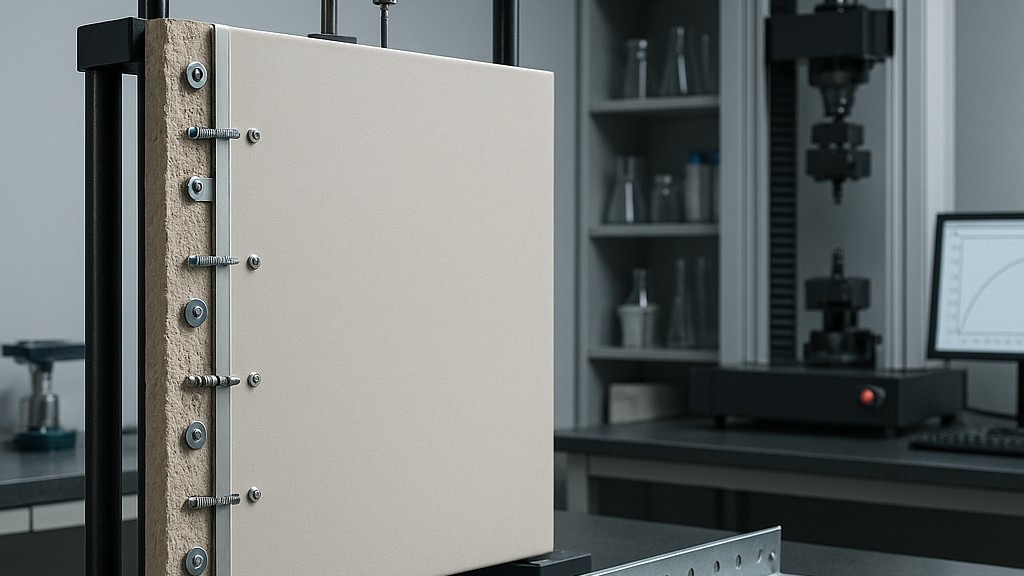
This standard covers product performance characteristics, such as reaction to fire and flexural strength, to be measured in accordance with relevant European test methods. It enables the assessment of product conformity to this standard.
This standard also covers additional technical specifications and reference tests for these specifications that are important for the use and acceptance of products by the construction industry. However, this standard does not cover nails, screws, and staples designed for use with materials other than plasterboard and the plasterboard-based products and their system components specified above.
In the construction industry, where precision and reliability are undeniable, standards such as EN 14566 play a crucial role in ensuring the structural integrity and safety of building interiors. This standard specifies performance criteria for fasteners used in gypsum-based systems. By harmonizing requirements across member countries, this standard facilitates consistent quality in trade and construction practices.
This standard relies heavily on mechanical fasteners such as screws, nails, and staples to secure drywall, a versatile material known for its fire resistance, acoustic properties, and ease of installation, to the framework. This standard ensures that these components can withstand daily stresses, from vibration to thermal expansion, without compromising system performance.
EN 14566 is a narrowly focused but fundamental standard: it covers mechanical fasteners (specifically nails, screws, and staples) specifically designed for plasterboard systems. This standard includes:
This standard explicitly excludes materials other than plasterboard, load-bearing elements, or fasteners for outdoor applications. This standard falls under the European Construction Products Regulation (CPR) and mandates compliance with the CE marking, which certifies that products meet health, safety, and environmental protection requirements. EN 14566 is impacting global applications because many international standards reference this standard for plaster-based construction. It is particularly important in renovations and new construction, where energy efficiency and modular design are emphasized.
The EN 14566 standard specifies strict criteria to ensure the reliability of fasteners, categorized by material, size, and performance characteristics. These criteria ensure a secure connection without damaging the drywall or underlying structure.
The material and size requirements are determined as follows:
The performance criteria are determined as follows:
Fasteners are divided into classes (e.g., Class A for general use, Class B for enhanced performance), allowing designers to choose based on project demands, such as fire-resistant partitions or acoustic barriers.
Ultimately, EN 14566 exemplifies the meticulous harmonization of European standards, recognizing the modest yet vital role of mechanical fasteners in plasterboard systems. From high-rise offices to residential homes, these guidelines ensure durable and safe interiors that stand the test of time.
Our organization, with its competent and experienced team, understands our customers' needs, provides advanced testing services, and assists them in establishing, implementing, and improving management systems. In this context, we also provide testing services in accordance with the EN 14566 "Mechanical fasteners for drywall systems - Definitions, requirements, and test methods" standard.
To get an appointment, to get more detailed information or to request an evaluation, you can ask us to fill in our form and reach you.

