

The standard "DIN 4103-1 Non-load-bearing internal partition walls - Part 1: Requirements and verification," published by the German Institute for Standardization (DIN), specifies the requirements for non-load-bearing internal partitions. This standard does not apply to internal partitions that support planned vertical building loads or are used for building restraint. This standard can also be used for internal partitions with a fall arrest function. This standard does not apply to movable partitions that can be moved horizontally or vertically (e.g., sliding and folding walls). If the walls are not vertical, the characteristics resulting from the slope must be taken into account.
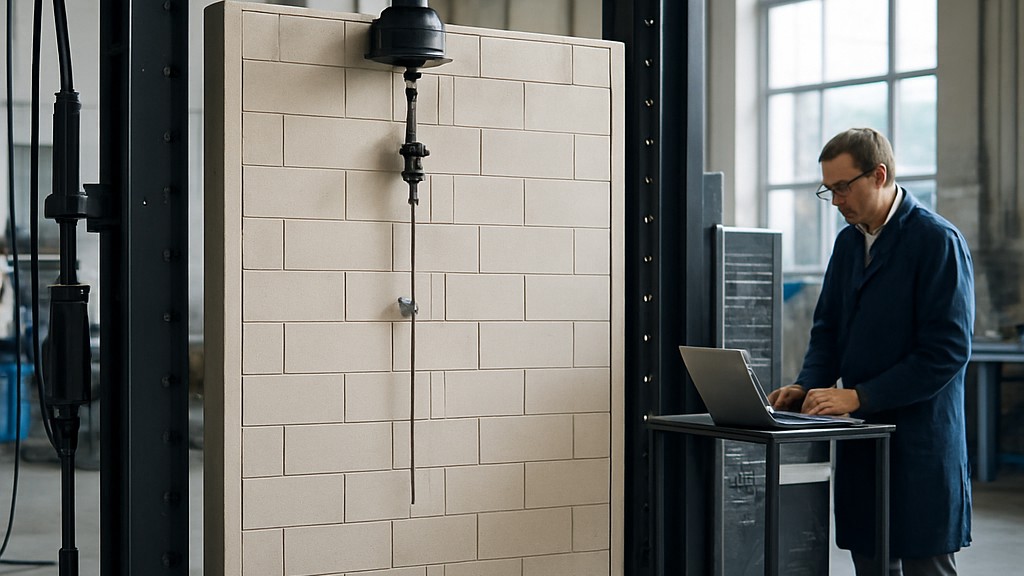
This standard is a general standard. Design-specific requirements are incorporated into relevant technical standards if necessary, eliminating the need for separate proof of compliance with the requirements of this standard. Specific technical standards apply, if necessary, to specific application-related requirements, such as sound insulation or fire behavior.
In modern architecture and construction, ensuring the safety, durability, and functionality of building components is paramount. Among the numerous standards governing these aspects, DIN 4103-1 provides comprehensive guidelines for the design, requirements, and verification of lightweight interior walls that do not support structural loads. As buildings become more complex, with open-plan designs and flexible spaces, DIN 4103-1 plays a vital role in maintaining integrity without compromising aesthetics or usability. This standard applies to fixed, immovable partitions, excluding sliding or folding walls, and serves as a fundamental technical standard for various types of wall construction.
DIN 4103-1 defines the parameters for non-load-bearing internal partitions, which are essential for residential, commercial, and industrial buildings. These partitions divide interior spaces without contributing to the overall structural stability of the building. This standard covers primarily fixed partitions, which are walls that remain fixed and are typically constructed from lightweight materials such as plasterboard, metal studs, or acoustic panels. It does not cover load-bearing elements, external walls, ceilings, or movable systems such as sliding or folding partitions.
Non-load-bearing partitions, often referred to as lightweight walls or interior partitions, are essential components of modern building construction. Unlike non-load-bearing walls, which support structural loads such as floors, roofs, or other structural elements, non-load-bearing partitions are primarily used to divide interior spaces, enhance functionality, and provide aesthetic flexibility.
While specifying the basic requirements, this standard emphasises that certain applications, such as improved sound insulation, fire resistance or thermal performance, must comply with standards such as the DIN 4102 standard for fire behaviour or the DIN EN ISO 10140 standard for acoustics.
The DIN 4103-1 standard contains a set of mandatory requirements to ensure the performance of partitions under everyday and extreme conditions. These are categorized into mechanical, stability, and functional aspects:
These requirements ensure that partitions contribute to a safe and habitable environment in line with wider building regulations that prioritise the well-being of occupants.
In an era of sustainable and adaptable buildings, the DIN 4103-1 standard promotes the efficient use of resources by favoring lightweight and recyclable materials. It supports trends such as modular construction and retrofitting older structures for improved energy performance. By standardizing partitions, it reduces the risk of failures that could lead to costly repairs or safety hazards.
For architects, engineers, and contractors, compliance with this standard not only fulfills legal obligations but also improves building quality. As urbanization accelerates, standards such as DIN 4103-1 continue to evolve, potentially integrating smart technologies for partition health monitoring.
Ultimately, DIN 4103-1 exemplifies the precision of German engineering standards by providing a robust framework for non-load-bearing interior partitions that balance functionality, safety, and innovation. Whether in residential buildings or office complexes, these standards ensure effective and lasting space division.
Our organization, with its competent and experienced team, understands our customers' needs, provides them with the advanced testing services they need, and assists them in establishing, implementing, and improving management systems. In this context, we also provide testing services in accordance with the DIN 4103-1 Non-Loadbearing Internal Partition Walls - Part 1: Requirements and Verification standard.
To get an appointment, to get more detailed information or to request an evaluation, you can ask us to fill in our form and reach you.

