

A European standard “EN 12087 Thermal insulation products for building applications - Determination of long-term water absorption by immersion” defines equipment and procedures for determining the long-term water absorption of test samples. This standard is also applicable to thermal insulation products.
This standard includes two options:
The partial immersion method aims to simulate long-term water absorption caused by long-term exposure to water. In the full immersion method, long-term water absorption is not directly related to field conditions, but has been considered a relevant test condition for some products in some applications.
In principle, long-term water uptake by the partial immersion method is determined by measuring the change in mass of a test specimen whose bottom is in contact with water for a period of 28 days. Excess water adhering to the surface and not absorbed by the test specimen is removed by drainage in method 1A or taken into account by deducting the initial water uptake in method 1B.
Long-term water uptake by the total immersion method is determined by measuring the change in mass of a test specimen completely immersed in water over a period of 28 days. Excess water adhering to the surface and not absorbed by the test specimen is removed by drainage in method 2A or taken into account by deducting the initial water uptake in method 2B.
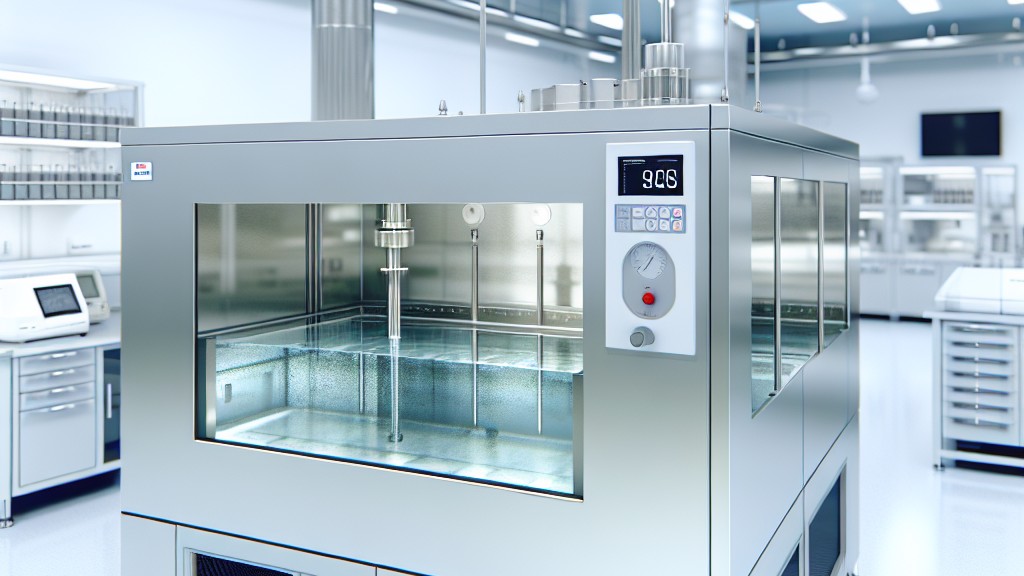
In these tests, a balance is used that allows the mass of a test specimen to be determined to the nearest 0,1 g. In addition, a water tank is used that contains a device that keeps the water level constant within plus/minus 2 mm and a device that holds the test specimen in the required position. Examples of test devices are given in the standard and in the figures. The device used to hold the test specimen in position should not cover more than 15 percent of the cross-sectional area of the test specimen exposed to water. The device should be such that the original form of the test specimen is preserved.
In addition, tap water adjusted to 23 degrees plus/minus 5 degrees is used in these tests. In case of disagreement, deionized water is used.
The absorption of water into the pore structure of the material increases the thermal conductivity due to the relatively high thermal conductivity of water. The water absorption of the thermal insulation significantly reduces the thermal resistance of the material. Especially in very cold regions, the frost insulation material is laid on damp soil and is exposed to gravitational water caused by rain as well as melting snow and ice. Therefore, the insulation material must have a tight structure. Officially approved frost insulation material must meet all the required functional properties, including a long-term water immersion test (28 days). According to the EN 12087 standard, the limits for the moisture content of the frost insulation material are 2 percent by volume. The purpose of this insulation is to ensure that the soil, which is prone to freezing during very cold periods, does not freeze. In heated buildings, if the frost insulation is sufficient, the heat flow through the ground ensures that the foundations do not freeze. The frost insulation material itself is exposed to gravitational water and frost attack. In order to ensure the long service life of the frost insulation material, it is important that the insulation material is not prone to frost.
Long-term water absorption testing by total immersion represents situations where the frost insulation material is subjected to very high moisture stress.
Our organization, which has been trying to support businesses from every sector with its testing, measurement, analysis and evaluation studies carried out in a wide range for years, has a strong staff that closely follows the developments in the world in the field of science and technology and constantly improves itself. In this context, testing services in accordance with the standard “EN 12087 Thermal insulation products for building applications - Determination of long-term water absorption by immersion” are also provided to businesses.
To get an appointment, to get more detailed information or to request an evaluation, you can ask us to fill in our form and reach you.

