ASTM C373 Water Absorption, Bulk Density, Apparent Porosity, and Apparent Specific Gravity of Fired White Goods Products, Ceramic Tiles, and Glass Tiles
The standard "ASTM C373 Standard test method for water absorption, bulk density, apparent porosity, and apparent specific gravity of fired white goods products, ceramic tiles, and glass tiles" published by the American Society for Testing and Materials (ASTM) describes the test methods and procedures for determining the water absorption, bulk density, apparent porosity, and apparent specific gravity of fired unglazed white goods products, glazed or unglazed ceramic tiles, and glass tiles.
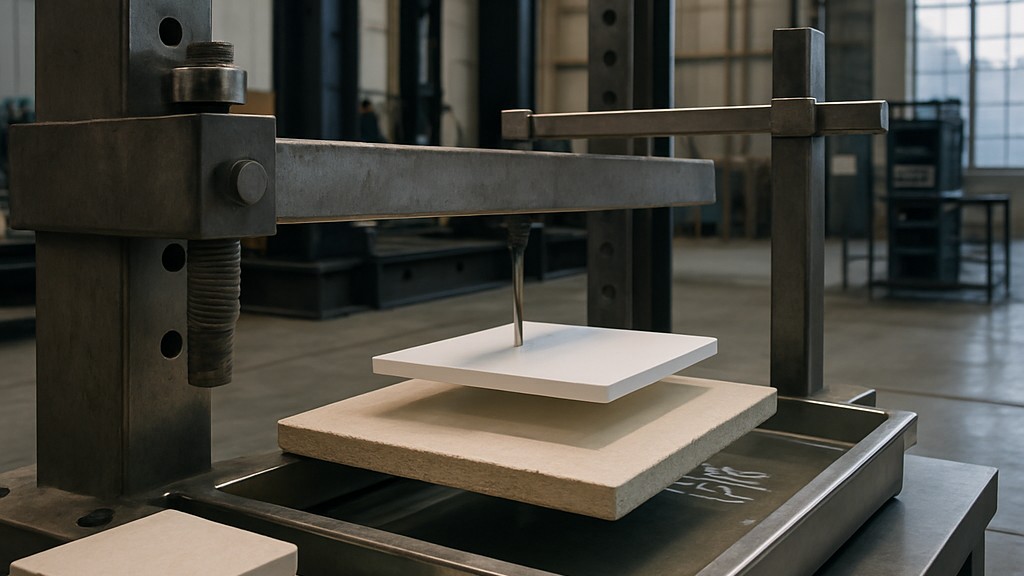
Density, porosity, and specific gravity measurements are tools used to determine the structural properties of samples that have sufficient size and capacity to allow cooling or that may be caused by ambient air. These measurements are also tools used to determine the degree of maturation of a ceramic body or to determine the structural properties that may be required for a particular application.
Providing a widely accepted test method, the ASTM C373 standard offers a systematic approach to determining four critical physical properties of ceramic materials:
- water absorption
- bulk density
- Visible porosity
- Apparent specific gravity
These parameters are important for evaluating the quality, durability and performance of fired ceramic products, especially white goods such as porcelain, tiles and sanitary ware.
Ceramic materials are widely used in construction and industrial applications due to their mechanical strength, thermal stability, and resistance to wear and corrosion. The porosity and water absorption of these materials are key indicators of their durability and suitability for specific environments. The ASTM C373 standard helps:
- Classify ceramic tiles according to their water absorption, depending on their intended use (e.g. indoor and outdoor).
- Ensuring compliance with product specifications and quality standards.
- To support research and development in ceramic production.
The ASTM C373 standard applies specifically to:
- Glazed and unglazed white goods products
- Porcelain tiles
- Plumbing ceramics
- Tableware and cookware
- Other fired ceramic products
The water standard is not suitable for materials that undergo significant dimensional changes when wet or for highly porous materials where boiling may alter their structure.
The main characteristics measured are:
- Water absorption (%): This measures a material's ability to absorb water, which affects its durability and freeze-thaw resistance. Lower water absorption indicates a denser, more durable product. High water absorption generally means a material is more porous and can weaken over time, especially when exposed to freeze-thaw cycles. Ceramic tiles are often classified as porcelain (up to 0,5 percent absorption) or non-porcelain based on this characteristic. Moisture resistance is critical in environments like bathrooms, kitchens, or outdoor spaces. Outdoor tiles with high water absorption may crack in freezing weather. Plumbing materials with lower water absorption are better at resisting staining and bacterial growth.
- Bulk density (g/cm3): Represents the mass of a material per unit volume, including open and closed pores. A higher bulk density generally means the material is stronger and more stable. This value is useful for calculating transportation costs, structural load, or installation support. Denser bricks or tiles may be more durable, but they are also heavier, affecting how they are transported or supported in buildings.
- Apparent porosity (%): This refers to the percentage of a material's volume that consists of open pores. Higher porosity generally means higher water absorption. Higher porosity means that water, air, or other substances can move more easily through the material. In terms of thermal and mechanical performance, porous materials tend to provide better insulation, but they are also more brittle. A tile with high porosity may stain or harbor mold more easily in humid conditions.
- Apparent specific gravity: The ratio of the material's weight to the weight of an equal volume of water, excluding open pores. It reflects the composition and structure of the ceramic body. It enables comparisons between different material types or batches. It helps engineers select materials with specific weight-to-strength ratios for design efficiency.
These four properties, combined, provide a complete picture of a ceramic material's quality and behavior under real-world conditions. They help:
- Predicting performance and lifespan
- Guiding material selection for specific applications
- Ensuring security, reliability and compliance with standards
Therefore, water absorption, bulk density, apparent porosity and apparent specific gravity are extremely important, especially for ceramic materials such as tiles, porcelain and sanitary ware.
Essentially, the testing method includes these basic steps:
- Drying of the sample: The ceramic sample is dried at 110 degrees until it reaches constant mass.
- Weighing (dry weight): Dry mass is recorded.
- Boiling: The sample is immersed in boiling water for 5 hours to saturate all open pores.
- Cooling and immersion: After boiling, the sample is soaked in water for 24 hours to reach saturation.
- Weighing (saturated weight and suspended weight): The saturated sample is weighed first in air and then in water.
- Calculations: Water absorption, apparent porosity, bulk density and apparent specific gravity are calculated using the formulas given in the standard.
The main application areas of the ASTM C373 standard are:
- Tile classification: Helps to separate ceramic tiles into groups (porcelain, vitreous, semi-vitreous) according to their water absorption.
- Product development: Manufacturers use these measurements to improve product formulations and cooking processes.
- Quality control: Ensures compliance and consistency with industry criteria.
- Performance evaluation: Evaluates the suitability of ceramics for freezing and thawing environments or high humidity areas.
As a result, the ASTM C373 standard is an essential tool in the ceramics industry, providing consistent and reliable methods for evaluating fundamental material properties. Understanding water absorption and porosity is crucial for determining the performance and durability of ceramic products, particularly in construction and industrial applications. By following this standard, manufacturers and researchers can maintain high quality standards and develop products fit for purpose.
Our organization, which has been supporting businesses across all sectors for years through a wide range of testing, measurement, analysis, and evaluation activities, boasts a strong team of employees who closely follow global developments in science and technology and are constantly improving themselves. In this context, we also provide testing services in accordance with ASTM C373 Standard Test Method for Water Absorption, Bulk Density, Apparent Porosity, and Apparent Specific Gravity of Baked White Goods, Ceramic Tiles, and Glass Tiles.



