EN 17686 Resistance of Roof Structure System to Wind Load with Bonded Waterproofing Systems
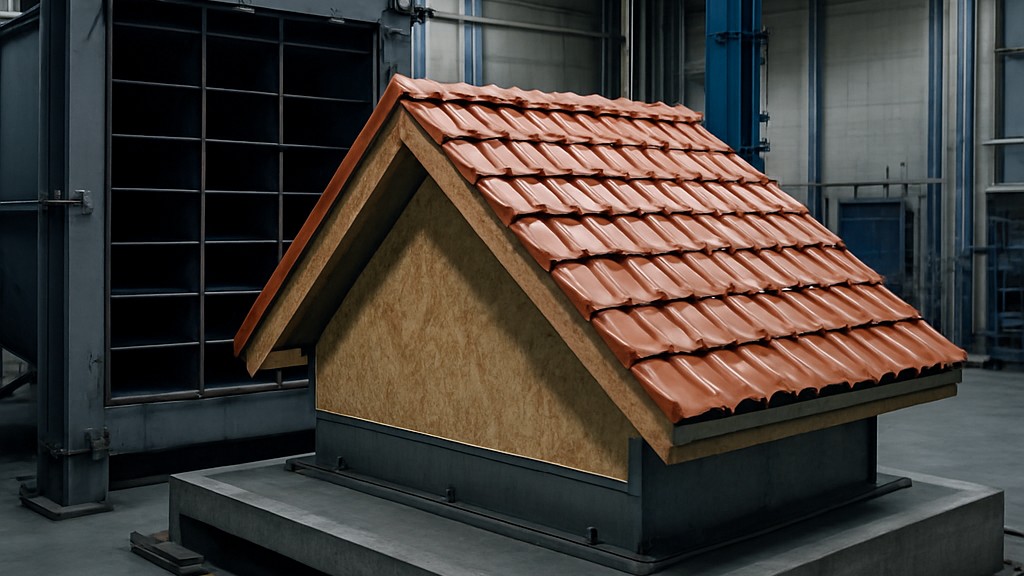
The European standard "EN 17686 Flexible sheets for waterproofing - Determination of the resistance of roof structure systems with bonded waterproofing systems to wind load" describes the test method to be applied to determine the resistance of the roof structure system where the waterproofing system is bonded to the substrate against wind load.
For the purposes of this standard, the following definitions apply in addition to the terms and definitions given in EN 13707 and EN 13956:
- An open air system is a roof structure system in which air flows from the outside of the test sample to the underside of the waterproofing system.
- An airtight system is a roof structure system in which there is no air flow from the outside of the test sample to the underside of the waterproofing system.
- The air and vapor control layer is the layer used to limit or prevent the transport of air and water vapor into the layers of the roof structure system above the structural deck.
- Adhesively bonded flexible boards are flexible boards that are bonded to a substrate by cold or hot bonding.
- Cold bonding is the bonding of a waterproofing system to a substrate without the use of additional heat (with or without the addition of adhesive).
- The fastening system is the elements designed to fix the insulation boards to the structural deck.
- Hot bonding is the bonding of a waterproofing system to a substrate by heating the surface of the board or adding heated adhesive.
- The joining technique is the technique of joining material-specific stitching and flexible sheets end to end.
- A roof structural system is the total structure of all the different layers that make up the roof from the top of the structural deck. The system may include, for example, air and vapor control layers, insulation layers, and layers of partially or fully bonded roof waterproofing boards.
- The structural deck is the part of the structure that must transfer both permanent and variable loads to other structural parts of the roof or building.
- The underlayment is the layer placed directly beneath the waterproofing system. The underlayment is the next surface below the waterproofing system in the roofing system. This could be insulation board, plywood, or a concrete deck, for example.
- The test sample is a representative part of the roof structure system.
- A waterproofing system is the combination of one or more flexible sheet layers with certain performance properties, applied and combined, or evaluated as a whole, for use on a roof.
Where necessary, flexible sheets used for roof waterproofing must be sampled in accordance with EN 13416 and all additional components forming the test sample must be sampled in accordance with the sampling requirements of the relevant European harmonised technical specification or the applicant's instructions.
The test sample and apparatus must be conditioned in an environment with a temperature of 23°C plus/minus 5°C for at least 16 hours before the test. The test sample must be tested under the same conditions.
The pressure chamber used in the tests must meet the following requirements:
- The internal length and width of the pressure chamber must be in accordance with this standard.
- The pressure chamber should be equipped with one or more windows through which the test specimen can be observed during the test.
- It must be possible to create an airtight seal between the test specimen and the pressure chamber.
- The pressure chamber must be able to withstand a suction pressure of at least 10.000 N/m2.
- The height of the pressure chamber should be such that the applied pressure is distributed evenly and is not affected by deformations of the test sample.
- The pressure chamber and additional devices must be calibrated according to this standard.
The pressure chamber should contain:
- Fan with control and recording system according to this standard
- Pressure and time measuring and recording device
- Thermometer
- Timer
The minimum effective test area of the test specimen shall be 4 m². If one dimension is less than 2 m², the effective area of the test specimen shall be at least 8 m². The minimum dimension is 1,5 m². The effective test area shall be equal to the internal dimensions of the pressure chamber.
The combination of fan and control equipment must be capable of producing the dynamic load cycles defined in this standard.
The pressure and time measuring device must have a measurement accuracy of less than plus or minus 2 percent. An accuracy of at least 20 N/m2 is permitted. The pressure and time recording device must be capable of recording and storing the pressure level every 0,1 seconds throughout the entire test period.
The thermometer, along with the recording apparatus used, must be capable of measuring between 0°C and 30°C with a measurement tolerance of less than or equal to plus/minus 1°C. The thermometer must be placed inside the test chamber.
The stopwatch must be able to measure over an interval of at least 60 seconds and, together with the recording device used, the measurement tolerance must be plus/minus 0,1 seconds or less.
The EN 17686 standard is necessary for several key reasons:
- Uniform quality and safety: Establishes minimum performance and application criteria for geomembrane materials, ensuring they provide effective and safe waterproofing in complex underground environments such as tunnels. These environments are subject to unique stresses such as water pressure, ground movement, and chemical exposure.
- Design and application guide: This standard provides practical guidance for the design, detailing, installation and testing of flexible waterproofing sheets and helps engineers and contractors prevent failures due to inappropriate use or incorrect application.
- Durability and longevity: By standardizing materials and installation practices, this standard ensures that waterproofing systems will maintain their performance throughout the design life of the structure, which can be many years.
- Regulatory compliance: Supports compliance with European construction and environmental regulations, facilitates harmonization between member states and simplifies cross-border projects.
- Risk reduction: Proper implementation of this standard reduces the risk of water ingress, which can lead to structural damage, increased maintenance costs, and operational disruptions, which is especially critical in infrastructure such as subways, tunnels, and underground facilities.
Our organization, which has been supporting businesses across all sectors for years through a wide range of testing, measurement, analysis, and evaluation activities, boasts a strong team of employees who closely follow global developments in science and technology and are constantly improving themselves. In this context, we also provide testing services in accordance with the standard "EN 17686 Flexible sheets for waterproofing - Determination of wind load resistance of roof structures with bonded waterproofing systems."



