

In the “ISO 717-1 Acoustics - Rating of sound insulation in buildings and building elements - Part 1: Airborne sound insulation” standard published by the International Organization for Standardization (ISO),
The single-numbered quantities in accordance with this standard are designed to rate airborne sound insulation and to simplify the formulation of acoustic requirements in building codes. An additional single-numbered assessment in 0,1 dB steps is specified for the expression of uncertainty. The required numerical values of the single-numbered quantities are specified according to changing requirements. The single-numbered quantities are based on the results of measurements in one-third octave bands or octave bands. For laboratory measurements in accordance with ISO 10140-2, the single-numbered quantities are calculated using one-third octave bands only. The rating of the results of measurements performed over an extended frequency range is included in the annex of the standard (Annex B).
For the purposes of this standard, the following terms and definitions apply:
According to the procedure for evaluating single-numbered quantities, for example the values obtained in accordance with the standards ISO 10140-2 and ISO 16283-1 are compared with reference values at measurement frequencies in the range 100 Hz to 3150 Hz for one-third octave bands and 125 Hz to 2000 Hz for one-octave bands. The comparison is carried out as specified in this standard. In addition, two spectrum adaptation terms are calculated based on two typical spectra in the frequency range quoted above. These two terms can optionally be supplemented (if necessary and if measured data are available) by additional spectrum adaptation terms covering a wider frequency range between 50 Hz and 5000 Hz.
The set of reference values used for comparison with the measurement results should be as given in the table entitled “Reference values for airborne sound”.
To calculate spectrum adaptation terms, the set of sound spectra in one-third octave bands and in octave bands should be as given in the table titled “Sound level spectra for calculating adaptation terms.” The spectra are A-weighted and the overall spectrum level is normalized to 0 dB.
Comparison method: To evaluate the results of a sound insulation measurement in one-third octave bands (or octave bands), the measurement data shall be given to one decimal place. The relevant reference curve is shifted in 32,0 dB increments towards the measured curve until the sum of the negative deviations is as large as possible, but not exceeding 10,0 dB or 1 dB.
In short, airborne sound is the noise carried in the air. Airborne noise is transmitted from the outside to the inside of a building, and also from floor to floor or room to room (e.g. within a building or unit). Airborne sound insulation describes the action of reducing the transmission of airborne sound by means of a separating element. The calculation is quite simple. Part of the incident sound energy is reflected from the surface of the separating element and part is absorbed by the separating element itself. Another part escapes into the adjacent room.
The acoustic insulation capacity of a building component is defined as the sound reduction index. This is a differential value, meaning that the larger the value, the better the sound insulation. This value applies to the building component, but not to its effect in a room. Airborne noise is transmitted not only directly through a separating element, but also through adjacent elements (a phenomenon known as lateral). The insulation effect of a building component can be judged from the difference in sound level between the transmitting room and the receiving room.
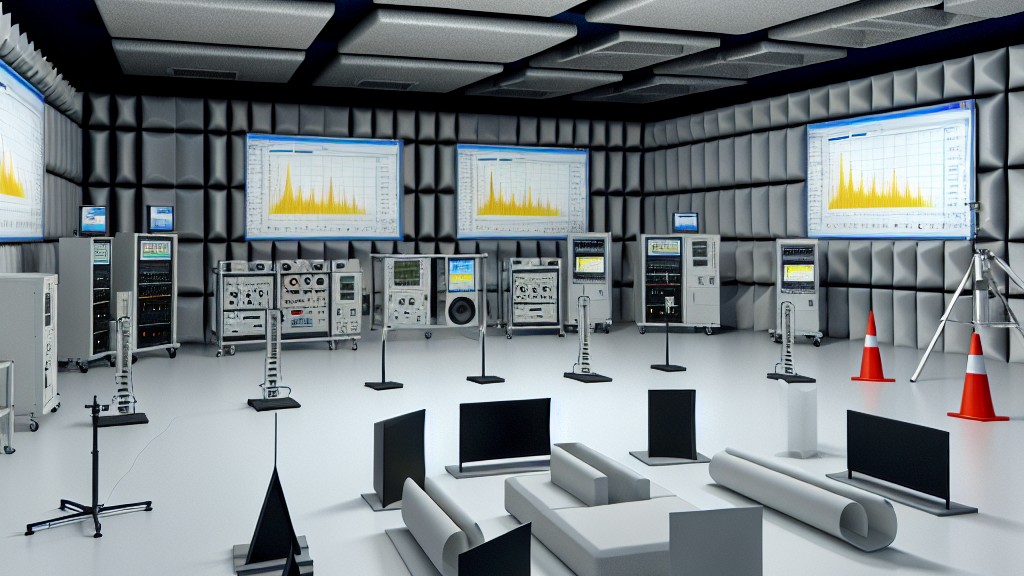
Our organization, which has been trying to support businesses from every sector with its wide range of testing, measurement, analysis and evaluation studies for years, has a strong staff that closely follows the developments in the world in the field of science and technology and constantly improves itself. In this context, testing services are also provided to businesses in accordance with the “ISO 717-1 Acoustics - Rating of sound insulation in buildings and building elements - Part 1: Airborne sound insulation” standard.
To get an appointment, to get more detailed information or to request an evaluation, you can ask us to fill in our form and reach you.

