

A method for determining the mass per unit area of a resilient floor covering is described in the European standard “EN ISO 23997 Resilient floor coverings - Determination of mass per unit area”, subsequently published by the International Organization for Standardization (ISO).
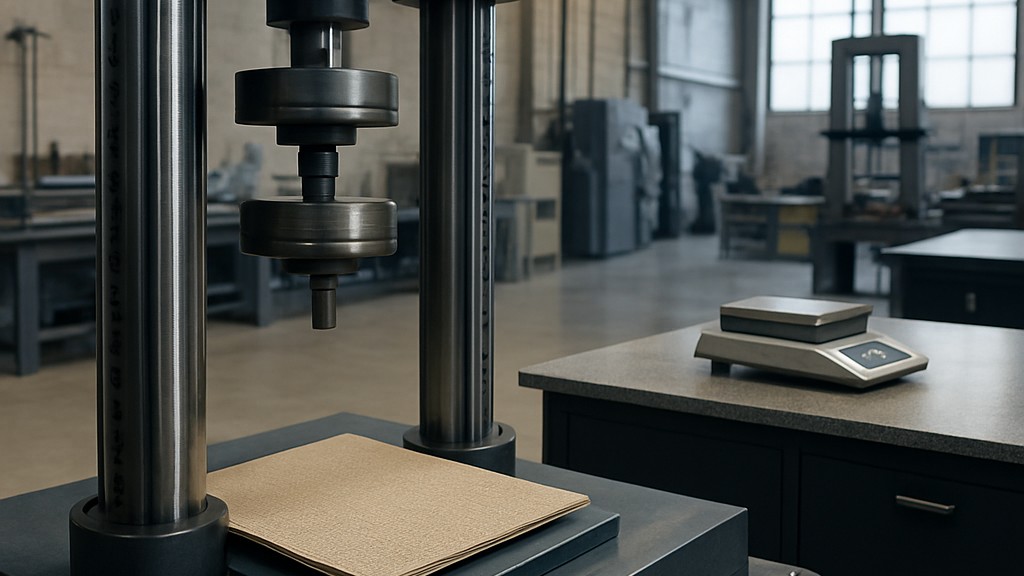
Durable flooring is used in a wide variety of residential, commercial, and industrial settings where durability, ease of maintenance, and underfoot comfort are important. These materials include vinyl, linoleum, rubber, cork, and similar resilient flooring.
Common applications of resilient flooring include:
For the purposes of this standard, mass per unit area refers to the ratio of mass to area. Mass per unit area is expressed in grams per square metre.
In principle, samples of a certain size are taken from a flexible flooring sample. The samples are weighed, and the mass per unit area of the flooring is calculated accordingly.
In these tests, a balance that can weigh the sample to the nearest 10 mg and a caliper that can measure the size of the sample to the nearest 0,05 mm are used.
The sample is conditioned for at least 24 hours at a temperature of 23 degrees Celsius (plus/minus 2 degrees Celsius) and a relative humidity of 50 percent (plus/minus 5 percent). These conditions are maintained throughout the test.
At the beginning of the test, a representative sample is taken from the available material. Five square or round samples with an area of at least 0,01 m2 are taken equidistant from the sample, with a distance of at least 100 mm between the outer edge of the sample and the nearest edge. If necessary, the edges of the sample are cleaned. Full tiles may also be used in the tests.
During testing, the surface dimensions of each sample are measured and recorded to an accuracy of 0,1 mm. Each sample is weighed individually, and the mass is recorded to an accuracy of 10 mg.
Mass per unit area is calculated in grams per square meter using the formula given in the standard. Results are expressed by rounding to the nearest 5 g/m2 for results up to and equal to 1000 g/m2. Results above 1000 g/m2 are expressed by rounding to the nearest 10 g/m2. The average value of mass per unit area for five samples is calculated by rounding to the nearest gram.
The test report should include the following information:
The EN ISO 23997 standard is important for many reasons, particularly in the flooring industry, in the context of quality control, performance evaluation, and product comparison. It also defines the requirements and test methods for flexible cellular polymeric materials, particularly polyethylene foams, which are used in a wide variety of applications.
The main reasons why this standard is important are:
Ultimately, the EN ISO 23997 standard is important because it defines a consistent, internationally accepted method for measuring the mass per unit area of resilient floor coverings. This improves product quality, supports fair comparisons, and ensures that the floor covering meets performance and regulatory expectations.
Our organization, which has been supporting businesses across all sectors for years through a wide range of testing, measurement, analysis, and evaluation activities, has a strong team of employees who closely follow global developments in science and technology and are constantly improving themselves. In this context, we also provide testing services in accordance with the EN ISO 23997 Resilient floor coverings - Determination of mass per unit area standard.
To get an appointment, to get more detailed information or to request an evaluation, you can ask us to fill in our form and reach you.

