

A European standard, “EN 822 Thermal insulation products for building applications - Determination of length and width” describes the equipment and procedures for determining the length and width of full-size products. This standard is also applicable to thermal insulation products.
For the purposes of this standard, the following terms and definitions apply:
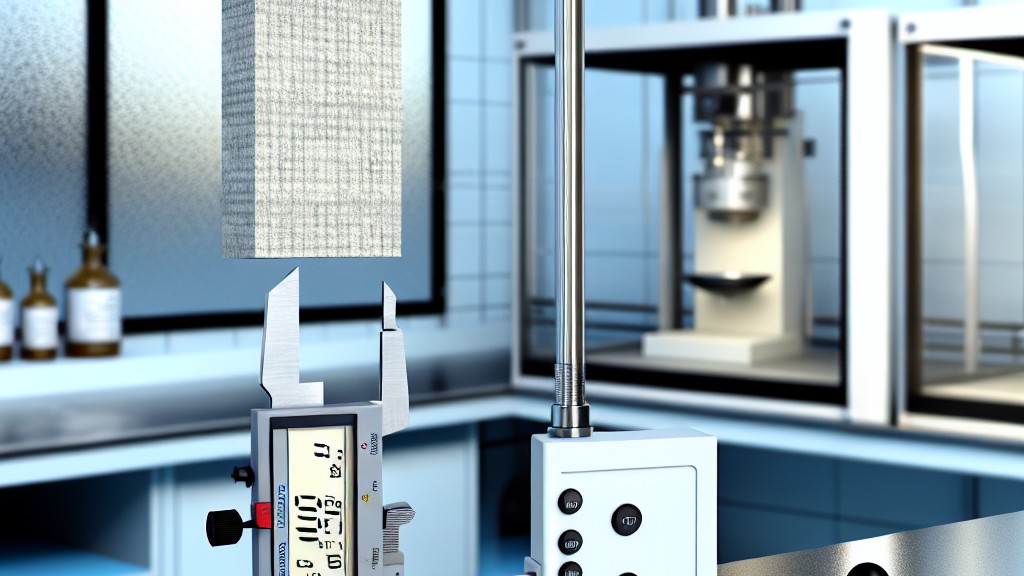
In principle, the test sample is placed on a flat surface and direct linear measurement is made with the help of a metal ruler or metal tape.
Measurements require a flat surface and a metal ruler or metal tape. This is equipment that is graduated in millimeters and allows readings to an accuracy of 0,5 mm. Any testing equipment that provides the same result with at least the same accuracy can be used.
The test sample shall be a full-size product. The number of test samples shall be as specified in the relevant product standard. In the absence of a product standard, the number of test samples may be agreed upon between the parties. The test samples shall be stored in a temperature environment of 6 degrees plus/minus 23 degrees for at least 5 hours. In case of disagreement, they shall be stored in an environment with a temperature of 23 degrees plus/minus 2 degrees and a relative humidity of 50 percent plus/minus 5 percent for the period specified in the relevant product standard.
The test shall be carried out in an environment with a temperature of 23 degrees plus/minus 5 degrees and a relative humidity of 50 percent plus/minus 5 percent. The test specimen shall be carefully placed on a flat surface. For test specimens with both dimensions of 1,5 m or less, a length measurement and a width measurement shall be taken at the positions indicated in the figure given in the standard. For test specimens with a length greater than 1,5 m, an additional length measurement shall be taken for each extra metre of length, with measurements spaced equally as shown in the figure, up to a maximum of five measurements. For test specimens with a width greater than 1,5 m, an additional length measurement shall be taken for each extra metre of width, with measurements spaced equally. All lengths and widths shall be read to the nearest millimetre.
Length and width are expressed in millimetres as the average value for each test specimen, rounded to the nearest millimetre. For products 3 m or longer, the length value is rounded to the nearest 5 mm.
Thermal insulation materials are materials or material complexes that are apparently resistant to heat flow, a general concept for heat preservation and heat insulation materials. Heat preservation is to prevent heat from spreading or being lost, while thermal insulation is to prevent heat from entering from outside.
According to their chemical composition, thermal insulation materials are classified into inorganic, organic and composite. Inorganic thermal insulation materials generally adopt minerals as raw materials in fibrous form and porous form, and can be produced into panels, sheets, coils or pipe shells. Organic insulation materials are made of organic raw materials (such as resins, corks, wood wool and wood chips).
Thermal insulators play a critical role in controlling building temperature and limiting energy loss, resulting in lower carbon emissions. Most insulation materials, also known as composite materials, are composed of polymer components, fillers, and other additives. Mechanical properties can be enhanced or adjusted by adding inorganic fillers to increase the strength of the composite.
Our organization, which has been trying to support businesses from every sector with its wide range of testing, measurement, analysis and evaluation studies for years, has a strong staff that closely follows the developments in the world in the field of science and technology and constantly improves itself. In this context, testing services are also provided to businesses in accordance with the standard "EN 822 Thermal insulation products for building applications - Determination of length and width".
To get an appointment, to get more detailed information or to request an evaluation, you can ask us to fill in our form and reach you.

