

The European standard "EN 1995-1-1 Eurocode 5: Design of timber structures - Part 1-1: General rules and regulations for buildings" describes general design rules for timber structures. This standard also includes specific design rules for buildings and timber civil engineering works.
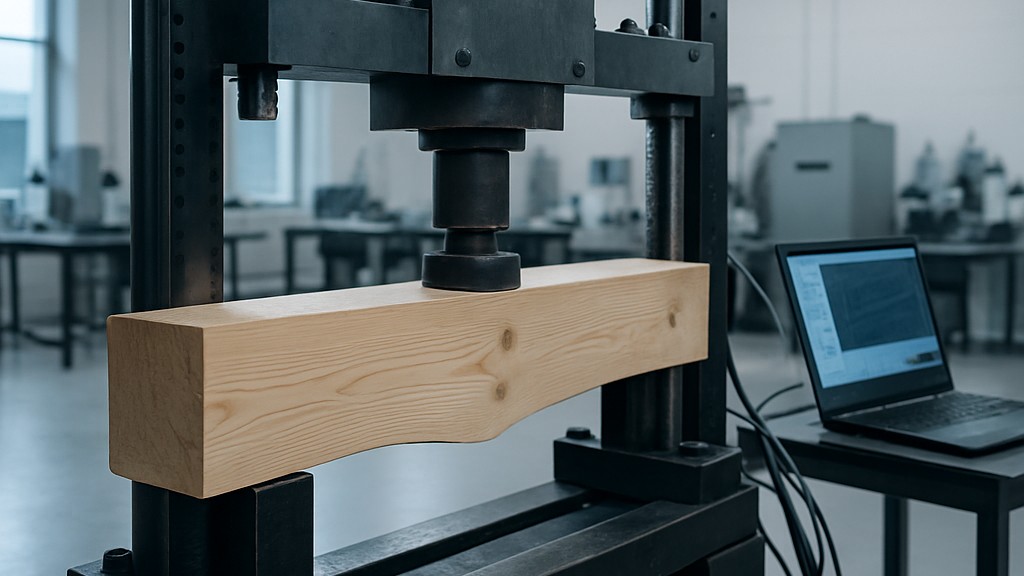
In the world of sustainable construction, timber has emerged as a leading material offering renewability, lightness, and aesthetic appeal. At the heart of modern timber engineering is EN 1995-1-1, the cornerstone of Eurocode 5, which standardizes the design of timber structures across Europe. This standard provides a unified framework for ensuring safety, reliability, and efficiency in timber-based buildings and civil engineering. While ongoing updates to align with more stringent environmental targets, the standard remains a vital tool for engineers moving towards low-carbon construction.
The EN 1995-1-1 standard harmonises with other Eurocodes such as EN 1990 (Fundamentals of structural design) and EN 1991 (Actions on structures) by integrating the limit state design philosophy, a probabilistic approach that balances ultimate limit states (durability and stability) with serviceability limit states (deflection and vibration).
The EN 1995-1-1 standard applies to a wide range of timber structures, including buildings, bridges and other civil works. This standard covers:
This standard explicitly excludes geotechnical aspects (Eurocode 7) and seismic design (Eurocode 8), but seamlessly integrates with them in seismic zones. For fire scenarios, it aligns with EN 1995-1-2, focusing on passive protection methods such as charring rates for exposed wood. This standard also allows for customization of nationally determined parameters to reflect local climates, materials, and regulations, ensuring harmonization while respecting regional differences.
EN 1995-1-1 encourages performance-based design, which essentially takes into account the unique behaviors of wood: anisotropy (directional strength), moisture sensitivity, and duration-dependent loading (e.g., persistent snow and short-term wind). This approach emphasizes the partial safety factors and combination rules from EN 1990, ensuring that structures meet reliability objectives over a 50-year design life.
The design begins with the characteristic strengths (e.g. bending, tension, compression) taken from the EN 338 standard for solid wood or the EN 14080 standard for laminated wood.
Since its entry into force, the EN 1995-1-1 standard has facilitated the regeneration of wood, enabling the construction of high-rise solid timber buildings. Recent amendments have improved connection rules and sustainability criteria, bringing it into line with the Construction Products Regulation (CPR).
The EN 1995-1-1 standard, part of Eurocode 5, is of critical importance for the following reasons:
In short, this standard is the cornerstone of modern and environmentally friendly engineering.
Ultimately, the EN 1995-1-1 standard is a testament to Europe's commitment to innovative and environmentally friendly engineering. By clarifying the complexity of wood, it enables designers to build durable structures in harmony with nature. As the construction industry grapples with net-zero targets, this Eurocode continues to evolve, ensuring wood's enduring role in shaping sustainable skylines.
Our organization, with its competent and experienced team, has been understanding the needs of its clients for years, providing them with the advanced testing services they require, and assisting them in the establishment, implementation, and improvement of management systems. In this context, we also provide testing services in accordance with the standard "EN 1995-1-1 Eurocode 5: Design of timber structures - Part 1-1: General rules and regulations for buildings."
To get an appointment, to get more detailed information or to request an evaluation, you can ask us to fill in our form and reach you.

