

A European standard, “EN 15813 Polymer-modified bituminous thick coatings for waterproofing - Determination of flexibility at low temperatures”, describes a test method for determining the flexibility of polymer-modified bituminous thick coatings for waterproofing at low temperatures.
For the purposes of this standard, the terms and definitions given in EN 15814 apply. Cold resistance also refers to the property of a bitumen sheet that resists cracking during bending tests at low temperatures.
Polymer-modified bitumen thick coatings are a highly preferred component in the construction and waterproofing sectors thanks to their technical advantages, practical benefits, and economic efficiency. Above all, they offer superior waterproofing performance. They provide a seamless, waterproof membrane that prevents water ingress. They are resistant to water pressure and are suitable for both vertical and horizontal applications, even below the groundwater table.
It exhibits improved flexibility and crack bridging. Thanks to polymer modification, these coatings maintain their elasticity even at low temperatures. They can bridge cracks in the substrate, which is critical in dynamic structures that move or collapse. They have strong adhesion to many surfaces, offering excellent adhesion to concrete, masonry, metal, and insulation boards. This reduces the risk of delamination over time.
It can be applied easily and safely. It is applied cold (without heating) by spray, roller, or trowel. It is user-friendly compared to traditional torch-applied membranes. Especially with solvent-free or low-VOC formulations, it is safe for use in confined or enclosed spaces. It also offers chemical and environmental resistance. It is resistant to soil chemicals, salts, acids, and alkalis, which is important for underground structures. Some formulations are UV resistant or can be overcoated in case of exposure.
Finally, Polymer modified bitumen thick coatings meet the performance criteria within the scope of EN 15814, EN 15817 and EN 15820 standards.
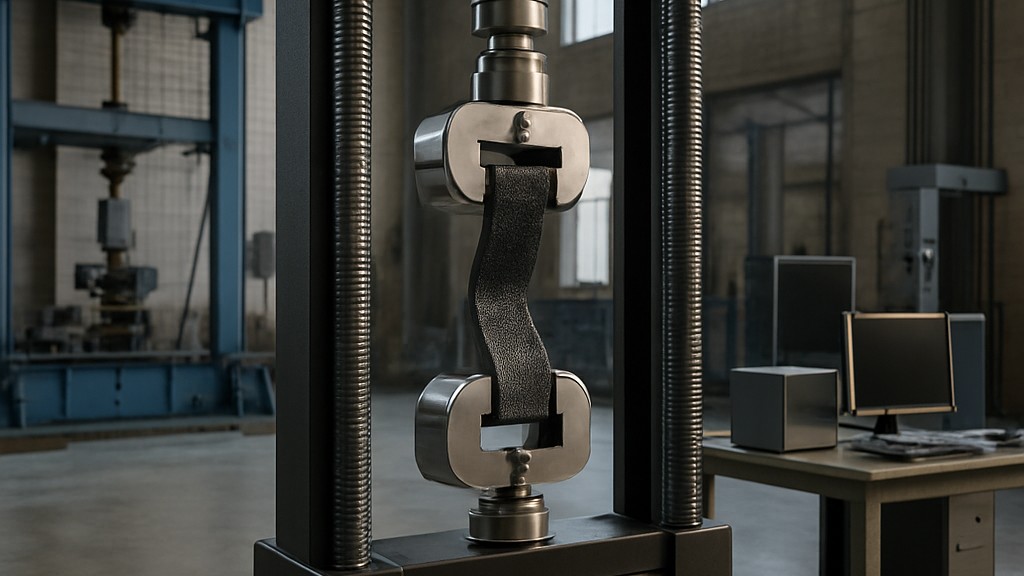
In principle, after preparing flexible sheets of polymer-modified bitumen emulsion, the samples are placed in a refrigerated box at a specified low temperature for at least 1 hour plus/minus 10 minutes. At the end of this period, the samples are bent around the bending steel.
The equipment used in these tests includes:
Five samples with dimensions of 50 mm x 200 mm are used in the tests.
Polymer-modified bituminous thick coating components should be conditioned for 24 hours in accordance with ISO 554 at a standard climate of 23°C (+/- 2°C) and a relative humidity of 50% (+/- 5%). To achieve the specified dry layer thickness, the wet coating should be leveled on the foil at room temperature using a frame or a measuring device, as specified in the manufacturer's instructions. The wet layer thickness should be 3 mm (+/- 0,3 mm) greater than the dry layer. Preparation should be carried out without any reinforcement. The samples should then be stored for 28 days in accordance with ISO 554 at a standard climate of 23°C (+/- 2°C) and a relative humidity of 50% (+/- 5%). The foil should be removed after 14 days.
After 28 days, test samples are cut to the dimensions specified in this standard. Five samples, along with the mandrel, are placed in a refrigerated box at 0°C (0°F) plus/minus 0,5°C (0°F) for at least 1 hour plus/minus 5 minutes. Each sample is bent around the mandrel inside the refrigerated box for 3 seconds at a constant speed. After bending, the samples should be visually inspected to determine if any cracks have formed on the coating surface.
The EN 15813 standard is important for the following reasons:
The EN 15813 standard is generally used in refrigerated trucks, trailers and containers for the transport of the following products:
This standard is also used by insulated sandwich panel manufacturers and vehicle body manufacturers specializing in cold chain logistics.
As a result, the EN 15813 standard plays a key role in maintaining cold chain integrity and ensuring that goods arrive safely at their destination without compromising quality or safety.
Our organization, which has been supporting businesses across all sectors for years through a wide range of testing, measurement, analysis, and evaluation activities, has a strong team of employees who closely follow global developments in science and technology and are constantly improving themselves. In this context, we also provide testing services in accordance with the EN 15813 standard for polymer-modified bituminous thick coatings for waterproofing - Determination of flexibility at low temperatures.
To get an appointment, to get more detailed information or to request an evaluation, you can ask us to fill in our form and reach you.

