
ASTM C672/C672M Standard Test Method for Scale Resistance of Concrete Surfaces Exposed to De-Icing Chemicals
The standard "ASTM C672/C672M Standard Test Method for Scale Resistance of Concrete Surfaces Exposed to De-icing Chemicals," published by the American Society for Testing and Materials (ASTM), describes a test method for determining the scale resistance of a horizontal concrete surface subjected to freeze-thaw cycles in the presence of de-icing chemicals. This method is intended for qualitative assessment of surface resistance through visual inspection.
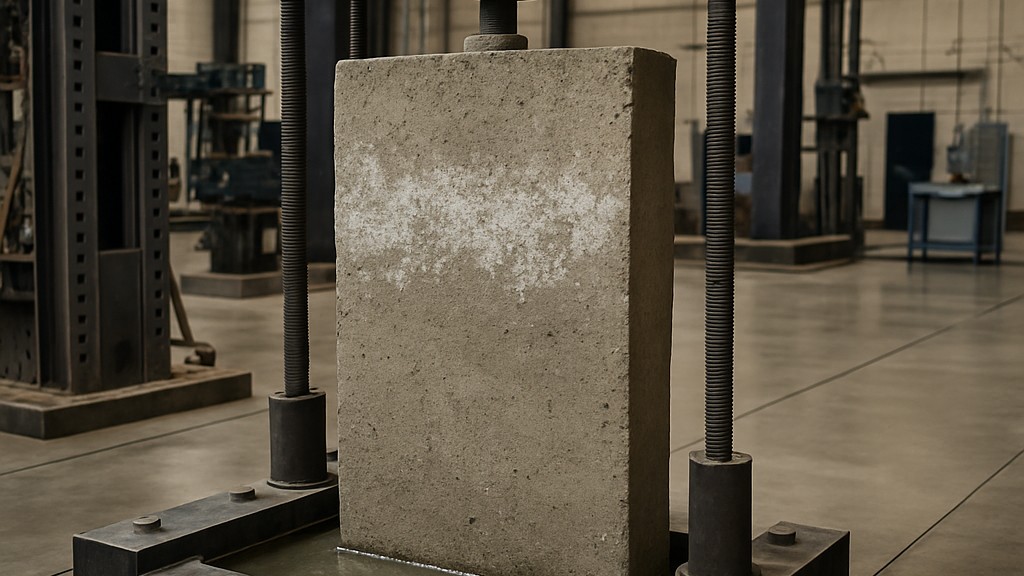
This test method can be used to evaluate the effect of mix ratio, surface treatment, curing, or other variables on scaling resistance. However, this test method should not be used to determine the durability of aggregates or other components of concrete. No correlation has been established between the frost resistance of specimens cut from hardened concrete and laboratory-prepared specimens.
The equipment used in these tests includes:
- Freezing equipment: A chest or room of sufficient size to hold the samples and reduce the temperature of the samples to minus 18 degrees plus/minus 3 degrees within 16 to 18 hours and maintain this temperature when the samples are fully loaded.
- Molds of appropriate size for use with test specimens and conforming to the requirements of ASTM C192/C192M standard.
- Compression bar conforming to the requirements of ASTM C143/C143M standard.
- Drilling tools: Wooden scraper board, steel trowel and medium-hard bristle brush suitable for achieving the desired test surface consistency.
- Slump cone conforming to the requirements of ASTM C143/C143M standard.
- Air meter conforming to the requirements of ASTM C173/C173M or ASTM C231 standards.
- Scales conforming to the requirements of ASTM C192/C192M standard.
- Concrete mixer conforming to the requirements of ASTM C192/C192M standard.
The air content, cementitious factor, slump rate, water-cement ratio, and other properties of the concrete and its components must be appropriate for the purposes for which the tests are to be performed. For purposes commonly used for this test method, such as evaluating a surface treatment to prevent scaling, concrete with the following properties has been found to be useful:
- Air is not entrained
- Cement content, 335 plus/minus 5 kg/m3
- Depression, 75 plus/minus 15 mm
- Durable aggregate with a maximum size of 25 mm (care should be taken to use an aggregate with a good track record of performance in freezing and frost exposure conditions).
If air-entrained concrete is to be used for comparison purposes, it should have the same proportions as the concrete with which it is being compared and the air content should be 6 percent plus/minus 1 percent.
Concrete is mixed and tested in the machine in accordance with the applicable provisions of the ASTM C192/C192M standard .
Concrete is widely used in environments subject to freezing and thawing, particularly in cold climates. One of the biggest durability issues in such conditions is surface spalling, a type of deterioration caused by repeated applications of deicing chemicals and subsequent freeze-thaw cycles. ASTM C192/C192M provides a systematic test method for assessing concrete's resistance to this type of damage. This standard includes a procedure to evaluate the resistance of a concrete surface to scaling after repeated freezing and thawing in the presence of deicing salts such as calcium chloride.
The main objectives of this standard are:
- To evaluate surface durability under simulated field conditions.
- To compare different concrete mixtures or treatments with respect to their resistance to surface abrasion.
- Supporting design decisions based on quality control, research and performance.
In the sample preparation process, concrete slabs measuring 300 mm x 300 mm x 75 mm are cast and cured under standard conditions. After 14 days of moist curing, they are air-dried for 14 days. A deicing agent (typically a 4 percent calcium chloride solution) is then applied to the concrete surface. The samples then undergo 50 freeze-thaw cycles. Each cycle includes:
- Freezing down to about minus 18 degrees
- Thawing up to plus 24 degrees
After every 5 cycles the surface is examined and given a scaling rating from 0 to 5:
- 0 = No scaling
- 1 = Very light scaling
- 2 = Light to moderate scaling
- 3 = Medium scaling
- 4 = Moderate to severe scaling
- 5 = Severe scaling with coarse aggregate visible
Various factors can affect the performance (scaling resistance) of concrete in the ASTM C192/C192M standard test, including:
- Water-cement ratio (lower water-cement ratio generally increases resistance)
- Air entrainment (provides space for freezing water to expand)
- Curing methods
- Use of additional cementitious materials (e.g. fly ash, slag)
- Surface finishing techniques
This standard is widely used by:
- Concrete producers ensure mix quality
- Ministry of Transport and transport agencies for infrastructure resilience
- Researchers studying the chemical interactions of freeze-thaw and defrosting
- Engineers and designers to specify durable concrete in cold climates
While this standard provides valuable information, it has some limitations:
- This is a qualitative test, not a quantitative one (visual assessments can be subjective).
- It only simulates one type of freeze-thaw damage (scaling from de-icers).
- May not fully represent real-world site conditions (e.g., traffic, UV exposure).
The ASTM C192/C192M standard is important because it helps evaluate and ensure the durability of concrete in environments where it is subjected to freeze-thaw cycles in the presence of deicing chemicals. This condition is common and serious in many cold regions. This standard is considered important for the following reasons:
- Protects infrastructure life: Surface scaling caused by de-icing salts can lead to progressive surface damage over time, exposing aggregates and reducing structural integrity. This standard helps specify scaling-resistant concrete mixes, resulting in longer-lasting sidewalks, bridges, curbs, parking lots, and more.
- Improves public safety: Delaminated or damaged concrete surfaces can become uneven, slippery, or dangerous, increasing the risk of accidents for vehicles and pedestrians. By ensuring surface durability, this standard contributes to safer infrastructure in winter conditions.
- Guides material selection and mix design: Allows designers and contractors to compare different concrete mixes, admixtures, or surface treatments under standardized conditions. Helps optimize mix designs for cold-climate performance, particularly when selecting air entrainment levels or additional cementitious materials.
- Supports quality control: This testing serves as a practical tool for verifying the quality of concrete batches or products before large-scale use. It ensures that what is specified in the project documentation is actually delivered and performs as intended.
- Reduces maintenance and lifecycle costs: Preventing premature surface deterioration results in fewer repairs and lower maintenance costs over the life of the structure. It helps asset managers make decisions that minimize long-term financial and environmental impacts.
- Provides standardized comparison: This standard provides a uniform, repeatable method for evaluating concrete across projects, laboratories, and geographies. This ensures consistent benchmarking and better communication between specifiers, manufacturers, and regulators.
- Aligns with sustainability goals: Durable concrete reduces the need for frequent repairs and replacements, which in turn reduces carbon dioxide emissions and material waste over time. It encourages the use of materials and practices that strengthen durable infrastructure.
Consequently, the ASTM C192/C192M standard plays a crucial role in assessing the surface durability of concrete exposed to deicing chemicals and freeze-thaw cycles. While not comprehensive, it is a fundamental tool for ensuring long-term concrete performance in cold weather conditions. Understanding and applying the results of this test can lead to more durable infrastructure, lower maintenance costs, and improved public safety in freezing conditions.
Our organization, which has been serving businesses for many years and meticulously following global developments in science and technology, employs a team of experienced professionals and a broad infrastructure to conduct testing, measurement, and analysis in a wide range of areas for businesses across all sectors. In this context, we also provide testing services in accordance with the ASTM C672/C672M Standard Test Method for the Resistance of Concrete Surfaces to Deicing Chemicals.

