

The “AATCC™ 124 Test Method for Appearance Smoothness of Fabrics After Home Washing” standard, published by the American Association of Textile Chemists and Colorists (AATCC), describes a test method designed to determine the appearance smoothness of fabrics after home washing. This standard provides standard parameters representing various washing and drying processes and common home care options. Any washable fabric (woven, knitted, or nonwoven) can be evaluated for appearance smoothness using this method.
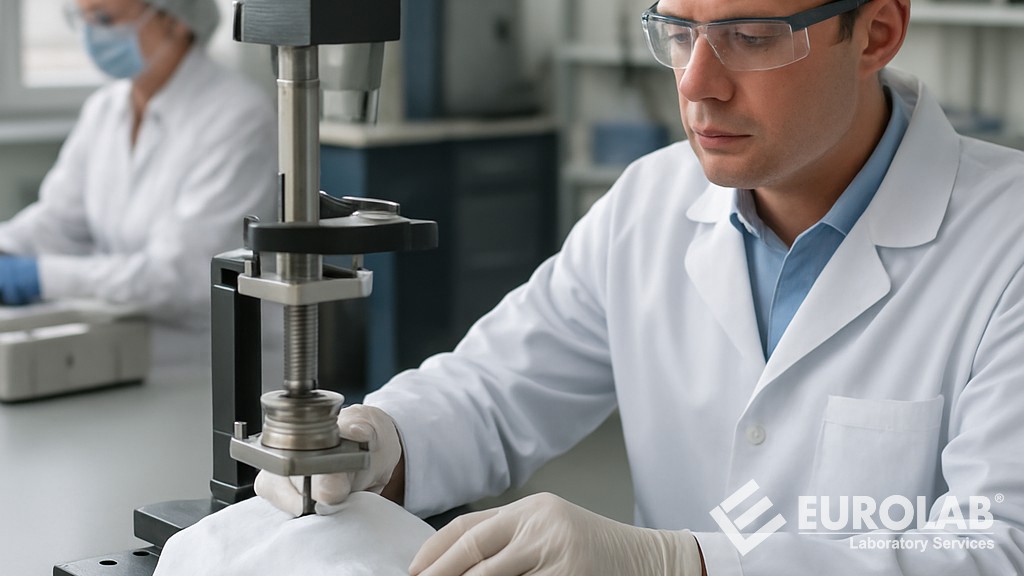
This testing method evaluates how well fabrics maintain a smooth, wrinkle-free appearance after repeated cycles of in-house washing. It's commonly used in the textile industry to assess the performance of wrinkle-resistant or durable iron-on finishes on fabrics, helping manufacturers ensure garments look smooth and wrinkle-free after washing.
The primary purpose of the AATCC™ 124 standard is to simulate real-world home washing conditions and measure a fabric's resistance to wrinkling. In an age of easy-care fabrics, such as resin-treated cotton shirts, which are wrinkle-resistant, this test measures the appearance of smoothness (typically wrinkle retention or wrinkle removal). Higher scores indicate better performance, which is crucial for consumer satisfaction in washable and wearable garments.
This testing method is particularly applicable to the following:
In various regulations, this standard is used as a reference in quality control and product claims, making it a cornerstone for textile testing laboratories worldwide.
This testing method involves subjecting fabric samples to multiple in-home washing cycles (typically 1–5, but more repeatable) followed by visual evaluation. The main steps include:
After washing, the fabrics are visually evaluated under controlled lighting (northern sky daylight or equivalent, at a 45-degree angle). Evaluators compare the sample to AATCC 3D Smoothness appearance replicas, a set of six plastic replicas representing increasing wrinkle levels.
Ratings for precision may include decimal numbers. At least three independent evaluators are recommended for accuracy. Replicas provide a tactile and visual standard, making evaluations more objective than photographic scales. These 3D replicas are essential tools and are also used in related methods such as the AATCC™ 143 standard.
The AATCC™ 124 standard is often performed in conjunction with dimensional stability (AATCC™ 135) or color fastness testing. It helps brands claim wrinkle-free or easy-care properties and is required for certain certifications or retailer specifications.
The equivalent of this standard is “ISO 15487 Textiles - Method for assessing the appearance of clothing and other textile finished products after home washing and drying” published by the International Organization for Standardization (ISO). The AATCC TM 104 standard is technically the same in scope as ISO 15487, but the procedures may differ in detail. This international standard includes a test method for assessing the appearance of clothing and other textile products after one or more home washing and drying processes. The assessed appearance includes elements such as color change, pilling, cottony appearance, matte appearance of fabrics, smooth appearance of fabric and seams, and the preservation of pressed wrinkles on garments and other textile products, as well as damage to components (such as buttons, snaps, zippers). This standard applies to washable textile finished products of all types of fabric structures. Since the aim is to assess textile finished products as they are supplied from the manufacturer or ready for use, sewing and creasing techniques are not included. Sewing and creasing techniques depend on the fabric properties.
In conclusion, the AATCC™ 124 standard remains a vital tool for the development of wrinkle-resistant textiles by combining laboratory testing with everyday consumer experience.
For many years, our organization, with its competent and experienced staff, has been understanding the needs of its clients, providing the advanced testing services they require, and assisting in the establishment, implementation, and improvement of management systems. Within this framework, we also provide testing services to businesses in accordance with the "AATCC TM 124 Test Method for the Smoothness Appearance of Fabrics After Home Washing" standard.
To get an appointment, to get more detailed information or to request an evaluation, you can ask us to fill in our form and reach you.

