

DIN 54034 Color Fastness of Textiles - Determination of Color Fastness of Dyes and Prints to Bleaching: Hypochlorite (Mild)
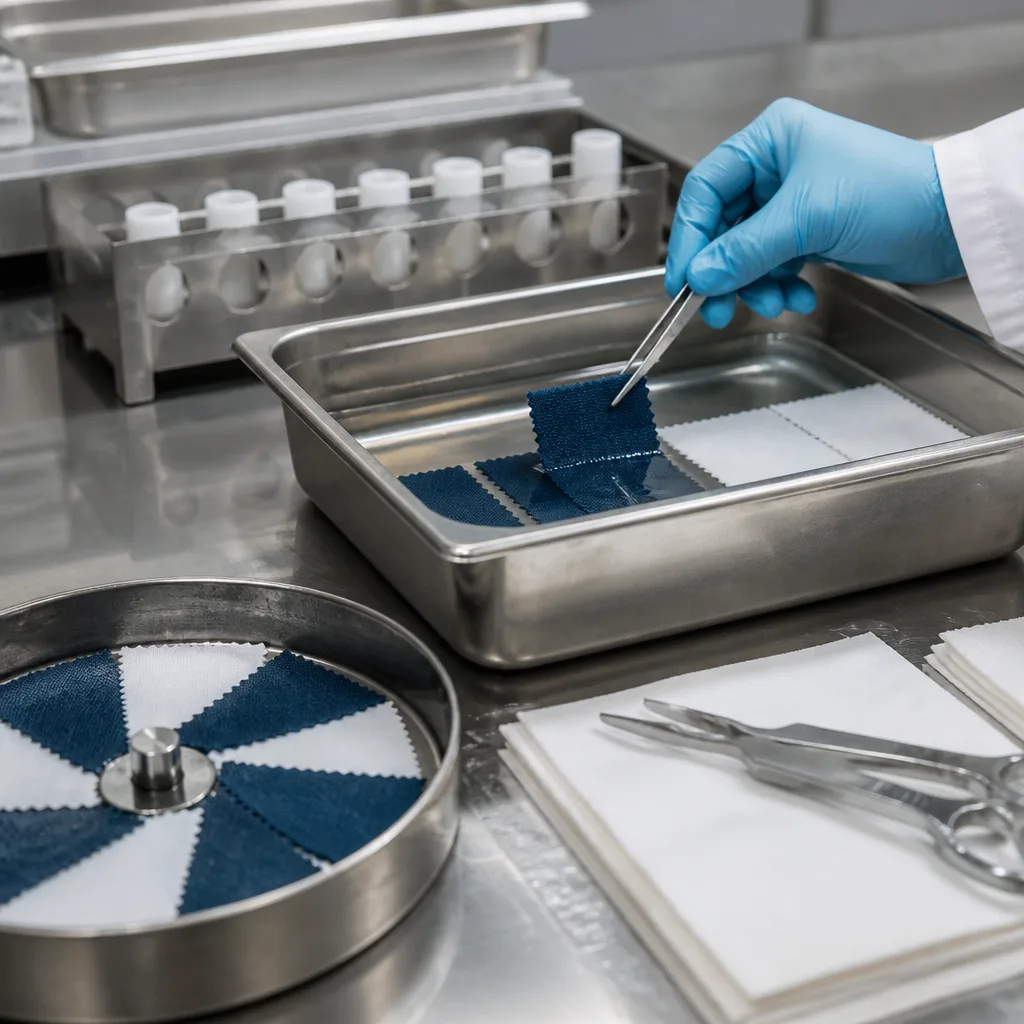
The standard “DIN 54034 Color fastness of textiles - Determination of color fastness of dyes and prints to bleaching: hypochlorite (mild)”, published by the German Institute for Standardization (DIN), describes a test method for evaluating the resistance of dyed or printed textiles (fibers, yarns, fabrics or finished products at all processing stages) to the effects of mild hypochlorite bleaching solutions (low-concentration active chlorine solutions).
This test measures how well a color withstands exposure to mild hypochlorite bleach, commonly used in laundry or textile processing. The test assesses color change (fading or tonal variation) and, in some cases, staining of adjacent fabrics. Particularly for quality control in the textile industry, it's crucial to ensure that dyes and prints remain stable under household or industrial bleaching conditions that simulate "mild" chlorine-based processes.
In these tests, mild/low concentrations of hypochlorite (sodium hypochlorite solution) are used as a bleaching agent. This standard applies to textiles in any form (raw, dyed, printed).
The DIN 54034 standard is often used in conjunction with the following other color fastness standards:
Laboratories often apply the DIN 54034 standard as a milder variant to distinguish it from harsher chlorine exposure tests. It is frequently referenced in product specifications and laboratory service lists along with other fastness tests (rubbing, washing, perspiration, light).
In short, the DIN 54034 standard includes test methods used to evaluate the color fastness of textiles, focusing particularly on their resistance to bleaching agents. This standard is widely applied in the textile and apparel industries to ensure that dyed or printed fabrics maintain their color integrity when exposed to bleaching conditions during washing or industrial processing.
The DIN 54034 standard defines a controlled laboratory procedure to simulate the effects of bleaching chemicals, such as those containing chlorine or oxygen, on textile materials. The main objectives are:
This standard is primarily used for the following:
This is especially important for items that are expected to be washed frequently with bleach detergents.
The testing method essentially follows these steps:
Color change is generally assessed on a scale of 1 = severe change to 5 = no change.
The DIN 54034 standard is necessary because bleaching is one of the most aggressive processes textiles may encounter in actual use, and without a standardized testing method, product quality becomes inconsistent and unpredictable. This standard is considered important for the following reasons:
This standard helps manufacturers identify poor paints or treatments before products are sold.
This leads not only to improved quality control, but also to better product engineering.
The DIN 54034 standard ensures that textile products not only look good when new, but also remain reliable even after repeated washing with bleach.
In conclusion, the DIN 54034 standard plays a crucial role in evaluating how textiles behave under bleaching conditions. By offering a reliable and standardized method, it supports the production of durable, colorfast textiles that meet both consumer expectations and industry requirements.
For many years, our organization, with its competent and experienced staff, has been understanding the needs of its clients, providing the advanced testing services they require, and assisting them in the establishment, implementation, and improvement of management systems. Within this framework, we also provide testing services in accordance with the DIN 54034 standard.
To get an appointment, to get more detailed information or to request an evaluation, you can ask us to fill in our form and reach you.

