

The standard “DIN 54015 Color fastness of textiles - Determination of peroxide washing fastness of dyes and prints”, published by the German Institute for Standardization (DIN), describes a method for determining the color fastness of textiles under all processing conditions to the effects of peroxide washing solutions at high temperatures and under simultaneous mechanical stress. This standard is primarily applicable to natural cellulose fibers and fibers expected to withstand the test conditions.
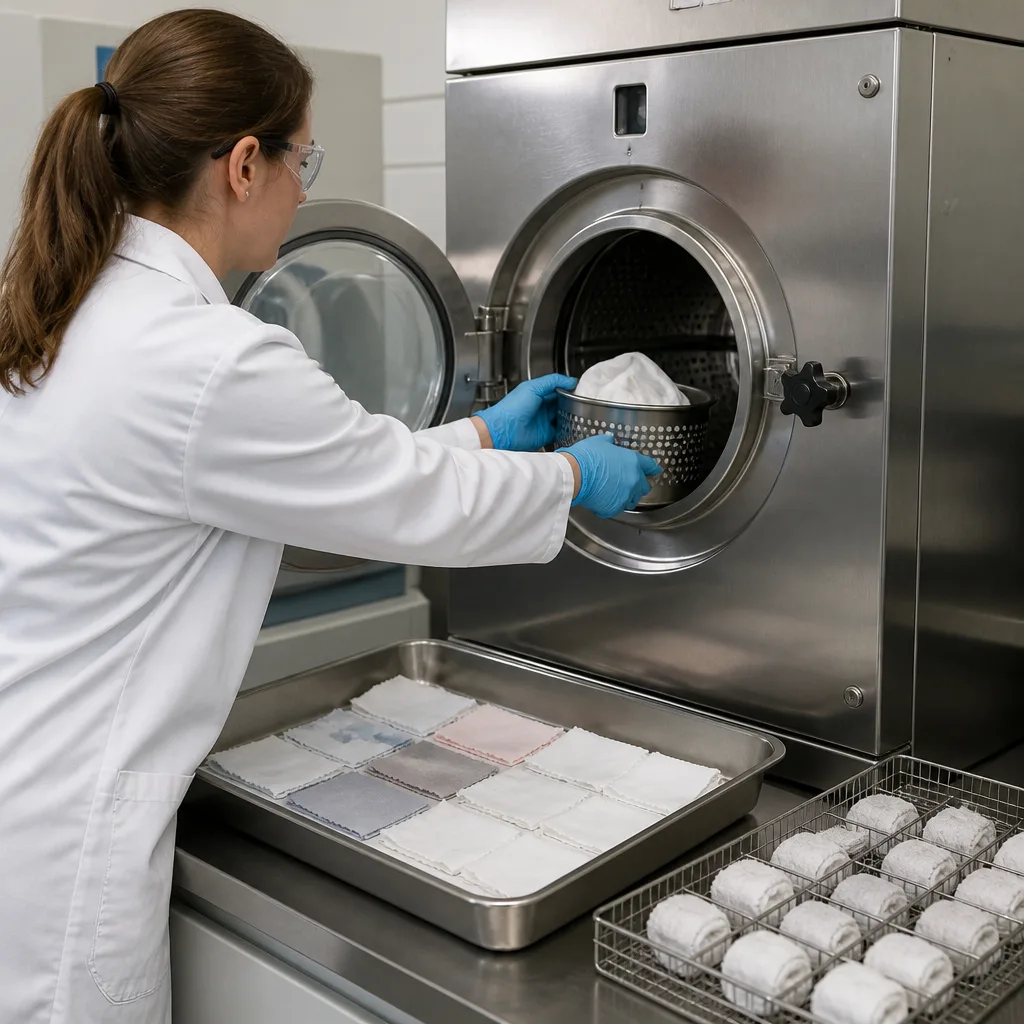
This standard provides a test method to evaluate how well dyed or printed textiles resist color change or staining when washed in the presence of peroxides (such as sodium perborate or hydrogen peroxide-based detergents). It simulates the higher-temperature washing conditions common in industrial or heavy-duty laundry processes where oxidative agents are used to enhance cleaning power.
This test assesses two main aspects:
This method applies to textile products at all processing stages (raw, semi-finished, or finished) and is particularly important for white or light-colored fabrics, work clothes, or hospital linens, which are subjected to washes containing bleaching agents that enhance hygiene and whiteness.
Peroxides are powerful oxidizing agents used in many modern detergents to break down stains and brighten fabrics. However, they can also affect some dyes, causing fading, discoloration, or bleeding. The DIN 54015 standard helps manufacturers, dyers, and quality control laboratories predict real-world performance under oxidative washing conditions.
This standard is often used in conjunction with related standards such as:
In some laboratories and textile finishing companies, peroxide washing fastness according to the DIN 54015 standard is a routine test for quality assurance.
Typically, this test follows these steps:
During the evaluation phase, color change is assessed using grayscale. Meanwhile, staining on adjacent fabrics is also evaluated. The evaluation levels are as follows:
Two main factors are considered:
The results help determine whether a paint or print is suitable for peroxide-tolerant applications.
The relevant applications of this standard are as follows:
In short, the DIN 54015 standard includes methods for evaluating the color fastness of textiles, particularly to organic solvents used in dry cleaning processes. This standard is part of the broader DIN 54000 series of standards, which focuses on different aspects of textile color fastness and durability under various environmental and chemical influences.
The main purpose of the DIN 54015 standard is to determine how well dyed or printed textiles retain their colors when exposed to solvent-based cleaning agents. This is especially important for garments labeled “dry clean only,” where conventional water-based washing is not used.
This standard helps answer these important questions:
The DIN 54015 standard applies to the following:
This test method is commonly used by:
In principle, this standard simulates real dry cleaning conditions by exposing textile samples to organic solvents under controlled laboratory conditions.
The DIN 54015 standard is important because solvent-based cleaning can affect textiles differently than washing with water. Without proper testing, colors can fade unevenly, fabrics can bleed color into each other, and garments can lose their commercial value after cleaning. This standard ensures the following:
The DIN 54015 standard complements the following other color fastness standards:
Together, these standards provide a complete durability profile for a textile.
In conclusion, the DIN 54015 standard plays a critical role in evaluating how textiles behave under dry cleaning conditions. By simulating solvent exposure and assessing color stability, it helps manufacturers and quality control professionals ensure that fabrics maintain their appearance, integrity, and performance throughout their lifecycle.
For many years, our organization, with its competent and experienced staff, has been understanding the needs of its clients, providing the advanced testing services they require, and assisting them in the establishment, implementation, and improvement of management systems. Within this framework, we also provide testing services in accordance with the DIN 54015 standard.
To get an appointment, to get more detailed information or to request an evaluation, you can ask us to fill in our form and reach you.

