
DIN 53843-1 Textile Tests - Loop Tensile Test - Yarns

DIN 53843-1 Textile Tests - Loop Tensile Test - Yarns

The standard “DIN 53843-1 Textile tests - Loop tensile test - Yarns”, published by the German Institute for Standardization (DIN), specifies how to perform loop tensile tests on yarns. This standard focuses on determining the strength of yarns when tested in a looped configuration.
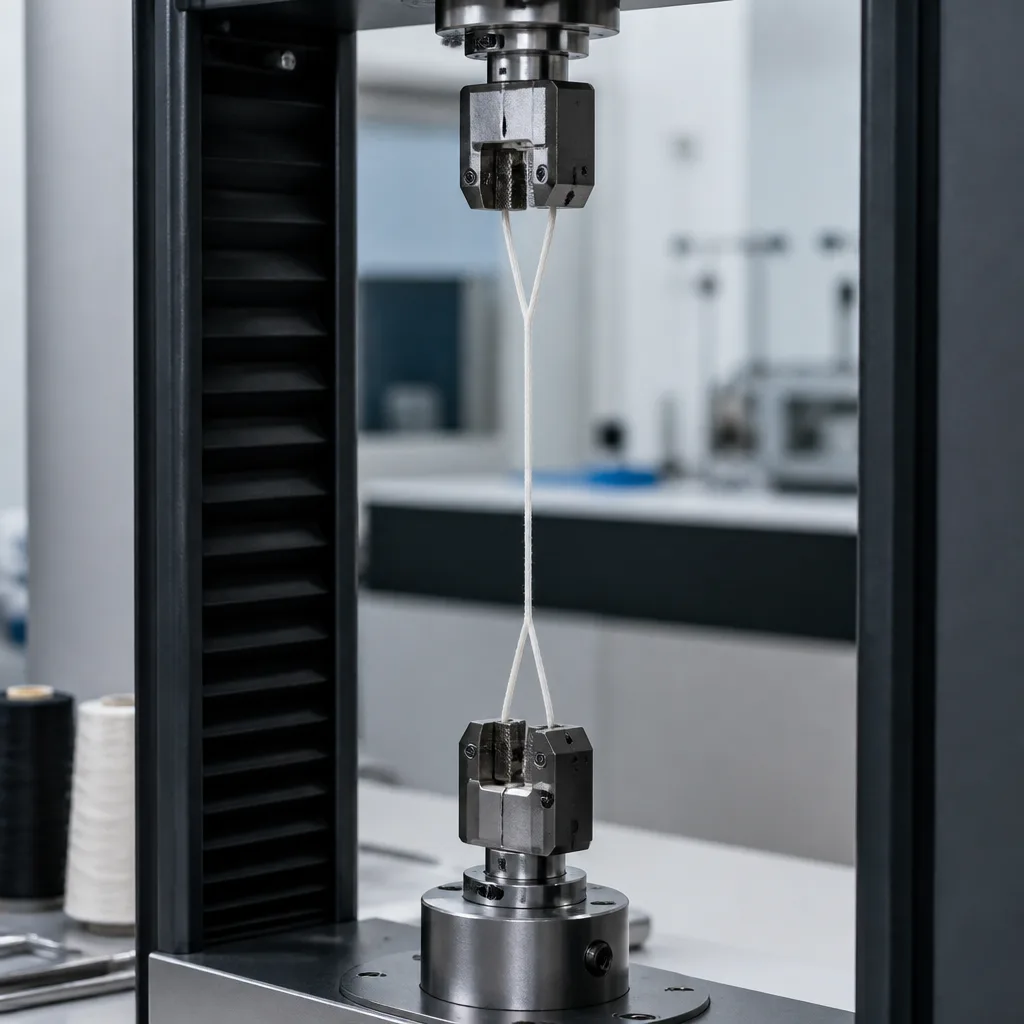
DIN 53843-1 Textile Tests - Loop Tensile Test - Yarns

The loop pull test evaluates the maximum tensile force a thread can withstand when looped and pulled until it breaks. This test is particularly useful for the following reasons:

  • It simulates the stresses experienced by yarns in processes involving loops or interweaving, such as weaving, knitting, or sewing.
  • It provides different information compared to a single-ended flat tensile test (e.g., DIN 53834-1 standard).

This method is generally applied to single threads, twisted threads, and sewing threads.

The results help to evaluate yarn quality, durability, and suitability for end-use applications in textiles, apparel, and technical fabrics.

A related standard, “DIN 53843-2 Textile tests - Ring tensile test for fibers,” sometimes covers variations or additional aspects, but the DIN 53843-1 standard is the primary method for basic loop testing on yarns.

The method described generally follows these steps:

  • Sample preparation: Yarns are conditioned in a standard atmosphere (DIN 53802 standard) to ensure consistent moisture content.
  • Test setup: A piece of yarn is looped (usually around pins or hooks on a tensile testing machine). The loop is then subjected to increasing tensile load until it breaks.
  • Testing machine: The equipment used is compatible with standard material testing machines (e.g., refers to the DIN 51221 standard series for equipment specifications).
  • Procedure: The maximum force at fracture in the loop configuration is measured. In some contexts, wet testing may also be considered.
  • Statement of results: The breaking strength in a loop (loop strength) is generally compared to the straight-line tensile strength for the loop efficiency ratio.
  • Relevant tests: These are usually performed in conjunction with a knot pull test, which uses a knot instead of a simple loop (DIN 53842-1 standard).

Textile testing laboratories, yarn manufacturers, and machinery manufacturers routinely use the DIN 53843-1 standard. This standard is included in laboratory service lists for the following purposes:

  • Quality control of spun, filament and textured yarns.
  • Evaluation of sewing threads and technical threads.
  • Comparison of different yarn structures (single-ply vs. multi-ply).

Relevant standards include the following:

  • DIN 53842-1: Knot pull test for threads (similar but uses knots).
  • DIN 53834-1: Simple (straight) tensile test for single and multi-ply yarns.
  • DIN EN ISO 2062: Breaking strength and elongation of threads (international equivalent of the straight tensile test).

In short, the DIN 53843-1 standard focuses on testing the abrasion resistance of textile floor coverings, especially carpets. This standard defines a method for evaluating how well a textile surface withstands abrasion caused by mechanical friction by simulating real-life usage conditions.

The main objectives of the DIN 53843-1 standard are as follows:

  • Evaluating the durability of textile floor coverings.
  • To measure resistance to surface abrasion and fiber loss.
  • To provide a repeatable and standardized test method.
  • To enable comparisons between different textile products.

This enables manufacturers, suppliers, and quality control laboratories to consistently evaluate product performance.

The DIN 53843-1 standard is generally applied in the following areas:

  • Carpets and rugs
  • Textile floor coverings
  • Materials used in residential and commercial interiors.

This standard is particularly important in the following sectors:

  • Construction and building materials
  • Interior design and furniture
  • Hotel and office environments
  • Test Principle

The method described in the DIN 53843-1 standard includes the following:

  • Subjecting the textile sample to controlled mechanical abrasion.
  • Using a standardized wear testing device (typically involving rotational or frictional motion)
  • Application of specific pressure and motion cycles.

During the test,

  • The sample is securely mounted.
  • A friction element rubs against a surface repeatedly.
  • The test continues for the specified number of cycles.
  • The degree of wear is assessed visually or by measuring mass loss.

After testing, the material is evaluated according to the following criteria:

  • Surface damage (e.g., fiber breakage, pilling)
  • Change of appearance
  • Material loss (mass reduction)
  • Durability level

The results help classify the suitability of textiles for different usage intensities (e.g., light household use vs. heavy commercial use).

The DIN 53843-1 standard is often used in conjunction with other textile testing standards that evaluate the following characteristics:

  • Tensile strength
  • Elastic behavior
  • Color fastness
  • Pilling resistance

Together, these standards provide a comprehensive understanding of textile performance.

The DIN 53843-1 standard is important because it directly addresses abrasion resistance, one of the most critical performance characteristics of textile floor coverings. This standard is considered important for the following reasons:

  • Ensures long-term durability: Carpets and textile floor coverings are constantly exposed to foot traffic, furniture movement, and cleaning processes. This standard helps determine whether a material can withstand daily use without rapid deterioration, preventing the need for premature replacement.
  • It ensures reliable quality control: This method allows manufacturers to:
    • To maintain consistent production quality.
    • Early detection of weak materials.
    • Ensuring each party meets performance expectations.
  • It enables fair product comparison: This standard provides objective and measurable results, making the following possible:
    • It enables buyers to make informed decisions.
    • It enables policymakers (architects, designers) to select appropriate materials.
    • It ensures that performance levels are communicated transparently.
  • It supports application-based selection: Different environments require different levels of resilience.
    • Houses: Medium abrasion resistance
    • Offices, hotels, airports: High wear resistance.

This standard helps determine whether a textile product is suitable for light, medium, or heavy traffic areas, reducing the risk of selecting the wrong material.

In conclusion, the DIN 53843-1 standard plays a crucial role in the textile and floor covering industry by defining a reliable method for testing abrasion resistance. By simulating real-world abrasion conditions, it helps ensure that textile floor coverings meet durability expectations and maintain their appearance over time.

For many years, our organization, with its competent and experienced staff, has been understanding the needs of its clients, providing the advanced testing services they require, and assisting them in the establishment, implementation, and improvement of management systems. Within this framework, we also provide testing services in accordance with the DIN 53843-1 standard.

WhatsApp

