

The "ASTM D3884-22 Standard guide for abrasion resistance of textile fabrics (rotary platform abrasive method)" standard developed by the American Society for Testing and Materials (ASTM) describes the requirements for determining the abrasion resistance of textile fabrics using a rotary platform abrasive.
Other procedures for measuring the abrasion resistance of textile fabrics include:
To determine the abrasion resistance of leather, the standard “ASTM D7255-22e1 Standard test method for abrasion resistance of leather (rotary platform, abrasive method)” is applicable.
For the purposes of this standard, the terms and definitions given in "ASTM D13.60-4848 Standard Terminology for Strength, Deformation, and Related Properties of Textiles" and "ASTM D98-4850 Standard Terminology for Fabrics and Fabric Test Methods" as well as the terms abrasion, abrasion cycle, and breaking force are relevant to this standard. Resurfacing also refers to the procedure of cleaning and renewing the working surface of an abrasive wheel before use or during testing.
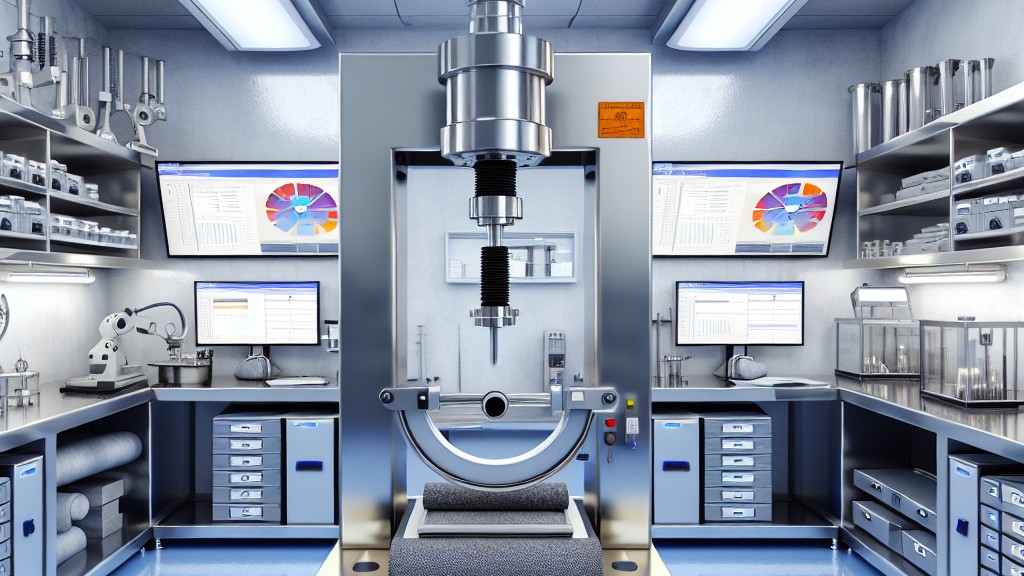
A specimen is abraded using rotary friction action under conditions of controlled pressure and abrasive action. The test specimen, mounted on a rotating platform, rotates about a vertical axis against the sliding rotation of two abrasive wheels. The wheels shall be mounted so that they rotate in opposite directions when in contact with the rotating test specimen. One abrasive wheel rubs the specimen outward towards the periphery and the other inward towards the centre, while a vacuum system removes the wear debris generated during the test. The resulting wear tracks form a pattern of crisscrossing arcs over an area of approximately 30 cm2. Resistance to abrasion is assessed by various methods described in this standard.
Measuring the abrasion resistance of textiles and other materials is very complex and can be affected by a number of factors, including:
The resistance of textile materials to abrasion as measured on a laboratory testing machine is usually only one of several factors that contribute to the abrasion performance or durability experienced in actual use of the material. While abrasion resistance (usually expressed as the number of cycles using a particular technique in a particular machine to produce a particular degree or amount of abrasion) and durability (defined as the ability to resist deterioration or wear during use, including the effects of abrasion) are often related, the relationship varies with different end uses, and different factors may be necessary in any calculation of durability estimated from specific abrasion data.
Laboratory tests may be reliable as an indication of relative end-use performance when the difference in wear resistance of various materials is large, but they should not be relied upon where the differences in laboratory test findings are small. In general, they should not be relied upon to predict actual wear life in specific end uses unless data demonstrating a specific relationship between laboratory wear tests and actual wear in the intended end use are available.
These general observations apply to all types of fabrics, including woven, nonwoven and knitted apparel fabrics, household fabrics, industrial fabrics and floor coverings.
Our organization has a strong staff that closely follows the developments in the world in the field of science and technology and constantly improves itself. Among the numerous test, measurement, analysis and evaluation studies provided for businesses in various sectors, there are also test services in accordance with the standard "ASTM D3884-22 Standard guide for abrasion resistance of textile fabrics (rotary platform abrasive method)".
To get an appointment, to get more detailed information or to request an evaluation, you can ask us to fill in our form and reach you.

