

The standard “DIN 53867 Textile tests - Detection of pilling by random roll pilling tester”, published by the German Institute for Standardization (DIN), describes the method for evaluating the pilling resistance of textile fabrics using a random roll pilling tester.
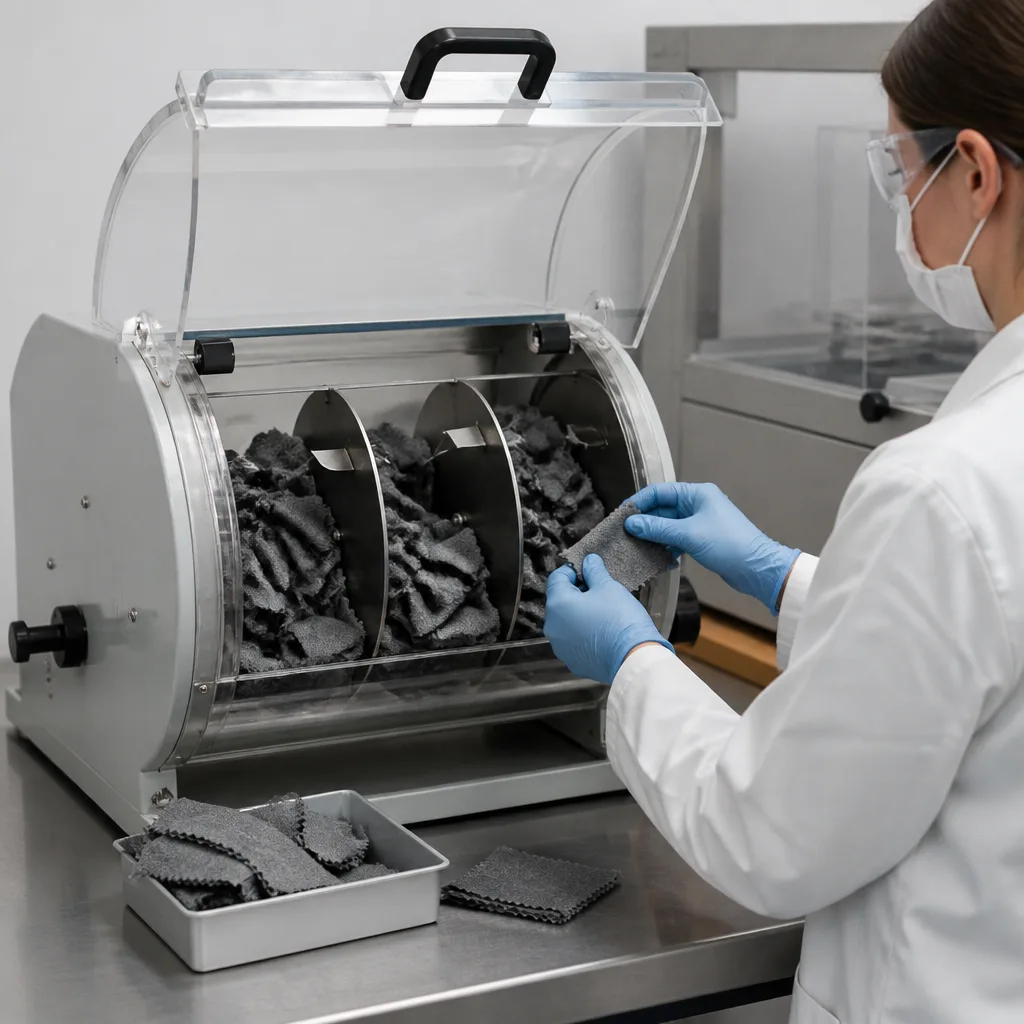
Pilling refers to the formation of small clumps (fuzz) of fibers intertwined on the surface of a fabric during wear or use. This can impair appearance and is an important quality parameter for clothing, upholstery, and other textiles. This standard helps manufacturers, testing laboratories, and retailers assess how well a fabric resists this surface change under simulated rolling and abrasion conditions.
This standard describes a laboratory test to determine the pilling behavior of woven, knitted, or other textile fabrics. The method simulates the mechanical stresses to which fabrics are subjected during everyday use (e.g., friction against themselves or other surfaces) by rotating fabric samples in a cylindrical chamber with a propeller (rotating blades or wings) and optional cork lining or air support.
The main objectives of the DIN 53867 standard are as follows:
This method is widely accepted internationally and is often used in conjunction with the following equivalent standards:
In general, this method follows these steps:
After testing, samples are visually evaluated for pilling, fluffing, and felting. The evaluation considers the number and size of pilling, surface turbidity, and fabric integrity. Results are typically expressed using a rating scale.
The evaluation compares the tested samples to reference photographs or standard copies. This method can also assess the prominence of surface changes. The equipment used in these tests is designed in accordance with DIN 53867, ASTM D3512, and related standards.
The areas of application of this standard are:
This standard is particularly useful for fabrics made from fibers prone to pilling (e.g., cotton, wool, polyester blends).
In short, the DIN 53867 standard defines methods for evaluating the mechanical abrasion resistance of textile fabrics, focusing particularly on pilling and surface wear. These properties are critical for assessing the durability and visual appearance of textiles during use.
This standard is widely applied in the textile industry for quality control, product development, and performance comparison.
The DIN 53867 standard is necessary because fabrics that look perfect in production can deteriorate rapidly in real-world use. This standard closes this gap by providing a reliable way to predict real-life wear behavior. The main reasons why this standard is considered important are as follows:
In conclusion, the DIN 53867 standard offers a reliable and standardized approach to evaluating the mechanical strength and surface appearance of textiles. By simulating real-world wear conditions, it helps manufacturers ensure that fabrics maintain their quality and appearance over time, ultimately increasing consumer satisfaction and product reliability. This standard plays a vital role in ensuring textile durability and consumer satisfaction by measuring one of the most visible signs of fabric wear.
For many years, our organization, with its competent and experienced staff, has been understanding the needs of its clients, providing the advanced testing services they require, and assisting them in the establishment, implementation, and improvement of management systems. Within this framework, we also provide testing services in accordance with the DIN 53867 standard.
To get an appointment, to get more detailed information or to request an evaluation, you can ask us to fill in our form and reach you.

