

The “ISO 6741 Textiles - Fibres and yarns - Determination of commercial mass of consignments” standard published by the International Organization for Standardization (ISO) consists of the following subsections published under the same title:
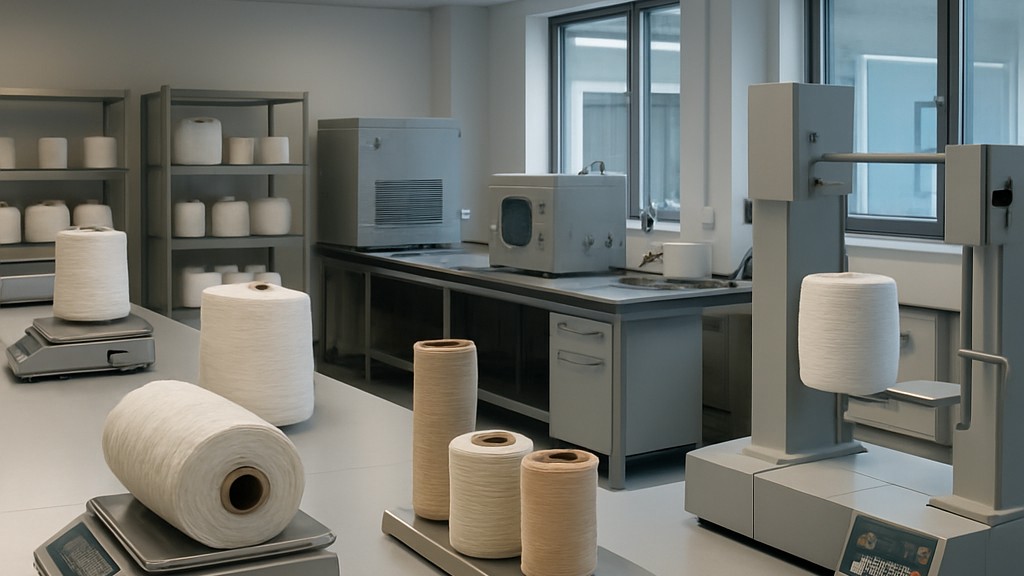
In principle, the commercial mass of a shipment is the calculated mass that a shipment of textile materials would have if the mass corresponding to the commercial moisture regain were added to the dried mass of the material, or if the mass corresponding to the commercial allowance were subtracted from the dried mass of the material. The following steps are necessary to determine the commercial mass:
When the commercial mass of a consignment is determined by drying without cleaning, the procedure specified in Annex C is used if the commercial mass needs to be adjusted to a specified extractable content.
This standard does not apply to: plated yarns, covered yarns, fibres or yarns packaged for retail sale and fibre blends (mixtures of different types of yarn).
This standard is particularly useful in trade and quality control to ensure accurate invoicing and compliance across the global textile supply chain.
In principle, laboratory samples are taken from the containers in the shipment samples taken as specified in the ISO 6741-1 standard and placed in closed, airtight containers for further processing.
The sample is taken as appropriate, preferably immediately after weighing each container in the shipment sample as specified in the ISO 6741-1 standard.
This standard does not apply to: plated yarns, covered yarns, fibres or yarns packaged for retail sale and fibre blends (mixtures of different types of yarn).
This standard outlines procedures for sampling various types of shipments, such as loose fibers, bales or yarn packages, ensuring that the samples are representative for accurate mass determination.
This standard is critical for ensuring accurate sampling, a prerequisite for reliable commercial mass determination in the textile industry. It is used in trade, quality control, and testing processes to ensure fairness in transactions and compliance with international standards.
In principle, as stated in the ISO 6741-1 standard, the test sample obtained by following the procedures given in the ISO 6741-2 standard is cleaned with the method recommended for the relevant fiber in the ISO 67414 standard.
This standard does not apply to: plated yarns, covered yarns, fibres or yarns packaged for retail sale and fibre blends (mixtures of different breed types).
This standard provides specific cleaning methods according to fiber type (e.g. cotton, wool) to remove contaminants such as dirt, oil or processing aids and to ensure that the sample is suitable for mass determination.
This standard is essential for preparing clean, representative samples for accurate commercial mass determination in the textile industry. It ensures that impurities do not affect mass measurements, which is critical for fair trade, quality control, and compliance with international textile standards.
The sampling procedures to be used for each morphological form (fiber, tow, sliver, yarn) given in the ISO 6741-2 standard are listed in Table 3. The sampling list and, where appropriate, the cleaning method in the ISO 6741-3 standard to be used for a specific fiber type are specified in Tables 1 and 2.
A fiber or a particular fiber type (e.g., greasy wool, wet-packed high shrinkage) included in this standard may not be applicable to that fiber or fiber type.
This standard does not apply to: plated yarns, covered yarns, fibres or yarns packaged for retail sale and fibre blends (mixtures of different breed types).
The report lists standardized values for:
This standard has been withdrawn because commercial tolerances and moisture recovery values have been integrated into other standards, updated in separate documents, or have become obsolete due to changes in industry practices or test methods.
During its existence, this technical report was used in the textile industry to ensure consistency in calculating the commercial mass of fibers and yarns by providing standardized moisture regain and tolerance values. These values were critical for accurate invoicing and quality control in international textile trade.
Our organization, which has been operating for many years and meticulously follows global developments in science and technology, employs a skilled team and extensive infrastructure to conduct testing, measurement, and analysis in a wide range of areas for businesses across all sectors. In this context, we also provide testing services in accordance with the ISO 6741 Textiles - Fibers and Yarns - Determination of Commercial Mass of Shipments standard.
To get an appointment, to get more detailed information or to request an evaluation, you can ask us to fill in our form and reach you.

