

This regulation, published under technical bulletin CAL 117 issued by the US State of California and containing procedures regarding the flammability of upholstered furniture, describes the requirements for determining raised surface properties and a test method.
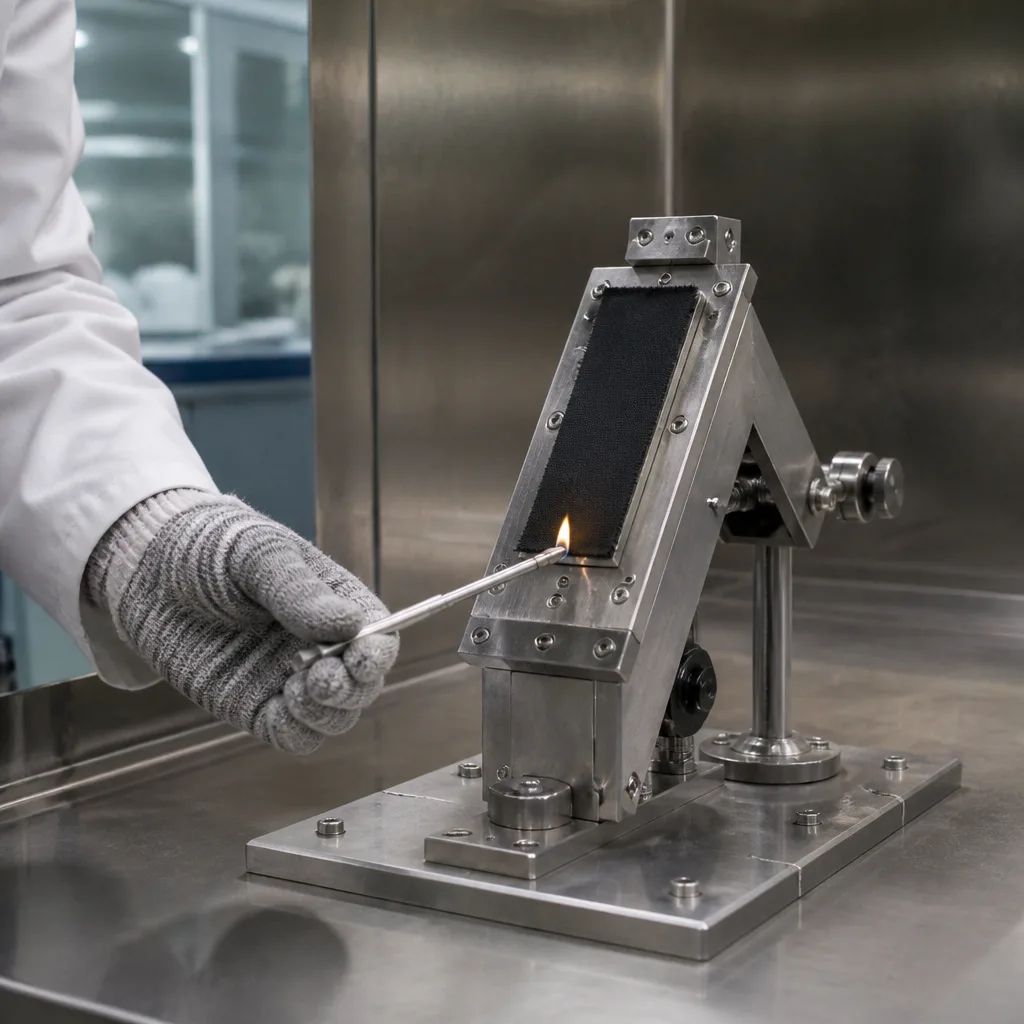
In the test method described in this section titled “CS 191-53 Flammability of Clothing Textiles,” the sample is placed in a chair simulation and exposed to a burning cigarette. During this test, a 5 cm x 15 cm sample is placed in the test device positioned at a 45-degree angle. A pencil-thin flame, 1,5 cm long, is applied to the surface of the test sample for 1 second. The result is described as “successful” (no flame) or “unsuccessful” (flamed).
In short, the CS 191-53 standard is one of the most important textile safety standards in the United States. This standard defines a uniform method for assessing the flammability of clothing fabrics. Immediately after its publication, it became the technical basis of the Flammable Fabrics Act and helped reduce injuries and fatalities caused by highly flammable clothing.
Although the CS 191-53 standard is no longer used for regulatory purposes, its technical requirements continue to be regulated today by the US Consumer Product Safety Commission (CPSC) in the “16 CFR Part 1610 Flammability of clothing textiles” standard.
The primary objectives of the CS 191-53 standard are as follows:
In the 1940s, numerous accidents involving highly flammable clothing made from loosely woven fabrics resulted in serious injuries and fatalities. Public concern led to the development of the CS 191-53 standard as a voluntary trade standard. When the subsequent Flammable Fabrics Act came into effect, the CS 191-53 standard was adopted as the mandatory federal testing method for determining whether clothing textiles are hazardously flammable. Today, it has evolved into federal regulation (16 CFR Part 1610).
The CS 191-53 standard applies to the following:
This standard generally does not apply to:
This standard evaluates how quickly a textile burns after brief exposure to a controlled ignition source. Generally, the basic procedure involves:
Observing combustion behavior includes the following:
The measured burning time is used to determine the flammability classification of the fabric.
The CS 191-53 standard categorizes textiles into three categories:
Class 3 fabrics are considered dangerously flammable and cannot be legally sold for use in clothing under US regulations.
The CS 191-53 standard is applicable to many types of textiles, including:
This standard is widely used by the following sectors:
The CS 191-53 standard offers several important benefits:
While this standard is historically significant, manufacturers now generally demonstrate compliance. A standard has been created under 16 CFR Part 1610 that is directly based on the CS 191-53 standard, including clarifications and administrative updates. The relevant flammability standards are as follows:
These standards complement each other in evaluating the fire performance of textiles for different product categories.
In conclusion, the CS 191-53 standard established the first nationally recognized method for assessing the flammability of clothing textiles in the United States. The adoption of this standard under the Flammable Fabrics Act represented a significant advance in consumer product safety by reducing the risk posed by hazardously flammable clothing. Although superseded by 16 CFR Part 1610, the original standard continues to form the basis of modern U.S. textile flammability regulations, and its principles continue to influence textile testing and safety compliance worldwide.
The main reasons why the CS 191-53 standard is considered important are as follows:
For many years, our organization, with its competent and experienced staff, has been understanding the needs of its clients, providing the advanced testing services they require, and assisting them in the establishment, implementation, and improvement of management systems. Within this framework, we also provide testing services compliant with the CS 191-53 standard.
To get an appointment, to get more detailed information or to request an evaluation, you can ask us to fill in our form and reach you.

