

The ISO 3340 Textile glass fiber - Woven rovings - Determination of breaking strength and elongation at break by the strip method standard, published by the International Organization for Standardization (ISO), describes the method for determining the breaking strength and elongation at break of woven glass fiber rovings using the strip method. This standard is widely used in the fiberglass and composite materials industries to evaluate the tensile performance of woven glass fiber fabrics before their incorporation into composite structures.
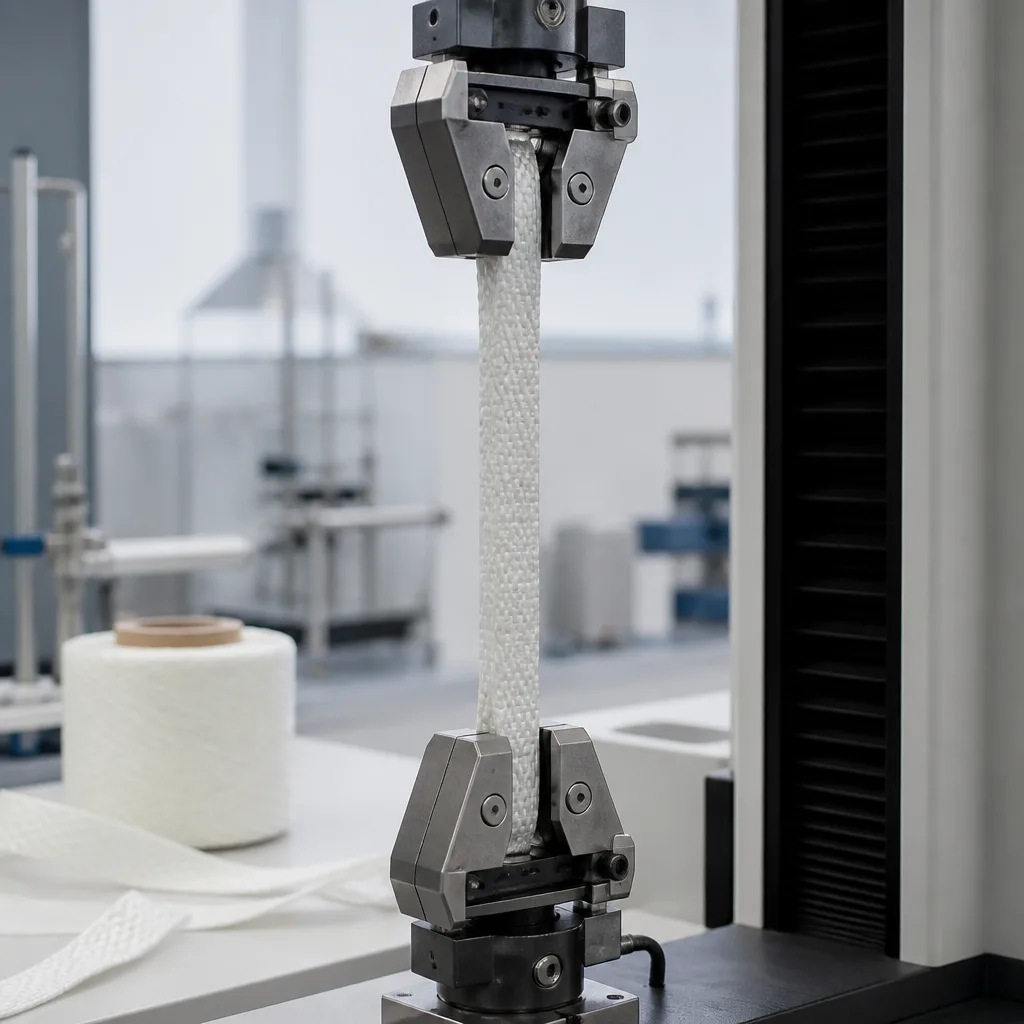
The described test method provides manufacturers and quality control laboratories with a reliable way to verify the mechanical integrity of woven rovings and ensure that reinforcement materials meet design and manufacturing requirements.
The ISO 3340 standard establishes a standardized tensile testing procedure for woven rovings made from textile glass fibers. This standard applies to fabrics designed for use in the following applications:
This standard measures the following:
The main objectives of the ISO 3340 standard are:
The strip method involves preparing a woven roving sample with a specific width and length. Results are reported separately for the warp and weft directions, as woven rovings generally exhibit different mechanical properties in each direction.
The following equipment is generally used in tests:
The testing machine must comply with accepted force calibration requirements.
Test samples are carefully prepared to avoid damaging the glass fibers. Typical considerations include:
The edges must remain clean because damaged threads can significantly reduce the measured strength.
Before testing, samples are conditioned under controlled laboratory conditions. Typical conditioning includes:
Proper conditioning minimizes humidity-related variability.
Before starting the tests, the samples are conditioned. Sample dimensions are measured if necessary. The strip is placed centered in the holders. Tensile load is applied at the specified speed. Loading continues until the breaking point is reached. The following points are recorded:
This procedure is repeated for all samples.
The values typically reported at the end of the test include the following:
The ISO 3340 standard emphasizes testing a sufficient number of samples to obtain representative averages. Several variables influence the measured tensile properties:
Proper control of these factors increases repeatability.
The ISO 3340 standard is widely applied in industries that rely on woven glass fiber reinforcements, including:
The ISO 3340 standard offers several advantages:
In contrast, while the ISO 3340 standard is quite effective, it has some limitations:
Additional testing is usually required for complete characterization of composites.
The ISO 3340 standard is often used in conjunction with many other standards for the comprehensive characterization of textile glass materials:
Together, these standards provide a comprehensive framework for evaluating both the reinforcing fabric and the resulting composite material.
The ISO 3340 standard is commonly used by the following sectors:
In short, the ISO 3340 standard provides a standardized and repeatable method for measuring the breaking strength and elongation at break of textile glass fiber woven rovings using the strip method. This standard enables consistent evaluation of tensile properties in both warp and weft directions, helping manufacturers maintain material quality, compare products among suppliers, and verify compliance with specifications. Although this standard focuses solely on the tensile performance of the reinforcing fabric rather than the final composite, it remains a vital quality assurance tool in industries reliant on reliable glass fiber reinforcements, including automotive, aerospace, marine, wind energy, and construction.
For many years, our organization, with its competent and experienced staff, has been understanding the needs of its clients, providing the advanced testing services they require, and assisting them in the establishment, implementation, and improvement of management systems. Within this framework, we also provide testing services compliant with the ISO 3340 standard.
To get an appointment, to get more detailed information or to request an evaluation, you can ask us to fill in our form and reach you.

