DIN 53835 Textile Testing - Tensile Test for Elastic Behavior
The DIN 53835 series of standards, published by the German Institute for Standardization (DIN), consists of sub-standards focused on determining the elastic behavior of textile materials. These standards define tensile testing methods for evaluating how yarns, elastomeric yarns, fabrics, and knitted fabrics return to their original state after being stretched under controlled conditions.
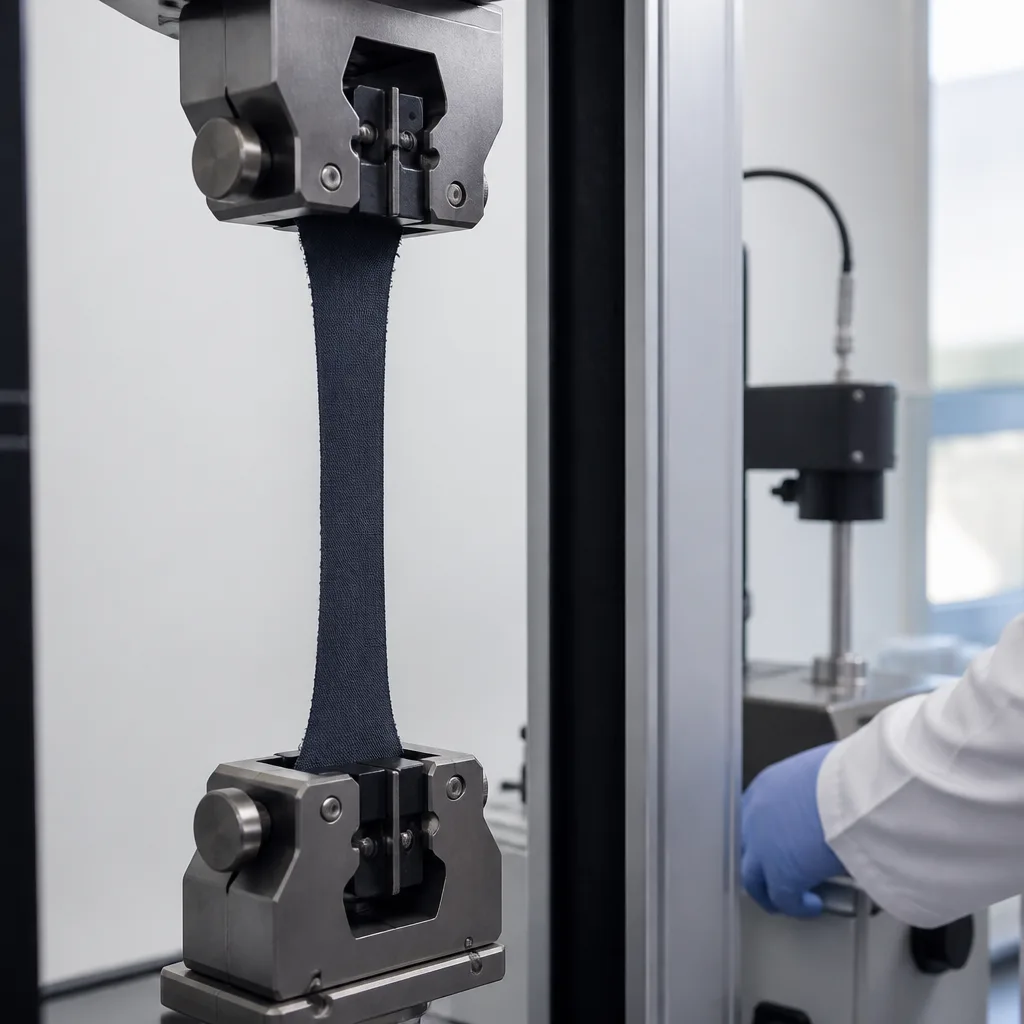
DIN 53835 standards evaluate elastic properties such as the following:
- Return to original state after elongation.
- Permanent deformation (shape change)
- Hysteresis (loss of energy during loading/unloading cycles)
- Behavior under repeated or single tensile loads
These standards are particularly important for stretch fabrics, elastane (lycra) containing materials, sportswear, underwear, and technical textiles where elasticity and shape retention are critical.
The DIN 53835 standard series is divided into multiple sections, each targeting specific materials or test conditions:
- DIN 53835-1: General principles of tensile testing for evaluating elastic behavior.
- DIN 53835-2: Testing of single and multi-ply elastomeric yarns (e.g., those made of elastane fibers). Includes repeated application of tensile load between constant elongation limits.
- DIN 53835-3: Determination of the elastic behavior of single and multi-ply yarns (non-elastomeric or general) by applying a single tensile load between constant elongation limits.
- DIN 53835-4: Similar to DIN 53835-3, but uses fixed force limits instead of elongation limits.
- DIN 53835-13: Elastic behavior of textile fabrics under application of a single tensile load between constant elongation limits.
- DIN 53835-14: Tensile test for knitted fabrics - Single stress between two force limits.
There are also separate sections for specific variants (e.g., different load cycles or material types).
Tests typically include the following:
- The sample (thread or fabric strip) is compressed in a tensile testing machine.
- Controlled elongation or force application (single or cyclical/repeated).
- Measuring the following parameters:
- Elongation under specific loads
- Permanent elongation (permanent deformation) after relaxation
- Elastic recovery percentage
- Force-strain curves
Samples should generally meet criteria such as elongation at break between 5% and 100% for specific sections. Conditioning (e.g., standard atmosphere) and precise length measurements are required according to relevant standards such as DIN 53808 or the DIN EN ISO series for textiles.
The main applications of the DIN 53835 standard series are as follows:
- Quality control in yarn and fabric production.
- Development of elastic garments and technical textiles.
- Suitability tests for performance claims (flexibility, recovery, durability)
- Research and comparison of materials containing elastomeric fibers.
Many testing laboratories offer accredited tests according to these sub-standards. These tests are generally carried out in conjunction with relevant standards such as DIN EN ISO 139 (conditioning) or ISO 2062 (tensile strength properties).
In short, testing the elastic behavior of textile materials refers to evaluating how a material stretches under force and how it returns to its original shape after the force is removed. Within the scope of DIN 53835, elastic behavior testing is used to characterize the performance of fibers, yarns, and fabrics when subjected to tensile stress.
Elastic behavior testing helps to determine the following:
- Flexibility: Ability to stretch
- Reversal: Ability to return to original length.
- Permanent deformation: Elongation remaining after stress.
- Durability under repeated stress
This is especially important for products such as:
- Flexible fabrics (e.g., sportswear, underwear)
- Elastic yarns (e.g., elastane blends)
- Technical textiles requiring flexibility
The test typically involves controlled pulling, loading, and unloading cycles:
- A sample is cut to a specific size.
- It is mounted on a tensile testing machine.
- A specific force or elongation is applied.
- The material is held for a specific period of time.
- The force is released.
- Return behavior is measured after a period of relaxation.
The main parameters measured are as follows:
- Elongation (percentage): Increase in length under load.
- Elastic recovery (percentage): The percentage of deformation recovered after the load is removed.
- Permanent deformation (percentage): Deformation remaining after recovery.
- Hysteresis behavior: The difference between the loading and unloading curves (energy loss).
Typical test conditions are as follows:
- Controlled temperature and humidity
- Specific bias
- Specific loading speed
- Multiple loading cycles (for fatigue behavior)
Elastic behavior testing is critically important in the following areas:
- Clothing industry: Comfort and fit
- Medical textiles: Bandages, compression garments.
- Automotive textiles: Fabrics, interior materials
- Sportswear: Performance fabrics
The following factors can influence the results of these tests:
- Fiber type (e.g., elastane vs. polyester)
- Fabric structure (woven, knitted, nonwoven)
- Finishing procedures
- Humidity and temperature
The DIN 53835 standard series is essential because it provides a reliable and standardized method for measuring how fabrics stretch and return to their original shape. This directly impacts product performance, safety, and customer satisfaction. These standards are considered important for the following reasons:
- Ensures consistent product quality: Elastic properties can vary greatly depending on the fibers, yarn structure, and finish. This standard ensures:
- All materials are tested under the same conditions
- The results are repeatable and comparable.
- Manufacturers ensure consistent elasticity between batches.
- Comfort and fit are guaranteed: Flexible behavior is particularly critical for sportswear, underwear, and stretch fabrics. This standard ensures that fabrics provide the following:
- They stretch sufficiently during use.
- They regain their original shapes.
- They do not loosen or deform over time.
- It assesses durability under repeated use: Textile products are typically stretched thousands of times in real life. This standard helps to evaluate the following:
- Fatigue resistance
- Loss of flexibility over time
- Permanent deformation
- It is indispensable for technical applications. In applications such as automotive textiles, medical compression fabrics, and industrial materials, elastic performance is not only about comfort but can also be critical for safety. This standard ensures that materials meet stringent functional requirements.
In conclusion, the DIN 53835 standard series offers a standardized method for evaluating the elongation and recovery properties of textile materials. This is particularly vital for ensuring product performance, durability, and user comfort in modern stretch and technical fabrics.
For many years, our organization, with its competent and experienced staff, has been understanding the needs of its clients, providing the advanced testing services they require, and assisting them in the establishment, implementation, and improvement of management systems. Within this framework, we also provide testing services in accordance with the DIN 53835 standard.



