

The standard “DIN 53528 Testing of rubber-coated textiles - Abrasion test - Determination of mass loss using a Frank Hauser device”, published by the German Institute for Standardization (DIN), describes a method for evaluating the abrasion resistance of rubber-coated textiles (coated fabrics or rubberized fabrics). The durability of the material is measured by a special device known as a Frank Hauser device, which determines the mass loss (weight loss) after controlled abrasion.
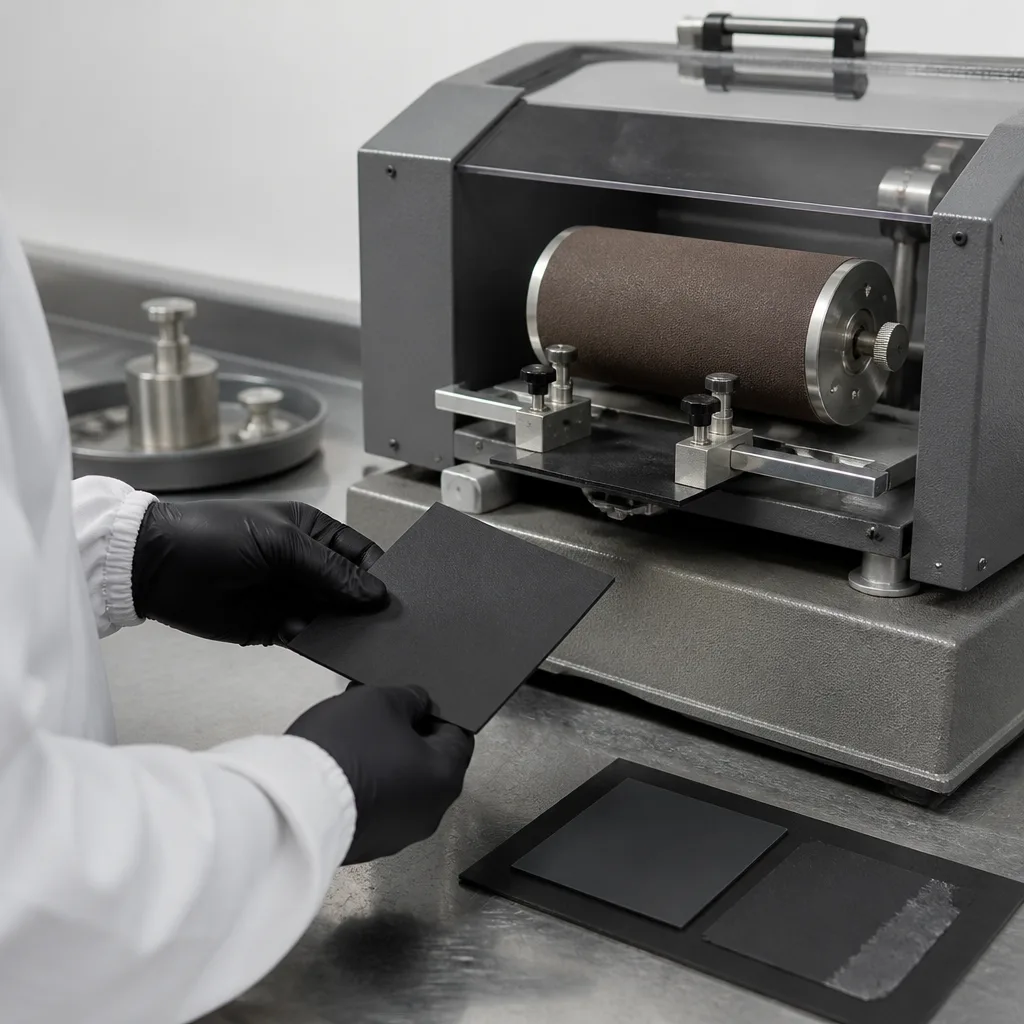
This standard has been withdrawn and is no longer active, but it continues to be used as a reference in technical literature, test laboratories, and comparisons with other wear methods.
Rubber-coated textiles are used in products requiring flexibility, water resistance, and abrasion resistance. For example,
This testing method simulates real-world wear from friction or abrasion and measures how much coating material is lost. This helps manufacturers assess quality, predict service life, and ensure compliance with performance requirements.
This method is often listed alongside other wear tests such as the following:
In the automotive context, Frank Hauser is specifically mentioned for its evaluation of coated fabrics.
The testing process generally follows these steps:
This method focuses on mass loss rather than visual appearance or penetration into the base fabric, and is therefore suitable for measuring coating durability.
This test complements other coated fabric standards, such as those listed below:
Laboratories offering these tests use them to verify the product safety and performance of coated and laminated textiles.
In short, the DIN 53528 standard includes methods for evaluating the mechanical behavior and performance of rubber and elastomeric materials, especially under defined stress or deformation conditions. It is part of the broader DIN 53500 series of standards, which focuses on rubber and elastomer testing for quality assurance, product development, and material comparison.
The main objectives of the DIN 53528 standard are as follows:
The DIN 53528 standard is widely used in industries where rubber components must meet the following stringent performance requirements:
The DIN 53528 standard is often used in conjunction with other standards in the DIN 53500 series. For example,
Together, these standards provide a comprehensive framework for the evaluation of rubber materials.
The DIN 53528 standard is essential because it provides a standardized, repeatable method for determining the abrasion resistance of rubber-coated textiles by measuring the mass loss (weight loss of the coating) after controlled friction on a Frank Hauser device.
Rubber-coated fabrics combine the flexibility and strength of a textile base with the protective, waterproof, or chemical-resistant properties of a rubber (or elastomer) coating. These materials are subjected to continuous mechanical stress in real-world use:
The DIN 53528 standard is considered important for the following reasons:
In conclusion, the DIN 53528 standard plays a crucial role in the testing and characterization of rubber materials, ensuring that elastomers perform reliably in real-world applications. By defining consistent test methodologies, it helps industries maintain high quality standards and improve product performance.
For many years, our organization, with its competent and experienced staff, has been understanding the needs of its clients, providing the advanced testing services they require, and assisting them in the establishment, implementation, and improvement of management systems. Within this framework, we also provide testing services in accordance with the DIN 53528 standard.
To get an appointment, to get more detailed information or to request an evaluation, you can ask us to fill in our form and reach you.

