DIN 54288 Textile Tests - Quantitative Determination of Sulfur in Viscose Fibers
The standard “DIN 54288 Textile Tests - Quantitative determination of sulfur in viscose fibers”, published by the German Institute for Standardization (DIN), describes a method specifically designed for the quantitative determination of residual sulfur compounds in regenerated cellulose fibers, commonly known as viscose rayon.
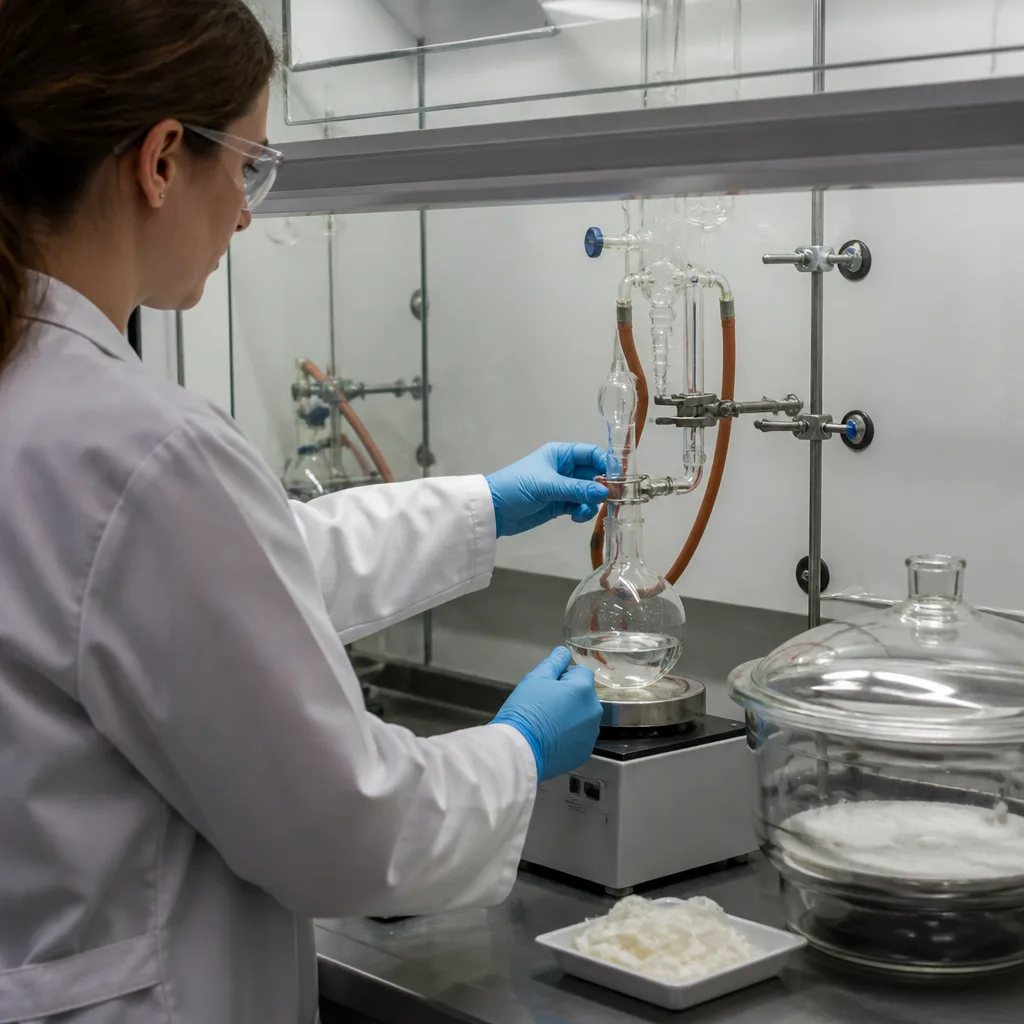
Viscose fibers are produced by chemically regenerating cellulose through the viscose process, which involves sulfur-containing chemicals such as carbon disulfide and sulfuric acid. Residual sulfur may remain in the fiber after production. The DIN 52488 standard provides a standardized laboratory procedure to precisely determine how much sulfur remains in the finished fiber.
This standard applies primarily to the following:
- Viscose fiber
- Viscose filament yarns
- Textile products containing viscose
It is commonly used by:
- Textile manufacturers
- Quality control laboratories
- Certification bodies
- Research institutions working with recycled cellulose fibers
The DIN 52488 standard determines sulfur content through chemical decomposition and quantitative analysis. Generally, this method follows these steps:
- Sample preparation: A representative sample of viscose fiber is dried, weighed, and prepared for analysis.
- Oxidative decomposition: The sample is chemically treated or incinerated to convert sulfur compounds into measurable sulfate forms.
- Sulfur conversion and precipitation: Sulfur is converted into sulfate ions, which are then precipitated as barium sulfate, usually using a barium salt reagent.
- Gravimetric measurement: The precipitate is filtered, dried, and weighed. The sulfur concentration is then calculated from the mass of the precipitate.
- Results are typically reported as follows:
- Percentage of sulfur by mass
- milligrams of sulfur per gram
The DIN 52488 standard is necessary because sulfur residues directly affect the quality and safety of viscose fibers.
- Fiber quality control: Sulfur measurement ensures consistent production quality.
- Process optimization: Residual sulfur indicates how effectively the washing and desulfurization stages are performed in viscous production. Manufacturers use the test results to optimize process efficiency.
- Product performance: Sulfur residues can affect dye absorption behavior, aging properties, fiber degradation rates, and compatibility with finishing chemicals. Sulfur control improves the long-term performance of textiles.
- Environmental and regulatory compliance: Sulfur compounds are environmentally sensitive because hazardous sulfur chemicals are used in viscose production. Testing helps manufacturers demonstrate that residual chemicals are disposed of properly and that internal quality specifications are met.
The main benefits of the DIN 52488 standard are as follows:
- Standardized, repeatable sulfur measurement.
- Reliable party-to-party comparison
- Improved viscosity production control.
- Improved final product consistency.
- Support for laboratory accreditation and documentation.
The DIN 52488 standard applies to the following sectors:
- Textile fiber production
- Clothing textiles
- Home textiles
- Non-woven viscose products
- Technical textiles using recycled cellulose fibers
Quantitative determination of sulfur in viscose fibers is important because sulfur compounds play a major role in viscose production, and residual sulfur can significantly affect fiber quality, processing behavior, safety, and environmental performance.
- Product quality is ensured: Viscose is produced using sulfur-containing chemicals such as carbon disulfide, sulfuric acid, sodium sulfate, and related sulfur compounds. After fiber regeneration, trace amounts of sulfur may remain in the material. If sulfur levels are too high, it can cause fiber yellowing or discoloration, unpleasant odor, reduced luster or whiteness, and inconsistent appearance between batches. Quantitative measurement of sulfur helps manufacturers verify that the treatment and washing steps are effective.
- Improves fiber stability and durability: Residual sulfur can accelerate the chemical degradation of cellulose over time. This can lead to reduced tensile strength, brittleness, faster aging, and lower resistance to storage conditions. By controlling the sulfur content, manufacturers improve the long-term stability of viscose yarns, fabrics, and finished garments.
- It supports dyeing and finishing performance: Sulfur residues can interfere with subsequent textile processing. Possible effects include: uneven dye absorption, color variation, poor finishing chemical compatibility, and reduced repeatability in coloring. Low and controlled sulfur levels lead to more predictable textile processing.
- It monitors production efficiency: Sulfur content serves as a process indicator for viscose production. High sulfur values may indicate inadequate washing, incomplete desulfurization, poor regeneration conditions, and process inefficiencies. Laboratories use sulfur measurements to troubleshoot and optimize production lines.
- It helps meet safety and environmental requirements: Some sulfur-containing compounds used in viscose production are hazardous or environmentally problematic. Monitoring residual sulfur helps ensure the following:
- Lower chemical residues in finished textiles.
- Safer consumer products
- Reducing the environmental burden caused by poorly controlled production.
This is especially important for manufacturers aiming to meet sustainability or eco-labeling requirements.
- It enables standardized quality comparison: A quantitative method provides objective numerical data, allowing for the following:
- Consistency checks from party to party
- Supplier qualification
- Dispute resolution between buyer and seller.
- Compliance with internal or external specifications.
Without standardized sulfur testing, quality assessment relies on less reliable visual or performance observations.
In conclusion, the DIN 52488 standard is an important analytical standard for the textile industry as it provides a precise method for determining sulfur residues in viscose fibers. Since sulfur compounds are an integral part of viscose production, monitoring residue concentrations is crucial for maintaining product quality, ensuring chemical cleanliness, and supporting efficient process control. By standardizing sulfur analysis, this standard helps manufacturers produce safer, cleaner, and more consistent viscose textile materials.
For many years, our organization, with its competent and experienced staff, has been understanding the needs of its clients, providing the advanced testing services they require, and assisting them in the establishment, implementation, and improvement of management systems. Within this framework, we also provide testing services in accordance with the DIN 54288 standard.



