

The standard “DIN 53331 Leather tests - Determination of seam tear strength”, published by the German Institute for Standardization (DIN), describes a test method for determining the seam tear strength (seam tear resistance) of leather materials. This property is particularly important in industries where leather is sewn or processed, for example:
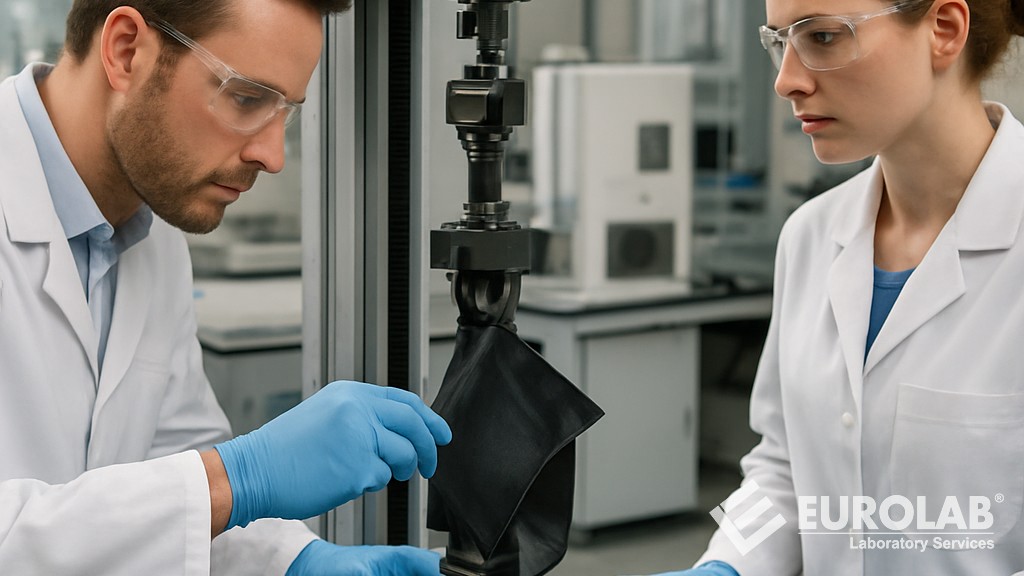
This testing method evaluates how well the leather can withstand a force applied through a simulated suture (using a needle or similar tool) that mimics the stresses generated during wear or near the suture site.
This standard measures the force required to tear a leather sample by placing a straight needle (or sometimes a mandrel) near the edge and pulling perpendicularly. This simulates the tearing motion that can occur along the seam line in stitched leather products. It helps evaluate the durability and quality of leather for applications where seam strength is critical.
In principle, during the test, a straight pin is driven or inserted into a prepared leather test specimen (at a specific distance from the edge, usually about 5 mm). The specimen is then clamped in a tensile testing machine, and the force required to propagate the tear along the pin is recorded.
The following equipment is used in these tests:
The testing process generally follows these steps:
Although the DIN 53331 standard is outdated, it continues to be used, but it has largely been harmonized with or replaced by international standards, such as "DIN EN ISO 23910 Leather - Physical and mechanical tests - Measurement of seam tear strength".
Many test equipment manufacturers explicitly state compliance with both DIN 53331 and ISO 23910 standards. The older DIN 53331 standard is still used in some contexts, particularly where older specifications or national requirements persist.
In short, the DIN 53331 standard is designed to determine the tear resistance of leather at seams. This test evaluates how well the leather resists tearing when subjected to forces applied through seam holes, a crucial characteristic for products such as footwear, bags, upholstery, clothing, and automotive interiors.
Leather products are generally joined using stitching. The areas around the stitches are often subjected to intense stress during use. The DIN 53331 standard measures the following:
This test helps manufacturers ensure durability and prevent seam failure in finished products.
This method simulates real-life seam stress conditions:
At the start of the test, samples are cut to standard sizes. Stitching holes are punched at specific intervals and a certain distance from the edge. In some cases, actual sewing thread is used. Samples are conditioned before testing under standard climatic conditions (typically 23 degrees Celsius and 50 percent relative humidity). Proper sample preparation is crucial for repeatable and comparable results.
The equipment used in the tests includes the following:
The tensile testing machine must apply force at a constant crosshead speed as specified in the standard.
While evaluating the results,
Higher values indicate better resistance to seam tearing.
The DIN 53331 standard is particularly applicable to the following:
Manufacturers use this test to compare different types of leather, their thicknesses, and finishing processes.
Suture tear resistance is affected by the following:
By implementing the DIN 53331 standard, manufacturers can:
In practical use, seams are often the weakest point of leather goods. Failure typically occurs in the following areas:
The DIN 53331 standard helps predict these failures before products are released to the market.
Seam tear strength is an important quality control parameter in leather production. Low values may indicate poor grain structure, inadequate tanning, or material defects, which can lead to seam failure in finished products.
In conclusion, the DIN 53331 standard provides a standardized and reliable method for determining the seam tear resistance of leather. By simulating real seam stress conditions, it ensures that leather materials used in seamed products meet durability and safety requirements.
For many years, our organization, with its competent and experienced staff, has been understanding the needs of its clients, providing the advanced testing services they require, and assisting them in the establishment, implementation, and improvement of management systems. Within this framework, we also provide testing services in accordance with the DIN 53331 standard.
To get an appointment, to get more detailed information or to request an evaluation, you can ask us to fill in our form and reach you.

