

The standard “DIN 54278 Textile tests - Coatings and related materials”, published by the German Institute for Standardization (DIN), consists of the following sub-sections published under the same title:
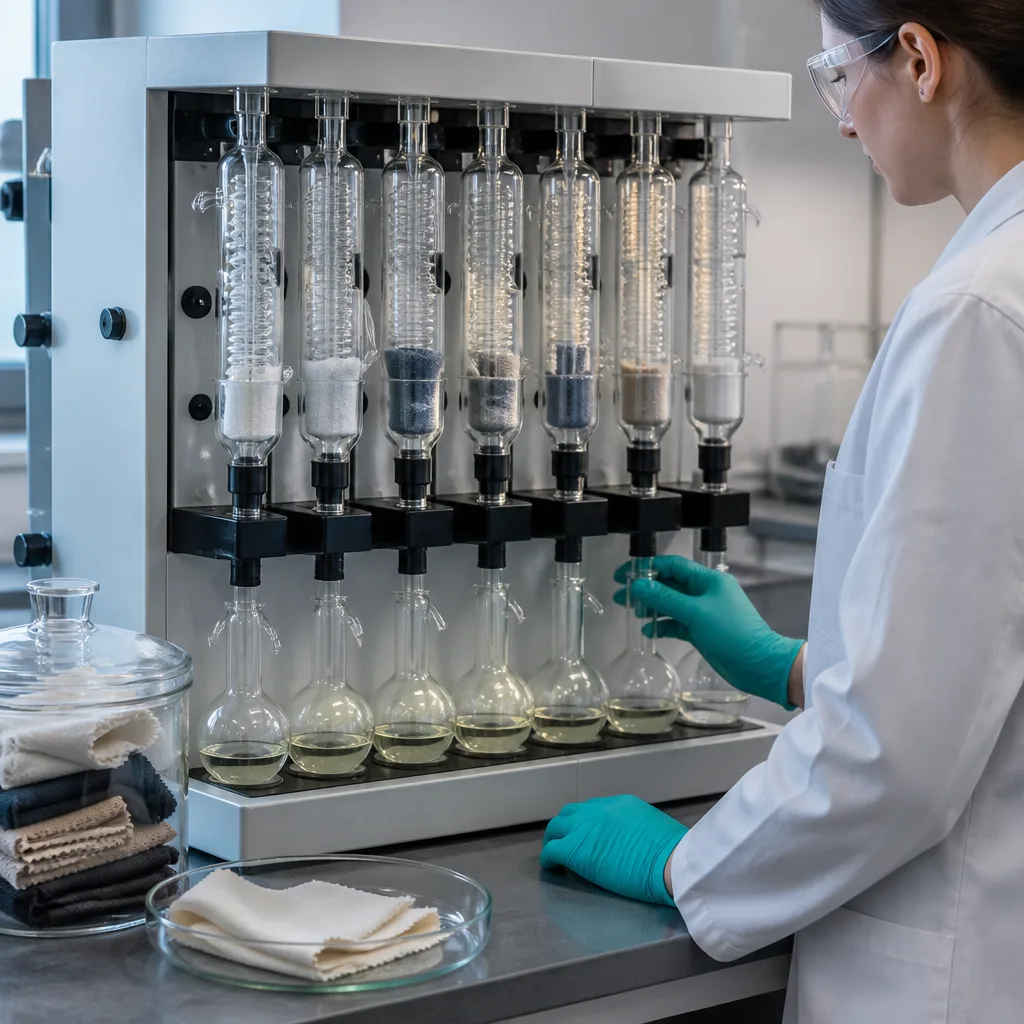
This standard belongs to the DIN 54278 series of standards, which focuses on testing textiles in terms of coatings and related materials. DIN 54278-1 specifically addresses the gravimetric determination of materials soluble in organic solvents. This method helps determine the quantity of extractable components such as:
These extractions are important for quality control, material composition analysis, process optimization, and compatibility in textile production.
The procedure typically involves Soxhlet extraction of a prepared textile sample with selected organic solvents or equivalent rapid extraction systems. Common solvents specified in the applications of this standard are:
After extraction, the solvent is evaporated, and the residue is weighed to calculate the percentage of soluble substance. The method is both quantitative and gravimetric.
Typical applications of this standard include:
This standard is often used in conjunction with other standards such as pH value (ISO 3071), fiber composition (ISO 1833 series), or azo amine determinations (EN 14362-1).
Soluble substances affect fabric performance, texture, dyeability, environmental compatibility, and end-product safety. Excessive residues can cause problems in subsequent processes such as dyeing, printing, or garment manufacturing. Testing according to this standard provides a standardized, repeatable way to monitor and control these factors.
This standard is essential because it provides a standardized, reproducible method for determining the quantity of extractable substances (coatings, finishes, oils, impurities, and additives) from textiles and related materials using organic solvents. This is critical for quality control, process reliability, product performance, and compliance in the textile industry.
The main reasons why this standard is important are:
This standard is the second part of the DIN 54278 series of standards, focusing on coatings/deposits and accompanying materials/substances in textiles. While the DIN 54278-1 standard uses organic solvents for extraction, the DIN 54278-2 standard targets substances that can be extracted or separated by hydrochloric acid treatment. These condensation products typically include:
By measuring the portion of these materials that can be disassembled or broken down under acidic conditions, the test provides valuable data for finish analysis, quality control, and process optimization.
This standard was later withdrawn, but it continues to be referenced and presented by accredited textile testing laboratories (particularly in Europe) for specific applications.
This method typically involves treating a textile sample, prepared under defined conditions (concentration, temperature, time), with hydrochloric acid. The acid breaks down or hydrolyzes (decomposes) the target condensation products. After treatment, the mass loss or removed material is determined gravimetrically to calculate the percentage of substances that can be removed by the acid.
This method is a relatively simple wet chemical extraction technique and is typically performed on conditioned samples that have been precisely weighed before and after processing.
Typical applications of this standard include:
This method complements other textile chemical tests such as solvent extraction (DIN 54278-1), fiber composition analysis, and various fastness or physical property tests.
Acid-removable substances can affect fabric performance, finish durability, environmental behavior, and compliance with processing specifications. Quantifying these substances helps manufacturers ensure consistent quality, address finish issues, and meet customer or regulatory requirements in industries such as automotive interiors, workwear, and home textiles.
This standard is necessary because it provides a standardized method for determining the quantity of acid-removable (hydrolyzable) condensation products on textiles and coated materials. These are typically resin-based finishes that cannot be fully removed by solvent extraction alone (DIN 54278-1).
The main reasons why this standard is important are:
These finishes form chemical bonds or deposits that can be broken down or removed by acid treatment (hydrochloric acid). This standard helps to verify the type and quantity of finish applied by gravimetrically measuring the amount of such materials.
For many years, our organization, with its competent and experienced staff, has been understanding the needs of its clients, providing the advanced testing services they require, and assisting them in the establishment, implementation, and improvement of management systems. Within this framework, we also provide testing services in accordance with the DIN 54278 standard.
To get an appointment, to get more detailed information or to request an evaluation, you can ask us to fill in our form and reach you.

