

The standard "ASTM D4033 Standard Test Method for Resistance to Thread Slippage in Upholstery Fabrics (Dynamic Fatigue Method)," published by the American Society for Testing and Materials (ASTM), describes a test method for measuring or visually assessing thread slippage and other types of defects in the three most commonly used upholstery seams. These seam types are:
The stresses in the seam are created by applying cyclic, impact, and penetrating loads that strain the seam structure. For simplicity, this test method assumes that the sample being tested has a woven structure. If the sample has a knotted structure, simply use the terms "bar" instead of "warp" and "row" instead of "fill" in the instructions.
In the world of textile testing, ensuring the longevity and reliability of fabrics used in high-wear applications like upholstery is crucial. Found in everything from sofas and armchairs to car seats, upholstery fabrics must withstand repeated stress, friction, and daily use without compromising their structural integrity. One of the primary types of failure in these fabrics is seam slippage. This is the slippage or separation of threads at sewn joints, leading to unsightly gaps, loss of strength, and eventual product failure. The ASTM D4033 standard includes a test method developed to assess this issue.
ASTM D4033 provides a rigorous and repeatable method for assessing a fabric's durability under dynamic loading. Although officially retired in 2001, the method remains influential in the industry, particularly through adaptations in standards like BIFMA X5.4 for furniture durability testing.
The three common seam types defined in ASTM D4033 represent the most common seam configurations in upholstery applications. This method measures or visually assesses thread slippage and other seam defects, such as thread breakage or fabric tearing, under simulated real-world stresses. Unlike static seam strength tests (e.g., methods that measure tensile strength), the ASTM D4033 test method emphasizes dynamic fatigue, simulating the cyclic loading that occurs when someone sits, slides, or jumps on a padded surface. This makes it particularly important for ensuring product durability in commercial and residential environments.
The ASTM D4033 standard test method is designed to be simple yet comprehensive, allowing laboratories to efficiently recreate conditions. The key steps of the method include:
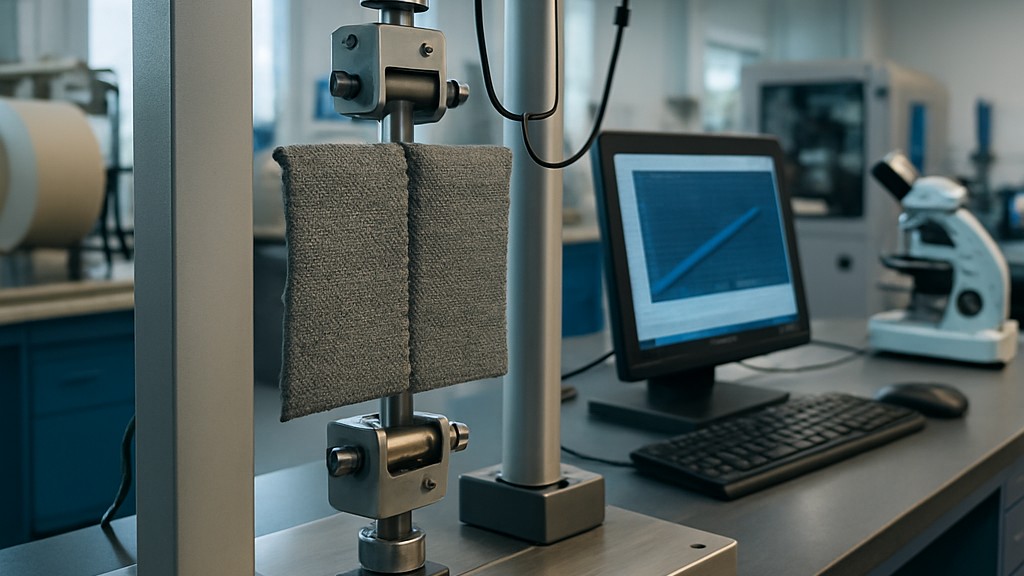
Specialized equipment, such as a dynamic seam fatigue tester, automates this process by applying precise loads and speeds and recording data for analysis. These testers are widely available from test equipment manufacturers and are essential for compliance in quality control laboratories.
The ASTM D4033 standard plays a crucial role in the upholstery supply chain by combining material science with practical performance. For manufacturers, passing this test provides confidence in their fabric selection, reducing warranty claims and returns due to costly sewing errors for the furniture industry.
This testing method ensures safer and longer-lasting products for end users, especially in high-traffic environments like hotels or public spaces. The test distinguishes it from simpler tensile tests and provides a more realistic simulation of "seat fatigue."
Although the ASTM D4033 standard has been withdrawn, its principles remain valid. Modern adaptations include digital sensors for precise slip measurement, and similar methods are included in international standards (such as the ISO 13936 standard for seam strength).
Ultimately, the ASTM D4033 standard is an example of how testing can improve textile quality by turning potential weaknesses, such as seams, into strengths. Although withdrawn, its methodology survives in adapted forms.
Our organization, which has been serving for many years and meticulously following global developments in science and technology, employs a skilled team and extensive infrastructure to conduct testing, measurement, and analysis in a wide range of areas for businesses across all sectors. In this context, we also provide testing services in accordance with the "ASTM D4033 Standard Test Method for Resistance to Thread Slippage in Upholstery Fabrics at Seams (Dynamic Fatigue Method)."
To get an appointment, to get more detailed information or to request an evaluation, you can ask us to fill in our form and reach you.

