

The ASTM D4751 Standard Test Methods for Determining the Apparent Opening Size of Geotextile Fabric, developed by the American Society for Testing and Materials (ASTM), describes test methods for determining the apparent opening size of a geotextile fabric. This determination can be made by dry sieving of glass beads through the geotextile fabric (Methods A1 and A2) or by using a capillary pore meter (Method B). Method B cannot be used in place of Method A unless the pre-qualification procedure specified in this standard is followed.
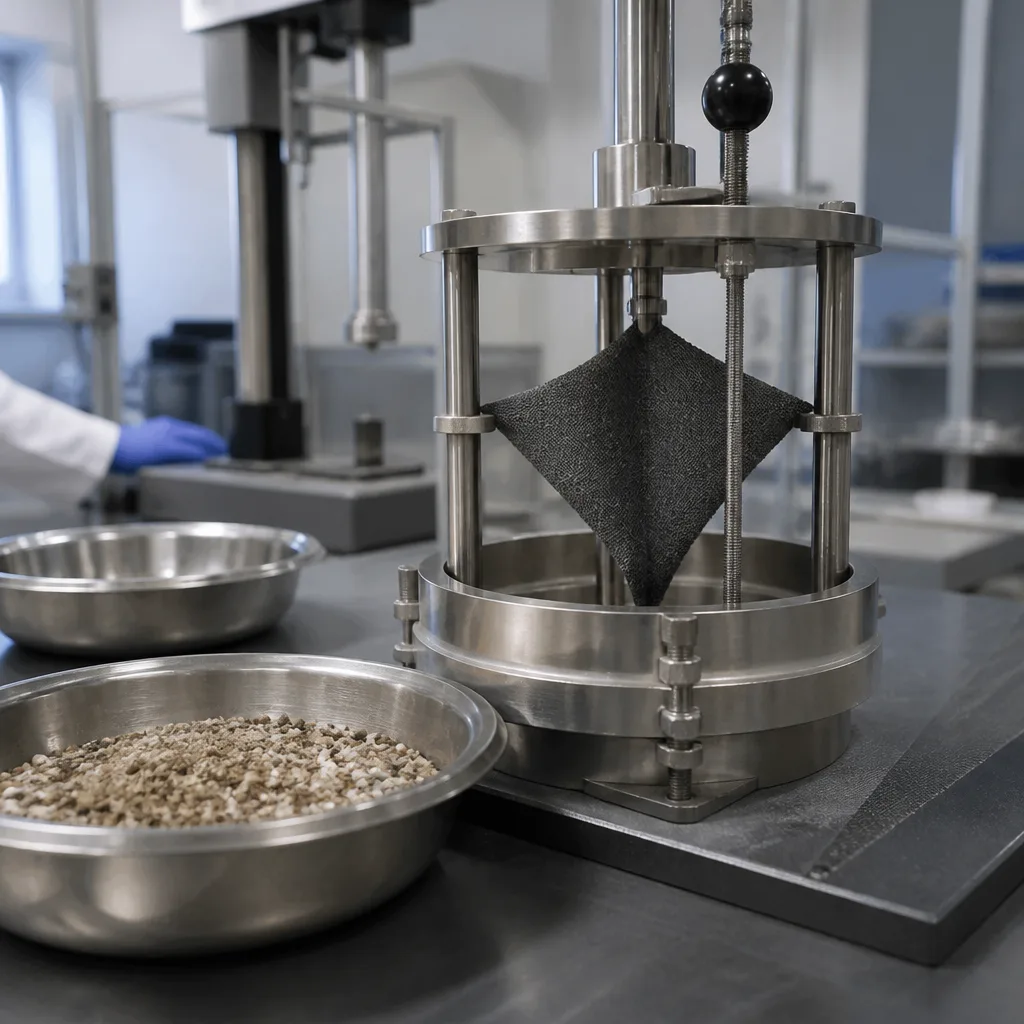
Using geotextiles to retain soil particles requires compatibility between the geotextile and the adjacent soil. This testing method is used to specify the apparent opening size in the geotextile, which reflects the approximate largest opening size through which the soil can pass.
The ASTM D4751 standard test method for determining the opening size of geotextiles is acceptable for testing commercial geotextile shipments. Existing interlaboratory accuracy estimates have been established.
The apparent aperture test results obtained using method A may differ from those obtained using method B. The purpose of this test method is to verify the equivalence of method B results before authorizing the use of this alternative. Laboratories choosing to use method B must first identify any discrepancies between the two methods and document a reliable correlation in accordance with this test method.
The correlation between the results of method B and method A must be established for each different type of geotextile product tested with method B and must meet the requirements of that test method. Geotextiles from different manufacturers or with different nominal unit weights are considered different products. At least three test results must be compared, and all three must meet the established correlation.
The ASTM D4751 standard includes commonly used geosynthetic testing methods. Apparent pore size represents the approximate size of the largest particles that can pass through pores in a geotextile and is a critical parameter for filtration and soil retention applications.
Geotextiles are frequently used in civil engineering projects to separate soil layers, provide filtration, facilitate drainage, and reinforce structures. For a geotextile to function effectively as a filter, its opening size must be compatible with the surrounding soil. The ASTM D4751 standard provides a standardized method for evaluating this property.
This standard helps engineers determine whether a geotextile fabric has the following properties:
The ASTM D4751 standard defines two methods for determining the apparent aperture size:
When applying method A (glass bead screening),
When applying method B (capillary pyrometric measurement),
The primary reported result is the apparent aperture size, typically expressed in millimeters (mm) or as a US standard mesh number.
Common apparent aperture size values for filtration geotextiles range from approximately 0,075 mm to 0,60 mm, depending on the application and fabric structure.
The ASTM D4751 standard is widely used for geotextiles in the following areas:
The ASTM D4751 standard is important because it provides a reliable indication of a geotextile's filtration behavior. Choosing a geotextile with an inappropriate pore size can lead to:
The ASTM D4751 standard standardizes the measurement of apparent opening size, enabling engineers to consistently compare products and identify geotextiles that provide the desired balance between soil retention and water flow.
The ASTM D4751 standard is frequently used in conjunction with other geotextile testing standards, including:
Together, these standards provide a comprehensive assessment of the filtration, hydraulic, and mechanical performance of geotextiles.
In conclusion, the ASTM D4751 standard is the fundamental standard used to determine the apparent pore size of geotextiles. By measuring the effective pore opening dimensions of a geotextile, this standard helps engineers ensure adequate filtration performance, prevent soil erosion, and optimize drainage in geotechnical and environmental engineering applications. Its use is essential for material specification, quality control, and long-term infrastructure reliability.
For many years, our organization, with its competent and experienced team, has been understanding the needs of its clients, providing the advanced testing services they require, and assisting them in the establishment, implementation, and improvement of management systems. Within this framework, we also provide testing services in accordance with the ASTM D4751 standard.
To get an appointment, to get more detailed information or to request an evaluation, you can ask us to fill in our form and reach you.

