

DIN 54021 Color Fastness of Textiles - Determination of Color Fastness of Dyes and Prints to Rubbing
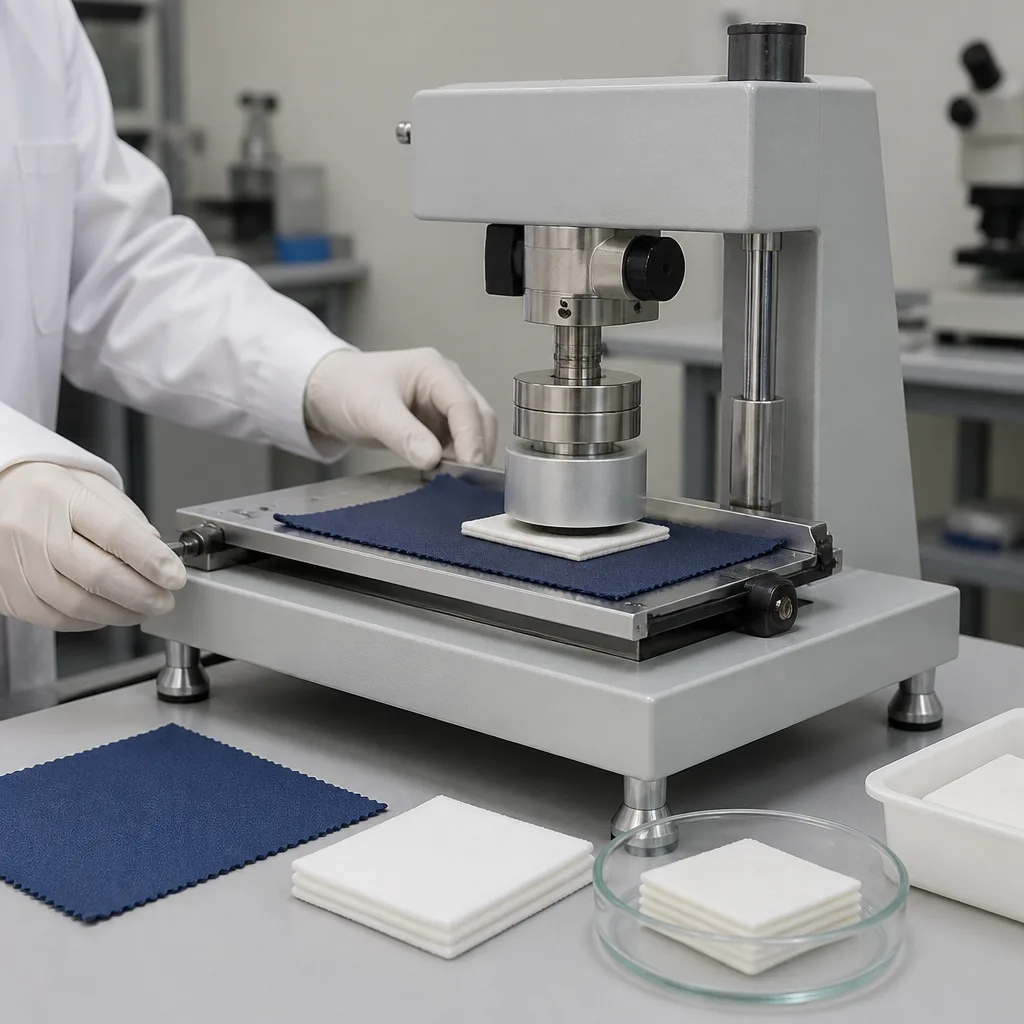
The German Standards Institute (DIN) standard, “DIN 54021 Color Fastness of Textiles - Determination of the abrasive color fastness of dyes and prints,” describes a test method for evaluating the abrasive fastness of dyed or printed textiles. This method measures how well the color transfers when the fabric is rubbed against another surface, both in dry and wet conditions.
This is a classic textile color fastness test widely used in industry to evaluate the quality of dyeing and printing processes, especially for garments, home textiles, and technical fabrics that are subjected to friction during use or washing.
The basic characteristics of the described test method are as follows:
Friction fastness is a critical quality parameter, as poor performance can lead to color transfer to other garments, skin, or surfaces. It is particularly challenging in the following situations:
Many certification schemes and recipient specifications refer to the DIN 54021 standard, including the following:
The DIN 54021 standard is technically very similar (and often used interchangeably) to the following standards:
In modern practice, many laboratories have switched to the ISO version, but the DIN 54021 standard continues to be used as a reference in European specifications, older test reports, and some certificates.
Practical notes:
In short, the DIN 54021 standard deals with methods used to evaluate the color fastness and durability properties of dyed or printed materials, especially under specific conditions. The main purpose of this standard is to provide a uniform test method for evaluating how textile materials behave when exposed to different environmental or mechanical effects. Standardized testing enables manufacturers, suppliers, and buyers to assess textile quality using the same technical criteria.
Typical areas covered include:
By following the DIN 54021 standard, companies can reduce inconsistencies in product quality and increase reliability in textile performance testing.
This standard applies to various sectors where textile performance is important:
For example, an automotive supplier might use the DIN 54021 standard to verify that seat upholstery will not show excessive color transfer or wear after repeated use.
Implementing this standard offers several advantages:
Failure to comply with the DIN 54021 standard can lead to significant variations in textile performance claims among suppliers. This standard helps establish a common technical language among manufacturers, testing laboratories, and customers. Furthermore, adherence to DIN standards across global supply chains can strengthen market acceptance and customer trust.
In conclusion, the DIN 54021 standard is a significant textile testing standard supporting the objective measurement of color fastness and related textile properties. By defining controlled procedures and evaluation criteria, it helps ensure that textile products meet consistent quality expectations across industries.
For many years, our organization, with its competent and experienced staff, has been understanding the needs of its clients, providing the advanced testing services they require, and assisting them in the establishment, implementation, and improvement of management systems. Within this framework, we also provide testing services in accordance with the DIN 54021 standard.
To get an appointment, to get more detailed information or to request an evaluation, you can ask us to fill in our form and reach you.

