

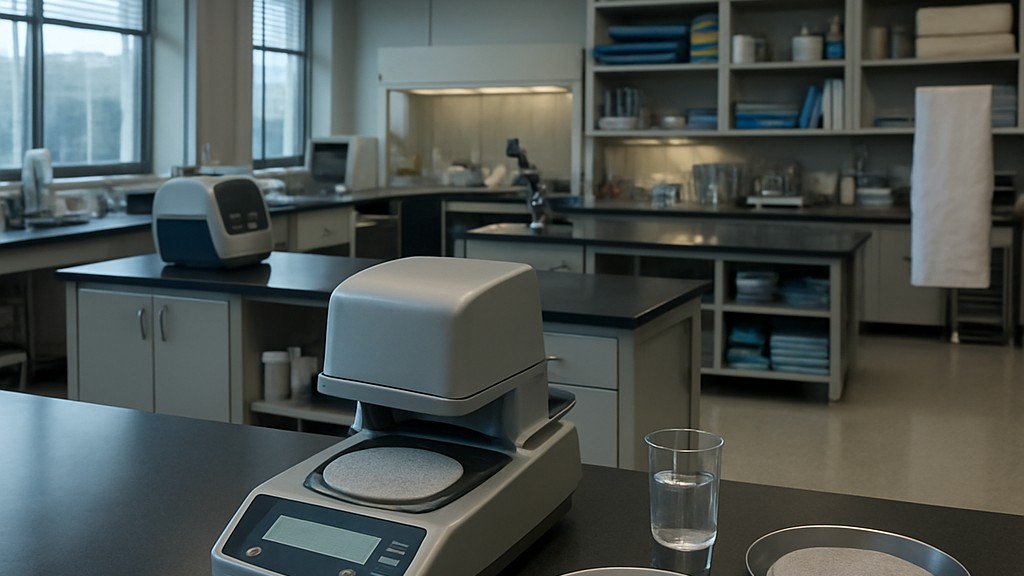
The American Association of Textile Chemists and Colorists (AATCC) standard, “ AATCC™ 199 Test method for drying time of textiles: moisture analysis method ,” describes a test method for evaluating the high-temperature drying time of knitted, woven, or nonwoven fabrics using a gravimetric moisture analyzer. This method can be performed under non-standard textile conditions to simulate drying at body temperature or at temperatures that simulate usage conditions.
Historically, the textile industry has used many different testing procedures to determine the drying properties of textile fabrics, whether these properties are drying rate, time, or another drying parameter. Over the past decade, the industry has developed new technologies that have resulted in improvements in these properties, one of many attributes associated with the use of the term moisture management. Many stakeholders (textile manufacturers, chemical suppliers, retailers, and independent testing laboratories) have joined the effort to develop and publish standard test methods for measuring the drying properties of fabrics.
This test method is designed to evaluate the drying time of knitted, woven, or nonwoven fabrics at elevated temperatures using a gravimetric moisture analyzer. By performing the test under non-standard textile test conditions, it is possible to simulate drying at body temperature or to test at temperatures that simulate usage conditions.
The test method described in this standard essentially involves applying water to a test sample and then drying it in an automatic moisture analyzer at a preselected temperature (37°C plus/minus 2°C). The time required for a test sample to reach a specified endpoint is measured and recorded as the drying time.
For the purposes of this standard, the following terms and definitions apply:
The drying of a fabric can be affected by its fiber content, fabric structure (e.g., thickness or fluffy surface, such as fleece), mechanical or chemical processing, or a combination of these aspects.
Other factors that can affect drying include the temperature and humidity conditions of the test and the amount of liquid to be dried. This test method is performed under non-standard textile test conditions. Because this test can be performed at various temperature settings on the moisture analyzer, test temperatures can be selected to simulate the temperature of a human body at rest, during exercise, or when exposed to ambient temperatures.
This method is based on applying a controlled amount of water to test samples, measuring the drying rate of this application, and calculating moisture retention based on this application.
This method is limited to fabrics that exhibit an absorption time of 30 seconds plus/minus 2 seconds on at least one side. It cannot be applied to fabrics that exhibit an absorption time greater than 30 seconds, as water evaporates from the fabric's surface as the temperature increases in such fabrics, skewing the results.
One possible use of this method is to compare the moisture retention properties of untreated and treated fabrics or to compare the moisture retention properties of a textile material with or without additives.
The results obtained with this test are not a measure of comfort, which is outside the scope of this method. The relationship between drying time and absorbency measured by this test has not been defined.
Ten 70 mm plus/minus 1 mm round samples are cut diagonally across the width of the sample. It is important to ensure that each sample contains thread sets of different lengths and widths or is taken from different parts of a product. If the sample being tested is not large enough to cut ten 70 mm plus/minus 1 mm diameter samples across the width, testing a smaller sample size is acceptable, but the test results must be reported. Two of the samples are used for preliminary steps, and eight are used for testing.
Specimens are placed on a flat, smooth, horizontal surface without tension prior to testing and conditioned to moisture equilibrium in a standard atmosphere for testing in accordance with ASTM D1776.
In short, the AATCC TM 199 standard provides a standardized procedure for evaluating the drying performance of fabrics marketed specifically for their moisture management or fast-drying properties. This test method is important for performance apparel, sportswear, towels, and other textiles where drying speed is a key functional characteristic. The primary purpose of this standard is to measure the drying efficiency of fabrics using a controlled drying process. It enables manufacturers, researchers, and quality control laboratories to compare the drying characteristics of different fabrics under standardized conditions.
This method is applicable to a variety of textile materials, including:
This method is particularly applicable to performance sportswear, outerwear and home textiles such as bath towels and bedding.
The AATCC TM 199 standard evaluates drying performance based on the amount of moisture removed from a fabric sample during a given drying cycle. The method includes:
Ultimately, this standard provides a consistent and repeatable method, supporting innovation in functional textiles and ensuring that products meet consumer expectations in terms of performance and comfort.
Our organization, which has been supporting businesses across all sectors for years through a wide range of testing, measurement, analysis, and evaluation activities, boasts a strong team of employees who closely follow global developments in science and technology and are constantly improving themselves. In this context, we also provide testing services in accordance with the "AATCC TM 199 Test Method for Textile Drying Time: Moisture Analysis Method" standard.
To get an appointment, to get more detailed information or to request an evaluation, you can ask us to fill in our form and reach you.

