

DIN 54209 Textile Tests - Quantitative Analysis of Binary Blends - Mulberry Silk and Wool Blend - Formic Acid/Zinc Chloride Method
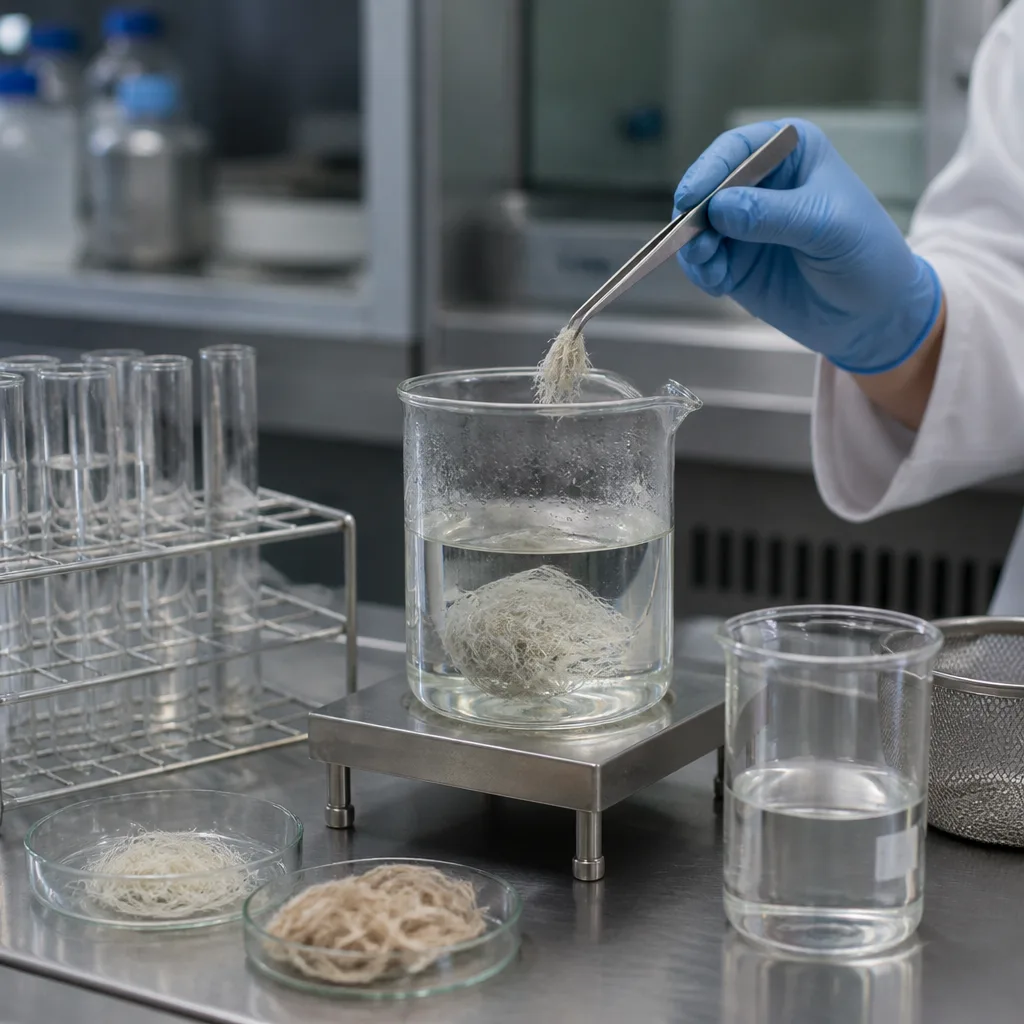
The standard “DIN 54209 Textile tests - Quantitative analysis of binary blends - Mulberry silk and wool blend - Formic acid/zinc chloride method”, published by the German Institute for Standardization (DIN), describes a chemical method for quantitatively determining the ratios in binary fiber blends consisting of the following:
This standard is part of a series of DIN standards for the quantitative analysis of textile fiber blends using selective dissolution techniques. In this case, the formic acid/zinc chloride method allows laboratories to calculate the exact percentage composition of the blend by dissolving one fiber component while leaving the other intact.
This standard is relatively old and is generally listed as inactive or withdrawn, but it is still used as a reference in textile testing laboratories and within their accreditation scopes.
In principle, a sample with a known dry mass is treated with a solution of formic acid and zinc chloride under defined conditions. While one fiber (typically silk) dissolves, the wool remains. The insoluble residue is weighed, and the ratios are calculated with correction factors for small losses or moisture.
These and similar methods are important for the following:
Although this standard is old, the method described continues to be used by accredited laboratories, particularly in Europe, for testing luxury fiber blends (such as silk-wool fabrics and knitwear). Modern laboratories use this standard as a reference or approved equivalent method alongside updated ISO standards.
In short, the DIN 54209 standard is an industry standard used to evaluate specific performance characteristics of textile materials. Like many standards in the DIN 54xxx series, this standard supports quality control, product consistency, and reliable testing methods in the textile and apparel industry.
The DIN 54209 standard focuses primarily on textile testing procedures, specifically evaluating how fabrics behave under defined environmental or mechanical conditions.
Textile products are subjected to repeated stress throughout their life cycles. Washing, friction, perspiration, sunlight, heat, and chemical contact affect durability and appearance. The DIN 54209 standard provides a standardized method for testing one or more of these behaviors under controlled laboratory conditions.
This standard helps manufacturers answer practical questions such as:
Without standardized methods, an acceptable result from one laboratory may differ significantly from that of another.
This testing method essentially follows these steps:
This ensures that all samples begin testing under comparable conditions.
Strict procedural consistency enhances repeatability and reproducibility.
The DIN 54209 standard is widely used in the following sectors:
This standard is generally needed in the following situations:
Organizations that implement the DIN 54209 standard gain several advantages:
It also helps laboratories produce defensible and comparable test reports.
The DIN 54209 standard is necessary because textile quality cannot be assessed solely by appearance. A fabric may initially appear acceptable, but it can deteriorate after washing, friction, or exposure to environmental influences. The main reasons why the DIN 54209 standard is considered important include:
For example, a clothing brand that sources fabric from multiple suppliers might require compliance with the DIN 54209 standard to ensure all materials meet the same quality standards.
In conclusion, the DIN 54209 standard is a crucial textile testing standard. By establishing a repeatable and objective testing method, it helps manufacturers, laboratories, and buyers consistently assess textile performance. In sectors where durability, appearance preservation, and material reliability are essential, this standard directly contributes to product quality assurance and market confidence.
For many years, our organization, with its competent and experienced staff, has been understanding the needs of its clients, providing the advanced testing services they require, and assisting them in the establishment, implementation, and improvement of management systems. Within this framework, we also provide testing services in accordance with the DIN 54209 standard.
To get an appointment, to get more detailed information or to request an evaluation, you can ask us to fill in our form and reach you.

