

The standard “DIN 54016 Color fastness of textiles - Determination of color fastness of dyes and prints to washing in the presence of hypochlorite”, published by the German Institute for Standardization (DIN), describes a laboratory test method for evaluating the resistance of dyed or printed textiles to color change or staining when washed in the presence of hypochlorite (a strong oxidizing bleach found in chlorine-based laundry detergents commonly used in homes).
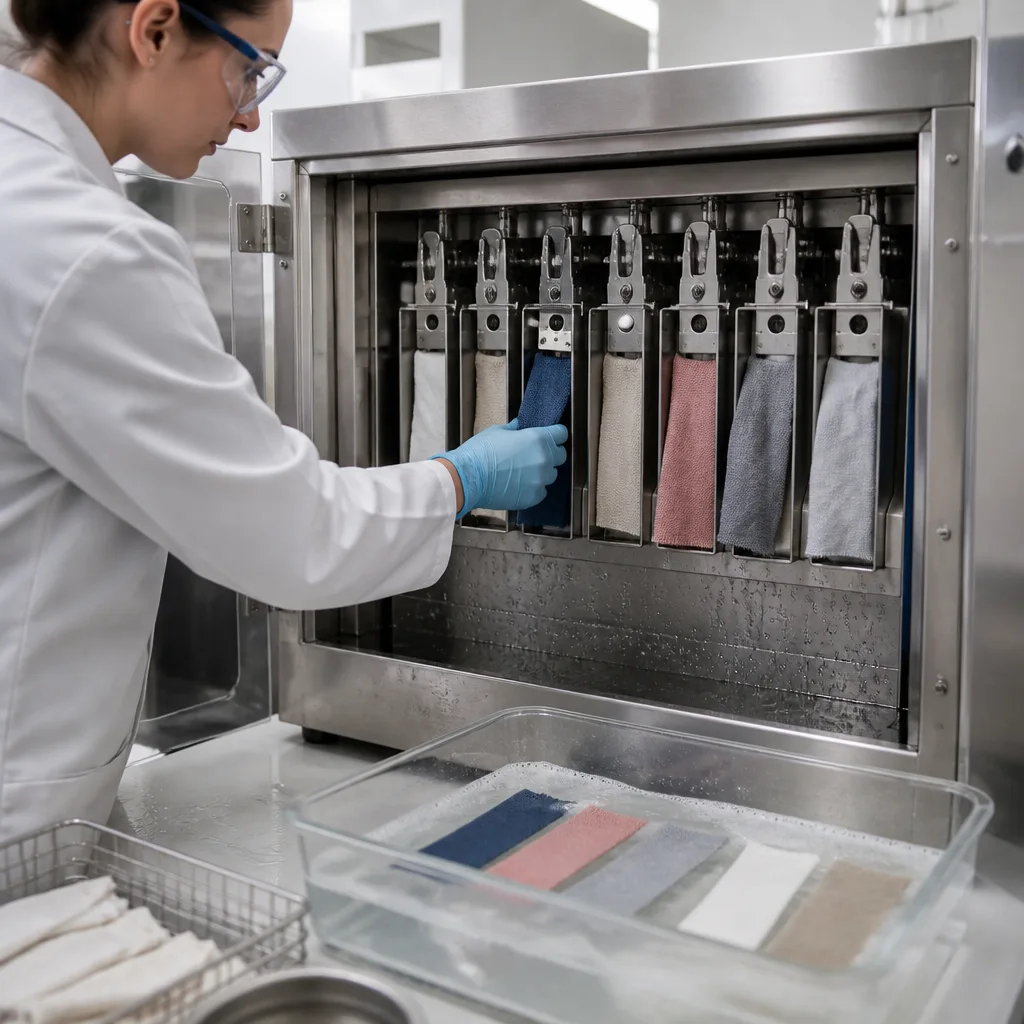
This standard simulates the stress experienced by colored fabrics during washing with detergents or bleach containing hypochlorite. The test evaluates both:
Hypochlorite washing is particularly aggressive, so this test is applicable to textiles that can be washed with chlorine bleach, such as white or colored cotton, linen, or blends used in household goods, workwear, or medical textiles.
This standard applies to textiles at all processing stages (raw, semi-finished or finished) involving dyeing and printing. It is part of the broader DIN 540xx series of standards for textile color fastness testing. It is often compared to or used in conjunction with the ISO 105 series of standards. For example,
This method generally follows these steps:
The assessment focuses on the following topics:
Results are typically graded using standardized grayscales:
These scales provide a numerical rating (typically between 1 and 5). Here,
To ensure reproducibility, precise parameters (such as hypochlorite concentration, temperature, and liquid ratio) are precisely defined in this standard.
The DIN 54016 standard is widely used as a reference in textile testing laboratories and quality assurance programs.
In short, the DIN 54016 standard focuses on testing the color fastness of textiles, particularly under the influence of organic solvents used in professional cleaning processes such as dry cleaning. The main purpose of this standard is to evaluate how well dyed or printed textiles retain their colors when exposed to solvents typically used in textile care. These solvents may affect dyes differently than water-based washes.
The DIN 54016 standard applies to the following:
This standard is particularly important for:
The DIN 54016 standard was designed because dry cleaning exposes textiles to very different conditions than normal washing. This standard is considered important for the following reasons:
This standard ensures that fabrics are tested not just by washing with water, but specifically under these solvent conditions.
This standard helps manufacturers verify that their products will not deteriorate after professional cleaning.
Without this, each company might conduct different tests, leading to inconsistent results.
This standard provides objective evidence that a textile can withstand dry cleaning.
This is especially important for delicate fabrics such as wool, silk, or blends.
The DIN 54016 standard is necessary because water-based tests alone are insufficient. By simulating real dry cleaning conditions, it fills a critical gap by ensuring textiles retain their color, quality, and usability throughout their lifecycle.
In conclusion, the DIN 54016 standard plays a crucial role in ensuring the durability and reliability of textile colors under dry cleaning conditions. By simulating real-world solvent exposure, it provides valuable insights into how fabrics will perform in professional care environments, helping both manufacturers and consumers maintain textile quality over time.
For many years, our organization, with its competent and experienced staff, has been understanding the needs of its clients, providing the advanced testing services they require, and assisting them in the establishment, implementation, and improvement of management systems. Within this framework, we also provide testing services in accordance with the DIN 54016 standard.
To get an appointment, to get more detailed information or to request an evaluation, you can ask us to fill in our form and reach you.

