

The ASTM D4355 standard, developed by the American Society for Testing and Materials (ASTM), describes a test method for determining the degradation of tensile strength in geotextiles due to exposure to light, moisture, and heat in a xenon arc device. This test utilizes a light and water exposure device and a xenon arc light source.
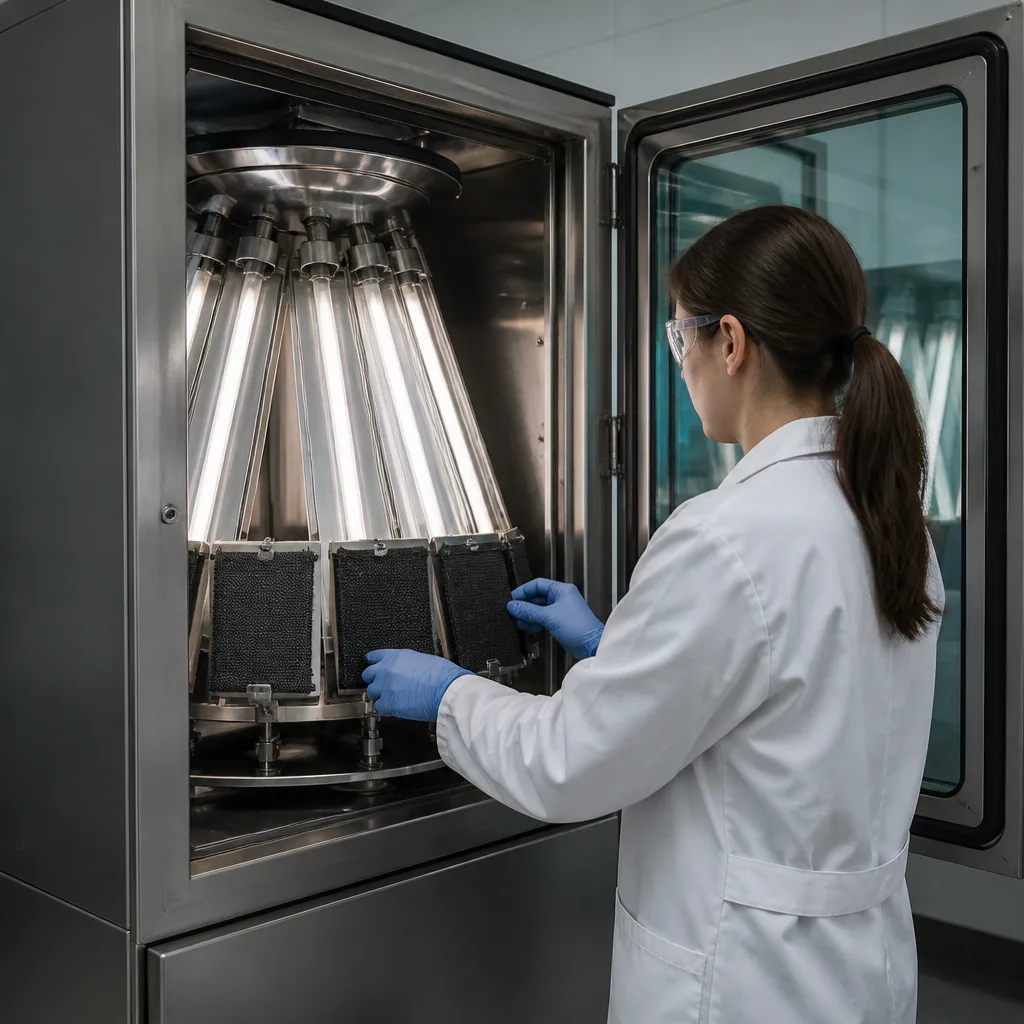
This standard is widely recognized internationally. Specifically, it provides a laboratory method for evaluating how geotextiles degrade when exposed to simulated external environmental conditions such as ultraviolet (UV) light, humidity, and heat.
Geotextiles are permeable fabrics used in civil engineering applications such as soil stabilization, erosion control, drainage, road construction, and landfills. Because these materials are often exposed to sunlight and weathering for extended periods, understanding their long-term durability is critical for safe and cost-effective engineering designs.
The primary purpose of the ASTM D4355 standard is to measure the degradation in tensile strength of geotextiles after controlled exposure to accelerated weathering. This test simulates a combination of the following effects:
Engineers and manufacturers can estimate the service life of geotextiles by measuring strength loss and compare the UV resistance of different materials (e.g., polypropylene, polyester).
In general, this testing method follows these steps:
This standard specifies the use of xenon arc lamps with certain filters (such as boron filters in some procedures) to achieve a spectral distribution close to that of natural sunlight.
This standard is considered important in geotechnical engineering for the following reasons:
Although this standard was primarily designed for geotextiles, the method is sometimes applied to other geosynthetic materials and permeable textiles used in outdoor environments.
This standard plays a vital role in ensuring the longevity and reliability of infrastructure projects worldwide.
In short, the ASTM D4355 standard is widely used in the geosynthetic industry to evaluate the resistance of geotextile materials to environmental aging caused by sunlight, heat, and humidity. Geotextiles are frequently used in outdoor civil engineering applications such as:
These materials can degrade over time due to exposure to ultraviolet (UV) radiation, rain, humidity, and temperature fluctuations. The ASTM D4355 standard was developed to measure the degradation of geotextiles under accelerated weathering exposure.
This standard evaluates changes in tensile strength after exposure to simulated sunlight and moisture, particularly in weathering tests using a xenon arc lamp.
During exposure, geotextile samples are exposed to the following:
These combined conditions accelerate environmental aging that would normally occur outdoors over long periods. Following exposure, samples are mechanically tested to determine how much tensile strength has been retained or lost.
The ASTM D4355 standard is important for the following reasons:
The ASTM D4355 standard is generally applied in the following areas:
ASTM D4355 is an accelerated laboratory test and does not perfectly reproduce every outdoor condition. Essentially, the standard itself states that the method described is not intended to simulate the following effects:
The actual service life depends on the installation conditions, climate, and material formulation.
In conclusion, the ASTM D4355 standard is an essential accelerated weather resistance testing standard for evaluating the environmental durability of geotextiles. This method helps manufacturers and engineers assess UV resistance and long-term outdoor performance by exposing materials to xenon arc light, moisture, and heat. This standard plays a significant role in geosynthetic product qualification, infrastructure reliability, and material quality assurance.
For many years, our organization, with its competent and experienced team, has been understanding the needs of its clients, providing the advanced testing services they require, and assisting them in the establishment, implementation, and improvement of management systems. Within this framework, we also provide testing services in accordance with the ASTM D4355 standard.
To get an appointment, to get more detailed information or to request an evaluation, you can ask us to fill in our form and reach you.

