

The American Society for Testing and Materials (ASTM) standard, "ASTM D3512/D3512M Standard Test Method for Resistance to Pilling and Other Related Surface Changes of Textile Fabrics: Random Rolling Pilling Tester," describes a test method for determining the resistance of textile fabrics to pilling and other related surface changes using a random tumble pilling tester. This method is generally applicable to all woven and knitted apparel fabrics. Other test methods for the pilling resistance of textiles are the test methods of ASTM D3511, ASTM D3514, and ASTM D4970.
Some fabrics treated with silicone resin may not be tested satisfactorily by this procedure because the silicone resin may contaminate the cork linings in the test chamber, causing erroneous results.
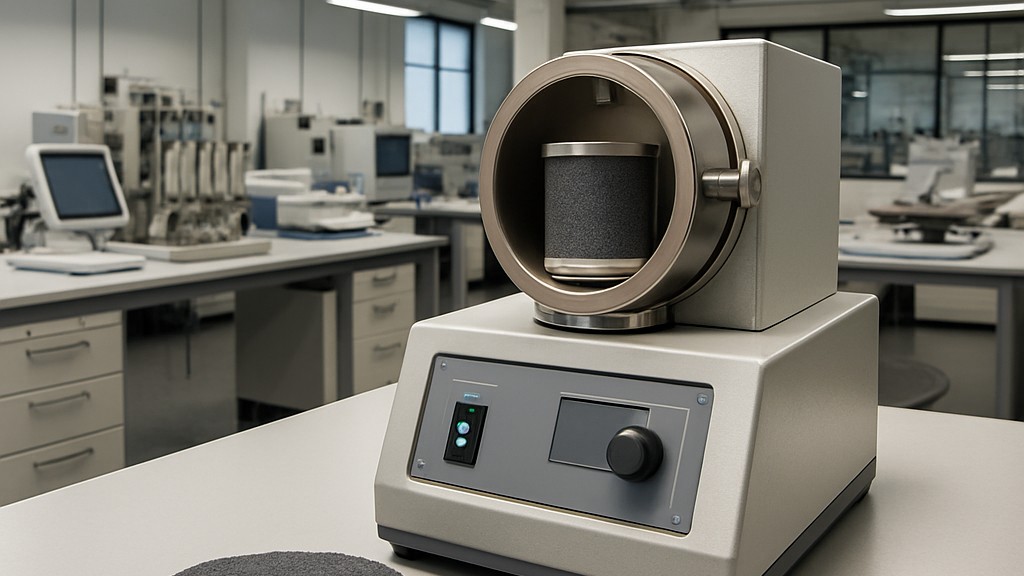
During the test, pilling and other surface appearance changes that occur during normal wear are simulated on a laboratory testing machine. A random frictional motion, generated by rolling samples in a cylindrical test chamber coated with a mildly abrasive material, causes pilling on the fabric. A small amount of short gray cotton fiber is added to each test chamber containing the samples to create pilling that resembles the appearance and structure of actual abrasion. The degree of fabric pilling is assessed by comparing the tested samples with visual standards, such as actual fabrics or photographs of fabrics showing different pilling resistances. The observed pilling resistance is reported using an arbitrary rating scale.
This method, used to test fabrics for pilling resistance, is not recommended for acceptance testing. If used for acceptance testing, it should be used with caution due to low interlaboratory precision. In some cases, the buyer and supplier may be required to test commercial shipments of one or more specific materials using the best available test method, even if it is not recommended for acceptance testing.
If there are differences or practical significance between the test results reported for two (or more) laboratories, comparative tests should be performed to determine whether a statistical deviation exists. At a minimum, test samples should be used as homogeneous as possible, taken from material from which different test results were obtained, and an equal number should be randomly assigned to each laboratory. Other materials with established test values may be used for this purpose. Test results from the two laboratories should be compared using a statistical test for unpaired data, with a probability level chosen before the test series. If a deviation is detected, the cause should be identified and corrected, or future test results should be adjusted to account for the known deviation.
Pilling of textile fabrics is a rather complex property as it is affected by many factors such as fiber or blend type, fiber dimensions, yarn and fabric structure, fabric finishing processes and regeneration.
Pilling in textile fabrics is a complex property, influenced by many factors, including fiber or blend type, fiber dimensions, yarn and fabric structure, fabric finishing processes, and the method of reconditioning. Testing before reconditioning is recommended. The pilling resistance of a given fabric in actual use varies more with typical usage conditions and individual users than with replica fabric samples subjected to controlled laboratory testing. This experience should be kept in mind when adopting acceptability levels for any series of standards.
Pilling varies considerably in size and appearance and depends on the presence of lint and the degree of color contrast. When pilling is assessed solely on the number of beads, these factors are not considered. Pilling may be accompanied by other surface phenomena such as coating loss, color change, or fuzz formation. Because the overall acceptability of a particular fabric depends on both the characteristics of the pilling and other factors affecting its surface appearance, it is not recommended to subjectively evaluate laboratory-tested fabrics for acceptability and rate them solely on the number of pills formed. A set of standards based on the gradual degree of surface change of the fabric type being tested can be established to provide a basis for subjective assessments. Visual standards are most advantageous when laboratory test samples closely correlate in appearance with worn fabrics and exhibit a similar pilling/fuzz ratio.
Counting beads and weighing their numbers according to their size and contrast as a combined measure of pilling resistance is not recommended because of the excessive time required for counting, sizing, and calculating.
The degree of fabric pilling is assessed by comparing tested samples to visual standards, which may be actual fabrics or fabric photographs, showing the range of pilling resistance. Observed pilling resistance is reported on an arbitrary scale ranging from 5 (no pilling) to 1 (very severe pilling).
This test method is applicable to a wide variety of woven and knitted fabrics that vary in their tendency to pilling due to differences in fiber, yarn, fabric structure, and finish.
In short, ASTM D3512/D3512M is widely used in the textile and apparel industry for quality control, product development, and supplier evaluation. It helps predict how fabrics will perform when worn (for example, in garments where pilling affects aesthetics and lifespan). This standard is particularly valuable for ensuring compliance with consumer expectations and retail specifications.
This standard is a critical tool for evaluating the durability and aesthetic life of fabrics in the textile industry. Its importance stems from its role in assessing the resistance of fabrics and textile products to other surface changes, such as pilling, that directly affect their quality, appearance, and performance. This standard is considered important for the following reasons:
Our organization, which has been operating for many years and meticulously follows global developments in science and technology, employs a team of experienced professionals and a broad infrastructure to conduct testing, measurement, and analysis in a wide range of areas for businesses across all sectors. In this context, we also provide testing services in accordance with the "ASTM D3512/D3512M Standard Test Method for Pilling Resistance and Other Related Surface Modifications of Textile Fabrics: Random Rotation Pilling Tester."
To get an appointment, to get more detailed information or to request an evaluation, you can ask us to fill in our form and reach you.

