

The standard "AATCCTM 8 Color Fastness to Color Transfer: Color Transfer Meter," published by the American Association of Textile Chemists and Colorists (AATCC), describes a test method for determining the amount of color transferred from the surface of colored textile materials to other surfaces through friction. This method is applicable to textiles made from all fibers in yarn or fabric form, whether dyed, printed, or otherwise colored. This method is not recommended for use in carpets or prints where areas can be selected very small.
This standard includes test procedures using squares of white test fabric, both dry and wet. Because washing, dry cleaning, shrinking, ironing, finishing, and similar treatments can affect the degree of color transfer from a material, testing can be performed before or after such treatments.
In principle, a coloured test sample is rubbed with a white test cloth under controlled conditions. The colour transferred to the white test cloth is evaluated by comparison with the grey scale or chromatic transfer scale for dyeing and a grade is assigned.
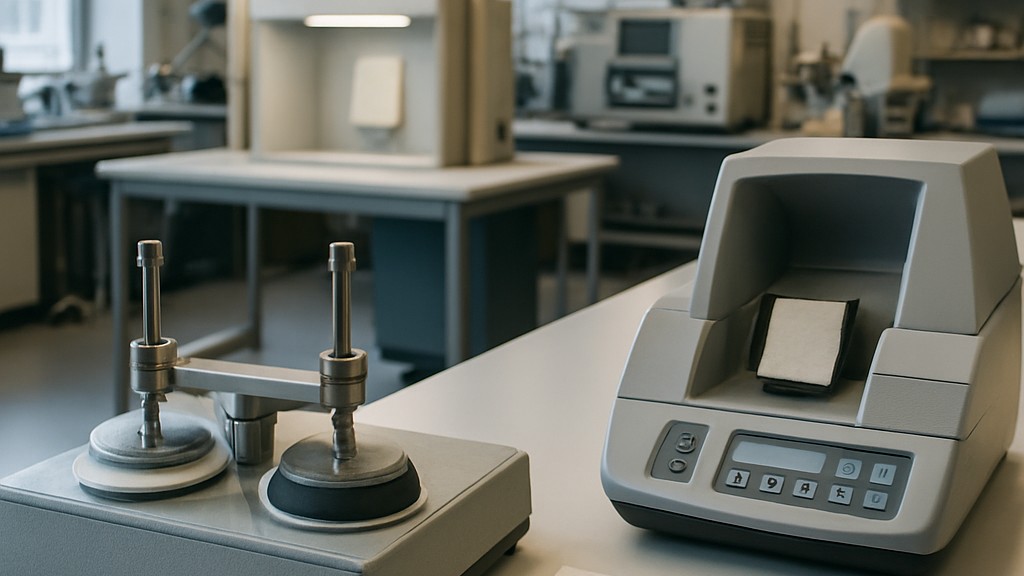
A color transfer meter (crockmeter) is a testing device used in the textile industry to evaluate a fabric's colorfastness to rubbing. This test helps determine how much dye will be removed from a fabric's surface when it comes into contact with another surface, whether dry or wet. This process is commonly known as a rubbing test, and the result is referred to as rub resistance or colorfastness to rubbing. The degree of color transfer is rated on a scale of 1 to 5, with 1 representing "Poor (heavy staining)" and 5 representing "Excellent (no staining)."
The AATCC TM 8 standard includes a test method developed to evaluate the color transfer (crocking) of textiles. This standard is not recommended for dyed, printed, or colored textiles in fiber or fabric form, textiles with thread veins, or small patterned products such as carpets. The purpose of this method is to determine color transfer from the fabric to other surfaces (e.g., a white test cloth). These tests are performed with a specialized device called a color transfer meter (crockmeter). The test fabric is subjected to a specified number of rubbing movements under a controlled load. In the dry crocking method, the white test cloth is rubbed dry. In the wet crocking method, the test cloth is prepared to 65 percent moisture and then rubbed. In both cases, the transferred color is then determined by specific scales.
The AATCC TM 8 standard plays a crucial role in ensuring consistency and accuracy during textile testing procedures. This method is not a test in itself, but rather a guide for preparing textile samples prior to testing and provides the standardized practices necessary for reliable and reproducible results. This method is designed to reduce variability in test results due to inconsistencies in the sample preparation process. It provides detailed instructions on how to properly cut and handle samples, and how to prevent contamination or contamination that could affect test results.
The main objectives of this standard are:
The AATCC TM 8 standard is widely used to prepare for various AATCC test methods, including but not limited to:
This standard applies to woven, knitted or nonwoven textiles and is used in both industrial and research laboratory environments.
During the sample preparation process,
This standard is considered important in the textile industry for the following reasons:
Consequently, adhering to the AATCC TM 8 standard test method supports the integrity of textile performance evaluations by ensuring the accuracy and repeatability of test results.
This standard reliably assesses the resistance to color transfer in textiles. Available in both dry and wet conditions, this method is a key industry reference for production control, quality assurance, and product performance.
Our organization, which has been supporting businesses across all sectors for years through a wide range of testing, measurement, analysis, and evaluation activities, boasts a strong team of employees who closely follow global developments in science and technology and are constantly improving themselves. In this context, we also provide testing services in accordance with the "AATCC TM 8 Color Fastness to Color Transfer Test Method: Color Transfer Meter" standard.
To get an appointment, to get more detailed information or to request an evaluation, you can ask us to fill in our form and reach you.

