

Developed by the British Standards Institution (BSI), BS 8479 Textiles - Method for determining the snagging tendency of fabrics - Rotating chamber method describes a method for determining the snagging tendency of fabrics and associated surface defects. This method is applicable to standard knitted and woven fabrics.
The tendency of fabrics to snag refers to how likely a fabric is to snag or pull, causing snags. This can be a natural occurrence or a possibility. Snagging occurs when a sharp or rough object (such as a fingernail, zipper, or rough surface) catches on the surface of a fabric and pulls on threads or fibers. In other words, it refers to how easily a fabric is damaged when it gets caught on something and the threads are dislodged.
For example, a fabric that is prone to snagging (such as fine silk or loosely woven materials) is more likely to be pulled or damaged. A fabric that is less prone to snagging (such as tightly woven polyester) is more likely to withstand such damage. This property is particularly important for apparel, upholstery, and industrial textiles, where durability is crucial.
BS 8479 provides a controlled, repeatable procedure for assessing the snagging resistance of a fabric, which is crucial for quality control in textile manufacturing. For the purposes of this standard, snagging refers to the formation of pulls or loops in a fabric due to snagging on sharp or rough surfaces. Snagging tendency is the tendency of a fabric to snag during normal use or wear.
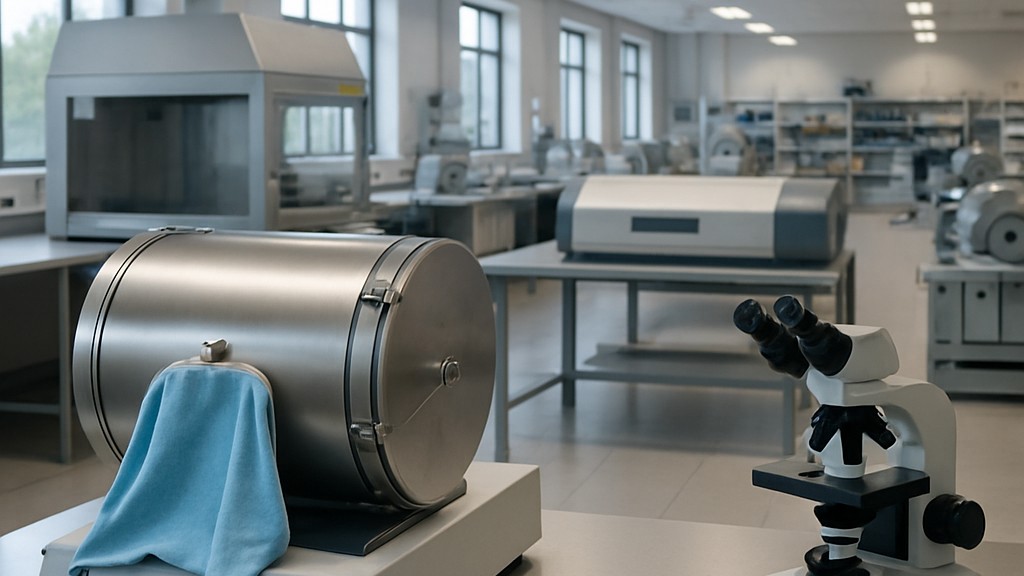
These tests utilize the rotating chamber method. A fabric sample is placed inside a rotating drum or chamber. The chamber contains rough surfaces or objects (e.g., jewelry, furniture, rough leather) to simulate conditions that cause snagging. The fabric is rotated within the chamber for a specified time at specific speed settings. After the test, the fabric is evaluated visually or compared with photographic standards or snagging scales.
This standard is used to test clothing fabrics, upholstery, sportswear and home textiles for:
A fabric with high snagging resistance will last longer and look better over time, especially in high-friction environments. The BS 8479 standard helps manufacturers and suppliers standardize their quality and deliver reliable performance to consumers. This is why these tests are so widely sought after.
The rotary chamber method is a specialized technique used to assess material emissions, particularly odor or volatile organic compound (VOC) emissions, under controlled conditions. It is commonly used in indoor air quality testing, construction material evaluation, and odor testing of materials such as plastics, textiles, foams, and automotive interiors.
The rotary chamber method involves placing a sample of material inside a slowly rotating cylindrical or spherical chamber to:
The necessity of this standard arises from the following fundamental points:
The BS 8479 standard is not legally mandatory, but its use is critical in industries that prioritise durability and customer satisfaction.
Our organization, which has been supporting businesses across all sectors for years through a wide range of testing, measurement, analysis, and evaluation activities, has a strong team of employees who closely follow global developments in science and technology and are constantly improving themselves. In this context, we also provide testing services in accordance with the "BS 8479 Textiles - Method for Determining the Snagging Tendency of Fabrics - Rotating Chamber Method" standard.
To get an appointment, to get more detailed information or to request an evaluation, you can ask us to fill in our form and reach you.

